(703) 436-4445 Book a Call

Roofers in Washington, DC

Sterling Roofers serves homeowners in the District, where the typical roof is a rowhouse flat roof rather than a Virginia-style shingle slope. This page covers who issues roof permits in DC, when a historic district changes the answer, and how to prepare for a call.

5.0 rated across 28 Google reviews · see the Google profile
Tyco Road8466 Tyco Road, Suite B, Vienna, VA 22182
(703) 436-4445Mon to Fri, 8 AM to 5:05 PM
Start by phoneA free 15-minute consultation

What we do here

Roof repair and replacement for District homes

A District roof call usually begins with a leak near a parapet, a soft spot around a vent pipe, or a pent roof over a front bay that has lost its covering. Sterling Roofers serves homeowners in Washington, DC, and the work falls into the same two groups as anywhere: a targeted roof repair when the fault is local, and a roof replacement when the covering has failed in several places.

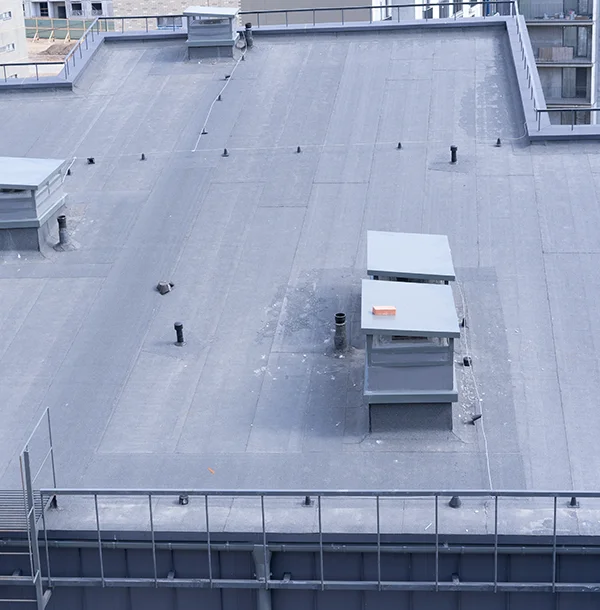
What changes in the city is the roof itself. The District's Office of Planning notes that most rowhouses and semi-attached buildings have flat roofs, and that pent roofs on rowhouses are commonly covered with slate, asphalt shingles or clay tile. A flat roof sheds water through a gentle fall toward the rear and through drains, so a leak is often a drainage or seam problem, not a missing shingle. See flat and low-slope roofing for membranes and asphalt shingle roofing for pent sections.

Flat membrane roof seen from above with vent pipes, two rooftop units and a metal railing along the parapet

Permits

Do you need a permit to replace a roof in DC?

Sometimes yes and sometimes no, and the Department of Buildings is the office that decides.

DC has one permit office

The District is a single government with no county layer. Roofing permits come from the DC Department of Buildings, known as DOB, which took over from the old Department of Consumer and Regulatory Affairs in October 2022. Virginia and Maryland building rules do not apply here.
Like for like can be exempt

As the DC building code is worded, replacing roof covering with the same material, matching the existing roof in proportion, appearance, texture, design, detail and dimensions, is exempt from a permit. A change of material is a different matter.

The code language is clearest about the like-for-like case. DOB has not published a roofing-only summary that spells out every scope, so treat the table below as a map of who to ask, not a ruling. DOB's Homeowner's Center, at 1100 4th Street SW, handles roof repair and replacement without structural changes for one- and two-family homes, and its number is (202) 671-3500.

What you are doingWhat the code points to
Same covering, same look, outside a historic districtExempt as an in-kind replacement; confirm the scope with DOB
Changing the material, such as slate to asphalt shinglesNot in kind, so ask DOB about a permit
Any roof in a historic district or on a landmarkPermit application with Historic Preservation Office approval, even for like for like
Changing the roof structureA permit, through DOB
Property in a flood hazard areaPermit application with Floodplain Administrator review

Ask DOB which code edition applies on the day you apply. For how other places compare, see service areas by jurisdiction.

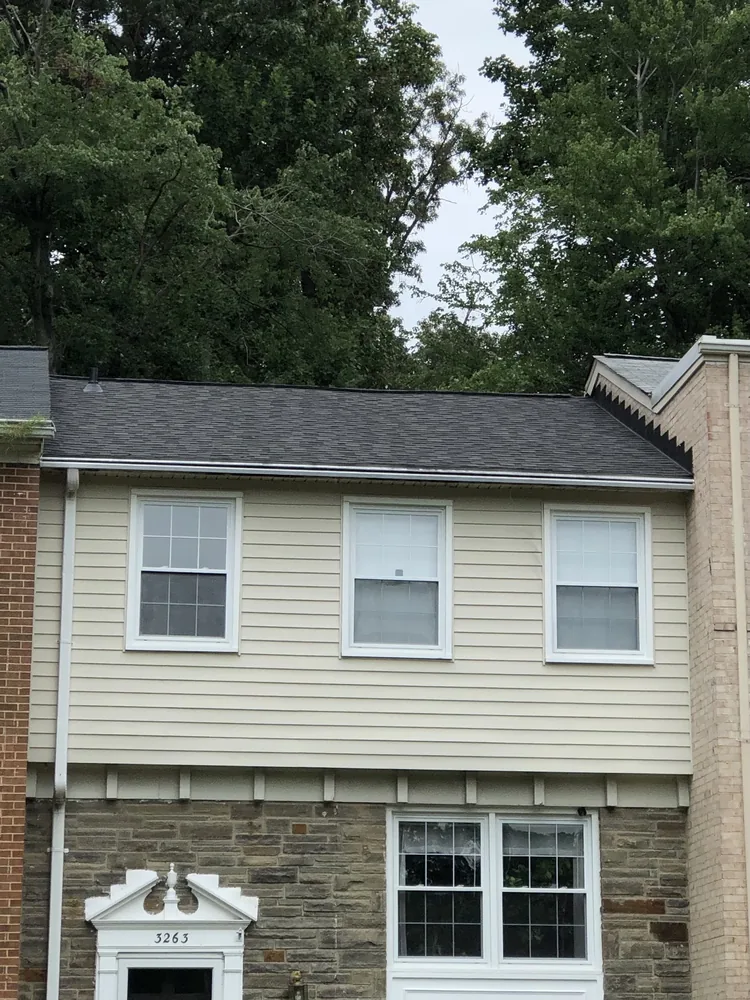
Dark architectural shingle roof on a brick and stone townhouse

Historic review

Does my DC roof need historic review?

If the house sits in a historic district or is a designated landmark, probably yes. The Historic Preservation Office, part of the DC Office of Planning, reviews the permit, and DOB lists replacement in kind of roofing and coping among the jobs that need a permit solely because of the district. Its guidance is to confirm with the Office of Planning before you submit.

In-kind or compatible roofing, coping, gutters and downspouts qualify for expedited review, where the office can clear a compatible application itself. Incompatible work goes to the Historic Preservation Review Board, as do roof decks and additions visible from the street.

The Office of Planning's roof guideline sets a clear order of preference: keep the existing roof, then repair it in kind, then replace the whole covering in kind, and consider a substitute material only when the earlier steps are not workable. That matters if you are weighing metal or asphalt shingles over slate, and our roofing materials compared page lays out the options. Georgetown adds a federal step, because the Old Georgetown Board of the Commission of Fine Arts also reviews work there, so call its staff at 202-504-2200 before ordering.

The housing stock

What do DC roofs look like?

The Census counts buildings, not roof age or material.

Median build year 1958

Across 361,014 housing units, per the Census Bureau American Community Survey 2020 to 2024 estimates, with 31.5% built in 1939 or earlier.

21.7% attached homes

Single-unit attached homes, mostly rowhouses, outnumber detached houses, which are 11.0% of units.

56.9% in larger buildings

Buildings of five or more units hold most of the stock, and 58.5% of occupied homes are renter-occupied.

A flat membrane roof must still drain. The model code sets a design slope of at least one-fourth inch per foot for membrane roofs, which is roughly 2 percent and far too gentle to see from the street. Standing water after rain is the usual sign that the fall or a drain is not doing its job.

Rowhouses to bay fronts

Where do rowhouse roof problems start?

Rowhouse blocks pack a lot of roof edge into little space. The usual trouble spots:

  • Parapet walls where the membrane turns up and the top cap or flashing has opened.
  • Drains and scuppers that clog with leaves and leave water standing near a seam.
  • Plumbing vents and rooftop equipment, where a boot cracks or a curb loses its seal.
  • Pent roofs over bay fronts, where shingles or slate meet brick and flashing carries the weight of every storm.

Neighborhoods such as Capitol Hill, Dupont Circle and LeDroit Park are made up largely of older rowhouses, and Capitol Hill, Georgetown, Dupont Circle and LeDroit Park are all historic districts. If your block is in one, start with the review question before you pick a material. A roof inspection records the condition so that repair, in-kind replacement and change of material can be compared on the same facts.

Storms

What storm facts matter in the District?

The June 2012 derecho produced a 70 mph gust at Reagan National Airport and left about 1.2 million customers in the region without power. On the night of September 3, 2026, winds reached up to 70 mph in the city, and a tree came down onto a rowhouse on the 200 block of 8th Street SE. Coverage of that storm describes fallen trees and outages, not a count of damaged roofs.

After a high-wind night, look from the ground for lifted membrane edges, missing shingles on a pent roof and limbs resting on the roof. See storm damage roofing, and read our roof insurance claim help before you call your carrier, because photos taken before any temporary repair help the paperwork.

How a job runs

How does a DC roofing job run?

Five steps, each with something in writing.

1. Phone call

A free 15-minute call to describe the roof type, the leak and whether the building is in a historic district.

2. Visit

A scheduled visit to the roof, with notes on drains, flashing, seams and anything that could not be reached.

3. Written scope

The area, the covering, tear-off, flashing, drains, a deck allowance and what is excluded.

4. Approvals

Your scope is checked against DOB and, where it applies, the Historic Preservation Office before materials are ordered.

5. The work and closeout

The job is done to the scope, and the paperwork matches what went on the roof.

Reviews

Reviews from Google customers

Quoted exactly as posted on Google, where the rating is 5.0 across 28 reviews.

★★★★★
“I chose Sterling Roofing to install my new roof due to their 5 star reviews online. I am very happy I did. Their estimate was extremely reasonable and their employees are very professional. They did an excellent job!”
Denise O. · Google review

See every review on Google

FAQ

Washington, DC roofing questions

Do you need a permit to replace a roof in DC?

It depends on the scope. As the DC building code is worded, replacing roof covering with like material that matches the existing roof is exempt, while a change of material or structure calls for a permit, and any roof in a historic district needs a permit with Historic Preservation Office approval. Confirm your scope with the Department of Buildings at (202) 671-3500 before work starts.

Which agency handles roof permits now that DCRA is gone?

The Department of Buildings, called DOB, took over permitting, inspections and code enforcement from the old Department of Consumer and Regulatory Affairs in October 2022. Its Homeowner's Center is at 1100 4th Street SW, and applications are made online.

Is a historic district roof job different from other jobs?

Yes. Even a like-for-like replacement needs a permit application that the Historic Preservation Office reviews first, and DOB tells applicants to confirm with the Office of Planning before submitting. Ask the Office of Planning at (202) 442-7600 whether your address is covered.

Can I switch from slate to shingles or metal on a DC rowhouse?

A change of material is not in kind, so the permit exemption does not apply, and in a historic district the Office of Planning guideline favors repair or in-kind replacement first. A substitute is considered only when those are not workable. Check with the Historic Preservation Office before you choose.

Why does my flat roof leak when it is not raining hard?

Flat roofs rely on a slight fall toward drains, and the model code sets a minimum of one-fourth inch per foot for membrane roofs. A clogged drain, a lifted seam or a failed parapet flashing can let water in during light rain. A visit can show which of those it is.

Does Georgetown have extra roof approvals?

Georgetown work can also involve the federal Commission of Fine Arts through its Old Georgetown Board, in addition to the District's historic review. The board's staff can be reached at 202-504-2200, and the board encourages contact before you submit.

Who handles a roof on a condo or co-op building?

Start with the building's board or management, since the roof is usually a shared element and the association decides who is hired. Ask the board for its approval steps before you schedule any work, and bring the written scope to it.

Nearby and our office

Where is Sterling Roofers based?

The office is at 8466 Tyco Road, Suite B, in Vienna, VA 22182, and the phone line is (703) 436-4445. Ring first, since the roof itself is looked at on site at a time you choose.

Across the Potomac, the rules are different, so each neighbor has its own page: Arlington, Alexandria, Falls Church and McLean in Virginia, and Bethesda and Silver Spring in Maryland. Learn more about Sterling Roofers, browse roofing services or check the service areas list.

Talk through the next step

Discuss your roof with Sterling Roofers

Share the property address, the condition you are seeing and the decision you need to make.

Call (703) 436-4445Book a Call