Storm & Hail Damage Roof Repair
Storm & Hail Damage Roof Repair: How to Find the Best Contractor
Key Takeaways
- Hail damage is not always visible from the ground — pockmarks on soft metals (gutters, flashing, vents) are the clearest early indicators
- Insurance claims for storm damage must typically be filed within one year of the event — inspect promptly after every major storm
- Avoid storm-chaser contractors who appear unsolicited after weather events — verify DPOR or MHIC license before any agreement
- Virginia requires roofing contractors to hold a DPOR Class A or B license — unlicensed emergency contractors void your insurance coverage
- A supplemental insurance estimate can be requested if initial insurer scoping misses hidden damage — a licensed contractor can document this
Storm damage requires prompt, professional attention to prevent secondary issues such as water intrusion, mold development, and structural deterioration. However, the post-storm period also attracts unqualified contractors who exploit homeowner urgency.
This guide provides Northern Virginia homeowners with a systematic approach to storm damage response, contractor evaluation, and insurance claim navigation. Sterling Roofers has assisted hundreds of DMV homeowners through storm damage situations across Sterling, Arlington, Fairfax, and surrounding areas.
- Document damage and file insurance claims within 24-48 hours
- Never sign contracts with door-to-door solicitors after storms
- Verify contractor licensing, insurance, and local references
- Maintain control of your insurance claim and communication
Immediate Post-Storm Actions
The 24-48 hours following a significant storm establish the foundation for successful damage resolution. Homeowners should complete the following steps before engaging any contractor:
- Safety Assessment: Evaluate the property from ground level only. Do not access the roof directly.
- Documentation: Photograph visible damage from multiple angles with date-stamped images
- Interior Inspection: Check attic spaces for water intrusion, wet insulation, or daylight penetration
- Storm Documentation: Record the date, time, and nature of the storm event
- Temporary Mitigation: If water is actively entering, deploy tarps or containers to prevent further damage
- Avoid Solicitations: Decline to engage with contractors who appear unsolicited after storms
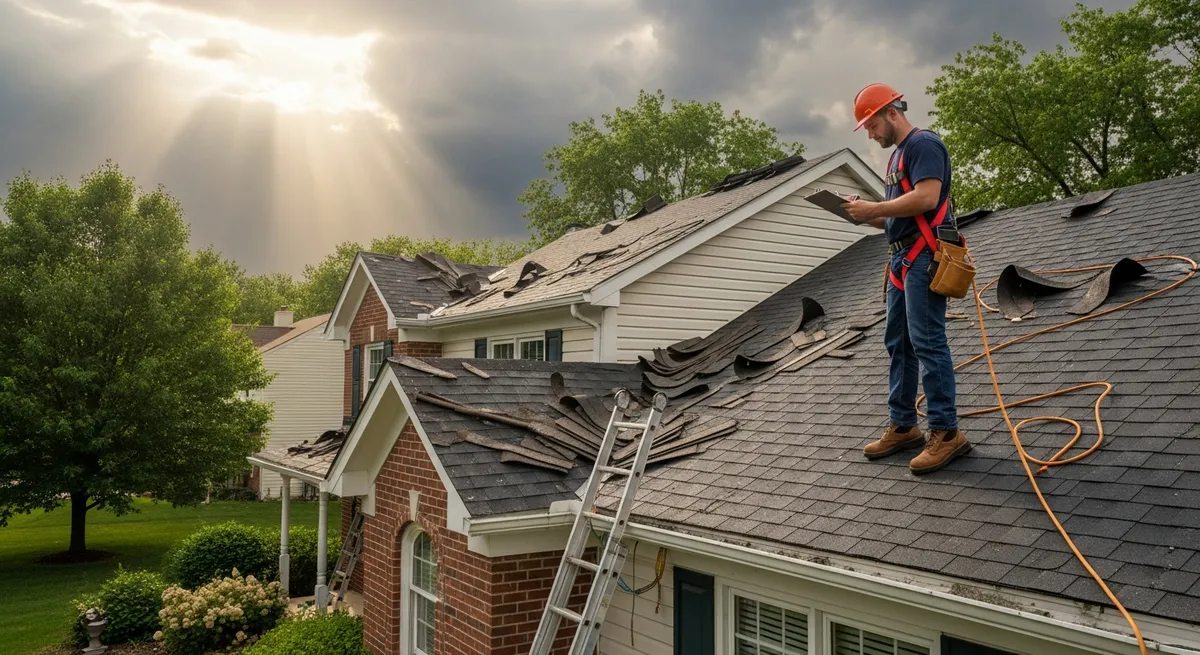
Storm-damaged roofs present significant hazards including unstable shingles, wet surfaces, and compromised structural elements. Roof access should be performed only by trained storm damage roofing contractors with appropriate safety equipment.
Identifying Storm and Hail Damage
Different storm types produce distinct damage patterns. Understanding these patterns helps homeowners assess potential issues:
Hail Damage Indicators
Hail damage is frequently invisible from ground level, which is why many homeowners fail to identify it until leaks develop months later. Hail damage roofing contractors evaluate for:
- Dented or dimpled metal components (vents, flashing, gutters)
- Circular soft spots on shingles (bruising)
- Granule displacement in random patterns
- Cracked or fractured shingles
- Exposed fiberglass mat where granules are completely removed
Wind Damage Indicators
- Missing shingles or shingle sections
- Lifted shingle edges or corners
- Creased shingles (bent but not removed)
- Damaged ridge cap shingles
- Debris impact damage
Inspect gutters and downspout discharge areas after storms. Significant granule accumulation indicates impact damage that may not be visible from the ground.
Contractor Fraud Prevention
Major storms attract transient contractors who follow weather patterns, collect deposits, perform substandard work, and relocate before problems surface. Identifying the best storm damage roofing company requires recognizing warning signs:
Red Flag Behaviors
- Unsolicited door-to-door contact immediately following storms
- Requests for substantial deposits before insurance approval
- Offers to "waive your deductible" (this constitutes insurance fraud)
- Pressure for immediate contract signing
- Requests to sign over insurance claim authority
- Out-of-state vehicle plates and temporary contact information
- Inability to provide local project references
The best storm damage roofing contractor will provide thorough documentation, explain the insurance process clearly, and allow homeowners adequate time for decision-making without pressure tactics.
Selecting a Qualified Storm Damage Contractor
Finding a reliable roofing repair team for storm damage requires systematic evaluation:
Insurance Claim Process
Proper claim handling maximizes coverage and ensures timely repairs. The best storm damage roofing company will guide homeowners through this process without taking control of the claim itself.
Step 1: Prompt Filing
Contact your insurance company within 24-48 hours of the storm. Early filing establishes the timeline and initiates the claims process.
Step 2: Comprehensive Documentation
Compile photographs, written descriptions, and any receipts for temporary repairs. This documentation supports your claim.
Step 3: Professional Inspection
Schedule an inspection with qualified storm damage roofing contractors who will provide a detailed damage assessment.
Step 4: Adjuster Meeting
Request that your contractor attend the adjuster inspection. Having professional representation ensures all damage is properly identified.
For comprehensive insurance claim guidance, visit our insurance claim resource page.
Expected Timeline
Following major storm events, qualified hail damage roofing contractors experience high demand. Early contractor engagement positions homeowners advantageously in scheduling queues.
Learn more about our storm damage services on our services page, or find a contractor in your area through our service areas directory.
Storm Damage Assessment
Receive professional damage documentation and insurance claim support from our experienced team.
Schedule Free Inspection