How to Find Reliable Roofing Contractors in Fairfax VA: A Homeowner’s Complete Guide
How to Find Reliable Roofing Contractors in Fairfax VA: A Homeowner’s Complete Guide
Key Takeaways
- Virginia DPOR Class A or B license is the legal requirement for roofing contractors in Fairfax — verify credentials before any work begins
- Fairfax County building permits are required for full replacements — your contractor is responsible for obtaining it
- References from Fairfax County jobs specifically are more useful than general online reviews for assessing local experience
- Written contracts in Virginia must include scope, materials, start date, payment schedule, and workmanship warranty terms
- HOA approval may be required for material or color changes in Fairfax planned communities — confirm before contracting
Why Choosing the Right Roofing Contractor in Fairfax Matters
Your roof is the single most important structural component protecting your home, your family, and everything you own from the elements. In Fairfax, Virginia, where summer thunderstorms can unleash torrential downpours and winter ice storms coat every surface in a crystalline glaze, a properly installed and maintained roof is not a luxury—it is an absolute necessity. Yet when the time comes to hire a roofing contractor, many homeowners find themselves overwhelmed by the sheer number of choices available. A quick online search for roofing contractors Fairfax VA returns dozens of results, each promising the best materials, the fastest turnaround, and the lowest price. The challenge lies in separating the genuinely qualified professionals from the fly-by-night operators who vanish after cashing your check.
Fairfax County is one of the most affluent and densely populated counties in the entire United States, and its housing stock reflects that status. You will find stately colonials in neighborhoods like Mantua and Mosby Woods, modern townhome developments along the Mosaic District corridor, and sprawling estates tucked into the wooded lots of Great Falls and Clifton. Each style of home presents unique roofing challenges, from complex multi-gable configurations that require precise flashing work to flat commercial-style sections on contemporary designs that demand specialized membrane systems. A fairfax roofing contractor who excels on one type of roof may not have the experience to handle another, which is why understanding what to look for—and what to avoid—before you sign a contract is so critically important.
The financial stakes are significant as well. A full roof replacement in Fairfax typically represents one of the largest home improvement investments you will make, often ranging from $8,500 to well over $20,000 depending on size, materials, and complexity. Even straightforward repairs can run into the thousands if the underlying issue has been left unaddressed for too long. Making the wrong hiring decision does not just waste money—it can leave you with a roof that leaks within months, void your manufacturer’s warranty, or create code violations that surface during a future home sale. Sterling Roofers has served Northern Virginia homeowners from our office at 8466 Tyco Road, Suite B, in Vienna for over fifteen years, and we have seen firsthand what happens when homeowners rush the contractor selection process. This guide is designed to help you avoid those mistakes by giving you a clear, practical framework for evaluating any roofing companies in Fairfax VA you are considering.
Whether you need a minor repair on a leaking flashing joint or a complete tear-off and replacement of your aging shingle system, the principles outlined here will help you make a confident, informed decision. We will cover Virginia licensing requirements, insurance verification, how to read a roofing estimate, the red flags that should send you running, and what the actual project experience looks like from contract signing through final cleanup. If you are a Fairfax homeowner who wants to protect both your roof and your wallet, keep reading.
Understanding Virginia Contractor Licensing Requirements
Virginia takes contractor licensing seriously, and as a homeowner in Fairfax, understanding these requirements is one of the most effective ways to protect yourself from unqualified operators. The Virginia Department of Professional and Occupational Regulation, commonly known as DPOR, oversees contractor licensing throughout the commonwealth. Every licensed roofer Fairfax Virginia homeowners hire should hold either a Class A or Class B contractor license, depending on the scope of work they perform. A Class A license is required for any single project with a value exceeding $120,000 or for contractors whose total annual volume exceeds $750,000. A Class B license covers individual projects valued between $10,000 and $120,000. Given that most residential roofing projects in Fairfax County fall within the $10,000 to $25,000 range, a Class B license is the minimum you should accept.
The licensing process is not a rubber stamp. Applicants must demonstrate a minimum of three years of practical experience or equivalent education, pass a comprehensive trade examination, and provide evidence of financial responsibility. The state also requires licensees to maintain a surety bond—$50,000 for Class B and $100,000 for Class A—which provides a financial backstop for consumers if the contractor fails to complete the work or causes damage. This bond requirement alone eliminates many of the transient operators who show up in Northern Virginia after major storms, work a few weeks, and then disappear across state lines.
Verifying a contractor’s license takes less than five minutes. Visit the DPOR website, enter the contractor’s name or license number, and review the record. You will see the license class, expiration date, and any disciplinary actions on file. If a contractor cannot provide a license number, or if their license shows as expired, revoked, or suspended, that is a non-negotiable deal breaker regardless of how competitive their pricing may be. We cannot overstate this point: hiring an unlicensed contractor in Virginia is not just risky for you—it is a violation of state law for the contractor, and it can complicate your insurance claims, void manufacturer warranties, and create title issues when you eventually sell the property.
Beyond the state license, Fairfax County may require specific permits for roofing work, particularly for full replacements or any structural modifications to the roof deck. A fairfax roofing contractor who is familiar with the local permitting process will handle the application on your behalf and schedule the required inspections. If a contractor suggests bypassing the permit process to save time or reduce costs, treat that suggestion as a serious warning sign. Unpermitted work can trigger fines, mandatory teardowns, and disclosure requirements that complicate future real estate transactions. The permitting system exists to protect homeowners, and any legitimate contractor will work within it willingly.
It is also worth noting that Virginia requires contractors to include their license number on all contracts, proposals, and advertising materials. If you receive a quote or business card that does not display a license number, ask for it directly. A professional who hesitates to provide this information is telling you something important about their legitimacy.
Insurance Requirements You Should Verify
Licensing confirms that a roofing contractor has met the state’s minimum competency and financial standards, but insurance is what actually protects you when something goes wrong on your property. There are two types of insurance every roofing contractors Fairfax VA homeowner should verify before allowing a single crew member onto their roof: general liability insurance and workers’ compensation insurance. These are not optional extras or nice-to-have features—they are the financial safety net that stands between you and potentially devastating liability exposure.
General liability insurance covers property damage and bodily injury caused by the contractor’s operations. If a crew member accidentally drops a tool through your skylight, backs a truck into your garage door, or damages landscaping while staging materials, the contractor’s general liability policy pays for the repairs. Without it, you would need to pursue the contractor personally—a process that can take months or years and may ultimately prove uncollectible if the contractor lacks assets. Most reputable roofing companies in Fairfax VA carry at least $1 million in general liability coverage, and many carry $2 million or more given the property values in Fairfax County.
Workers’ compensation insurance is equally critical, and this is where many homeowners make a dangerous oversight. Roofing is consistently ranked among the most hazardous occupations in the United States, with falls accounting for the majority of serious injuries and fatalities. If a roofer is injured on your property and the contractor does not carry workers’ compensation insurance, you as the property owner could be held liable for medical bills, lost wages, and long-term disability costs. Virginia law requires most employers to carry workers’ comp coverage once they have three or more employees, but some smaller operations attempt to skirt this requirement by classifying workers as independent subcontractors. Do not accept this arrangement. Request a certificate of insurance that specifically names workers’ compensation coverage, and verify the policy is current by calling the insurance carrier directly.
When you request a certificate of insurance, pay attention to the policy dates. Coverage can lapse if premiums go unpaid, and a certificate that was valid last month may not be valid today. Ask for a certificate dated within the last 30 days, and consider requesting to be listed as an additional insured on the general liability policy for the duration of the project. This provides you with direct notification if the policy is cancelled or modified during the work. Any reputable best roofing contractors Fairfax will have no issue fulfilling this request—it is standard practice in the professional roofing industry.
One more insurance consideration deserves mention: your own homeowner’s insurance policy. Before starting any roofing project, contact your insurance agent to understand how the work affects your coverage. If you are filing a claim for storm damage, your insurer will have specific requirements regarding contractor qualifications, material specifications, and documentation. Some policies even require pre-approval of the contractor. Understanding these requirements upfront prevents claim denials after the work is already complete.
How to Research Roofing Contractors in Fairfax
Once you have confirmed that a contractor is properly licensed and insured, the next step is deeper research into their reputation, track record, and the quality of their work. In a market as competitive as Fairfax County, nearly every roofing company will tell you they are the best. Your job is to verify those claims independently, using a combination of online reviews, professional references, and industry credentials that paint a complete picture of who you are really hiring.
Start with online reviews, but read them critically rather than just glancing at the star rating. Google Business Profile reviews are the most widely visible, and a roof contractor near me Fairfax search will surface local companies along with their aggregate ratings. Look beyond the number and examine the substance. Are reviewers mentioning specific details about the project—the type of work performed, how the crew handled unexpected issues, whether cleanup was thorough? Specific, detailed reviews are far more credible than vague one-liners like “great job” or “highly recommend.” Also pay attention to how the company responds to negative reviews. A contractor who acknowledges the complaint, explains what happened, and describes the resolution demonstrates accountability. A contractor who attacks the reviewer or dismisses the feedback reveals a troubling attitude toward customer satisfaction.
The Better Business Bureau remains a useful resource, particularly for checking complaint history. While BBB accreditation itself is a paid membership and does not guarantee quality, the complaint database is informative. Look at how many complaints have been filed in the last three years, what the nature of those complaints was, and whether the company resolved them. A pattern of unresolved complaints about incomplete work, billing disputes, or communication failures is a reliable indicator of systemic problems.
Ask the contractor directly for three to five references from projects completed in Fairfax within the last twelve months. Then actually call those references. Many homeowners skip this step because it feels awkward, but a ten-minute phone conversation can reveal insights that no online review will capture. Ask the reference whether the project was completed on time and within budget, how the contractor handled change orders or unexpected discoveries, and whether they would hire the same company again. If the contractor cannot provide recent local references, or if the references they provide are from projects in distant locations, that should give you pause.
Industry certifications offer another layer of validation. Major shingle manufacturers such as GAF, CertainTeed, and Owens Corning operate certified contractor programs that require participants to meet specific training, volume, and customer satisfaction benchmarks. A GAF Master Elite certification, for example, is held by only about three percent of roofing contractors nationwide. While certification alone does not guarantee a perfect experience, it does confirm that the manufacturer has vetted the contractor and stands behind their installation quality with enhanced warranty coverage. When evaluating roofing companies in Fairfax VA, ask whether they hold any manufacturer certifications and what additional warranty benefits those certifications provide to you as the homeowner.
Finally, check with your neighbors and community networks. Fairfax is a community-oriented area, and word of mouth remains one of the most reliable ways to find a trustworthy contractor. If three of your neighbors on the same street had positive experiences with the same fairfax roofing contractor, that is a powerful endorsement that no amount of online marketing can replicate. Neighborhood social media groups, HOA message boards, and local community forums are all excellent places to solicit honest recommendations from people who have no financial incentive to steer you wrong.
What a Professional Roof Estimate Should Include
A roofing estimate is more than a number on a piece of paper—it is a window into the contractor’s professionalism, thoroughness, and honesty. The way a fairfax roofing contractor presents their proposal tells you a great deal about how they will manage the actual project. A vague, handwritten note with a lump-sum price and no detail is not an estimate—it is a guess, and it should be treated accordingly. A professional estimate, on the other hand, is a detailed document that breaks down every component of the project so you understand exactly what you are paying for and exactly what the contractor plans to deliver.
The materials section should specify the manufacturer, product line, and color of every major component. For a shingle roof, that means the shingles themselves (including weight class and warranty tier), the underlayment type and brand, the starter strip product, ridge cap shingles, drip edge metal, flashing materials, and fastener specifications. If the estimate simply says “shingles” without naming a manufacturer or product line, you have no way to compare the quality of materials between competing proposals. Worse, you have no way to hold the contractor accountable if they substitute cheaper materials during installation. Detailed material specifications are not pedantic—they are essential.
The labor section should describe the scope of work in clear language. Will the contractor perform a full tear-off down to the deck, or will they overlay new shingles on top of the existing layer? How many layers of existing roofing will be removed? Will they replace damaged decking boards, and if so, at what per-sheet price? Will they install ice-and-water shield membrane in valleys, along eaves, and around penetrations as required by code? Will they replace pipe boots, re-flash the chimney, and install new vent caps? Each of these items should be addressed explicitly. If you need to compare estimates from different roofing contractors Fairfax VA, matching the scope of work is the first step—price comparisons are meaningless unless you are comparing identical scopes. For a detailed breakdown of typical costs, see our roof replacement cost guide for Northern Virginia.
Every estimate should include a section on cleanup and disposal. Roofing generates a significant amount of debris—old shingles, torn underlayment, bent flashing, and countless nails. The estimate should confirm that the contractor will provide a dumpster, remove all debris from the property, and perform a thorough magnetic nail sweep of the yard, driveway, and surrounding areas. Leftover roofing nails are not just unsightly—they puncture tires and injure bare feet. Professional crews sweep the entire work zone with rolling magnets at the end of each day and again after project completion. If cleanup is not addressed in the estimate, ask about it directly.
The estimate should also include warranty information for both materials and workmanship. The manufacturer’s warranty covers defects in the roofing materials themselves, while the contractor’s workmanship warranty covers installation-related failures such as improperly nailed shingles or poorly sealed flashing. A minimum five-year workmanship warranty is standard among reputable contractors; many of the best roofing contractors Fairfax offer ten years or more. Make sure the warranty terms are spelled out in writing—verbal promises carry no legal weight once the crew has packed up and moved to the next job.
Finally, the estimate should outline the payment schedule. As mentioned earlier, a deposit of ten to thirty percent upon contract signing is typical, with the remaining balance due upon completion. Some contractors offer milestone-based payments for larger projects, which can work well for both parties. What you should never agree to is full payment in advance or a final payment before you have had the opportunity to inspect the completed work. Your financial leverage is your most effective quality control tool—use it wisely. For additional guidance on what your roofing contract should cover, review our roofing repair contract checklist.
Red Flags When Hiring a Roofer in Fairfax
For every legitimate, hardworking roofing professional in Fairfax County, there is at least one operator whose business model relies on cutting corners, pressuring homeowners, and disappearing before problems surface. Learning to recognize the warning signs can save you thousands of dollars and months of frustration. The good news is that most red flags are easy to spot once you know what to look for—the bad actors in this industry tend to follow remarkably similar playbooks.
The door-to-door solicitor is perhaps the most common red flag in the roofing industry. After every significant storm that hits Fairfax County, crews of canvassers fan out across affected neighborhoods, knocking on doors and offering free inspections. While not every door-knocking contractor is a scam artist, this approach is disproportionately favored by storm chasers—out-of-state companies that follow weather events, sign up as many homeowners as possible, perform rushed or substandard work, and then move on to the next storm-ravaged market before warranty claims start rolling in. A licensed roofer Fairfax Virginia residents can trust will have a permanent local presence, a verifiable physical address, and a track record of projects completed in the community long before the latest storm arrived.
Demanding cash-only payment is another glaring red flag. Legitimate businesses accept checks, credit cards, and financing options because they have established banking relationships, merchant processing accounts, and the financial infrastructure that comes with running a real company. Cash-only operators avoid paper trails for a reason, and that reason rarely benefits the homeowner. Without a documented payment history, you have no recourse if the work is defective, the contractor vanishes, or a dispute arises over the amount paid. Always pay by check or card, and always get a receipt.
Be wary of any contractor who offers a price that is dramatically lower than competing bids. In a market like Fairfax, where labor costs, material prices, and disposal fees are relatively consistent across contractors, a bid that undercuts the competition by thirty or forty percent usually means the contractor is planning to cut corners somewhere. They may use thinner underlayment, skip ice-and-water shield in required areas, use fewer fasteners per shingle than manufacturer specifications require, or hire unskilled labor at below-market wages. The savings you see on paper evaporate when the roof starts leaking two years into a twenty-five-year warranty period.
Pressure tactics are another reliable warning sign. A contractor who insists you must sign today because the price expires at midnight, or who claims they have a crew available right now but cannot guarantee availability tomorrow, is using artificial urgency to prevent you from doing your homework. Legitimate roofing companies in Fairfax VA understand that a roofing decision is a major financial commitment and will give you reasonable time to review the proposal, compare it with competing bids, and ask questions. Any contractor who tries to rush you past the due diligence phase is not acting in your best interest.
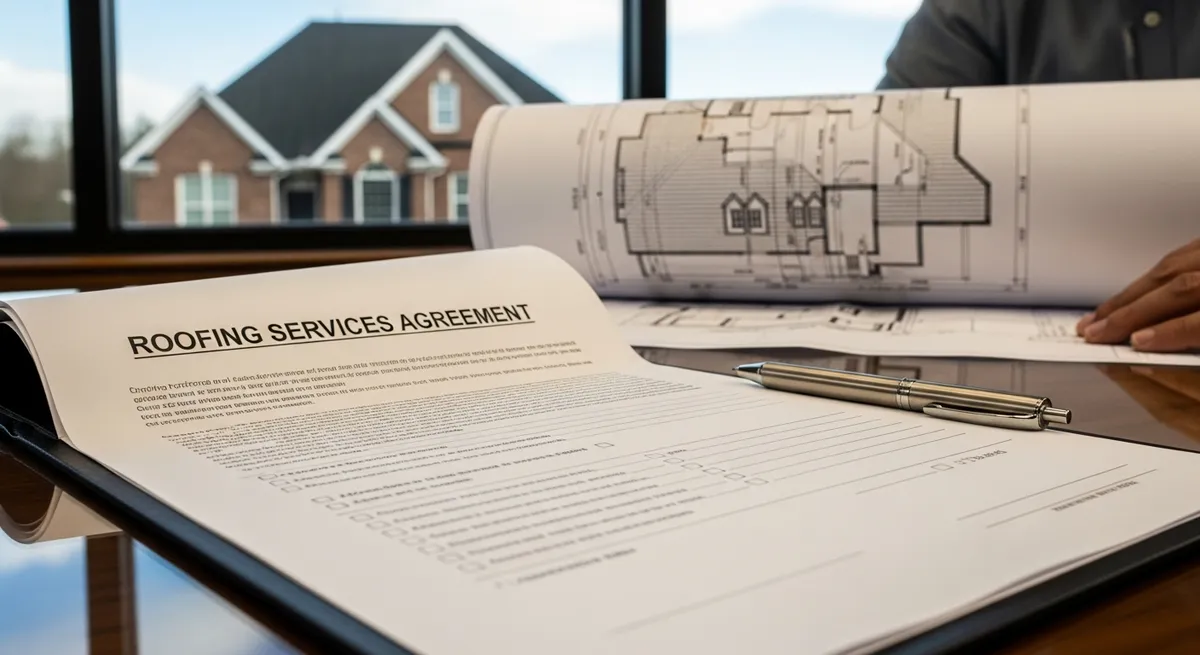
Watch out for contractors who refuse to provide a written contract or who present a contract that is vague on key terms. Every legitimate roofing agreement should specify the scope of work, materials to be used, project timeline, payment schedule, warranty terms, and the process for handling change orders. If the contract is a single paragraph on a half-sheet of paper, it does not provide adequate protection for either party. Similarly, be cautious of contractors who are unwilling to pull permits for work that clearly requires them. Skipping permits is not a shortcut—it is a liability that can follow you for years.
Finally, trust your instincts about communication quality. If a contractor is difficult to reach during the sales process, slow to return calls, or dismissive of your questions, that behavior will not improve once they have your deposit. The contractor selection process is, in many ways, an extended interview. A professional who communicates clearly, responds promptly, and treats your concerns with respect during the estimate phase is far more likely to deliver the same level of service during and after the project.
Questions to Ask Before Signing a Roofing Contract
Armed with the knowledge of what to look for and what to avoid, you are now ready to have a substantive conversation with the roofing contractors Fairfax VA you are evaluating. The questions you ask during this phase are not just informational—they are diagnostic. The way a contractor responds tells you as much about their professionalism as the actual answers they provide. A confident, knowledgeable contractor will welcome detailed questions because they demonstrate that you are an engaged, informed homeowner who values quality.
Start with warranty specifics. Ask exactly what the workmanship warranty covers, how long it lasts, and what the process is for filing a claim. Then ask about the manufacturer’s warranty and whether the contractor’s installation qualifies for enhanced coverage through a certified installer program. Some manufacturer warranties cover only materials, while others—available exclusively through certified contractors—extend to cover labor costs for warranty-related repairs as well. The difference between a standard twenty-five-year material warranty and an enhanced fifty-year system warranty with labor coverage can be substantial, and it is often available at no additional cost simply because the contractor holds the right certification.
Ask about the project timeline in specific terms. When will the crew arrive? How many workers will be on-site each day? How many days will the project take under normal weather conditions? What is the contingency plan for weather delays? A professional fairfax roofing contractor should be able to answer each of these questions without hesitation. Vague answers like “a few days” or “we will start when we can” suggest poor project management or an overcommitted schedule that will leave your roof partially completed and exposed to the elements longer than necessary.
Permits are another essential topic. Ask whether the project requires a building permit from Fairfax County, and confirm that the contractor will handle the permit application and schedule the required inspections. The cost of the permit should be included in the estimate—if it is not listed, ask whether it is built into the labor cost or whether it will be an additional charge. A contractor who tries to talk you out of pulling a permit is a contractor you should not hire, period.
Discuss the change order process before work begins. On many roofing projects, hidden damage is discovered during tear-off—rotted decking, mold on the underside of sheathing, or deteriorated framing members that need reinforcement. These discoveries are legitimate and often unavoidable, but the way they are handled financially should be agreed upon in advance. A reputable contractor will stop work, document the issue with photographs, present you with a written change order specifying the additional scope and cost, and wait for your written approval before proceeding. Any contractor who simply adds charges to the final invoice without prior authorization is operating outside professional norms and potentially outside the law.
Ask about the crew itself. Will the contractor’s own employees perform the work, or will they use subcontractors? If subcontractors are involved, are they licensed and insured independently? Who will be the on-site supervisor, and how can you reach them during the project if questions arise? Understanding the chain of command helps you communicate effectively during the project and ensures that your concerns reach someone with the authority to act on them. The best roofing contractors Fairfax homeowners recommend typically have dedicated project managers who serve as a single point of contact from start to finish.
Finally, ask about cleanup expectations. Will the crew tarp landscaping and cover outdoor furniture before starting? Will they use dump trailers or dumpsters, and where will those be placed? How many magnetic nail sweeps will they perform, and will they sweep neighboring properties as well if the work zone is close to a property line? These details may seem minor compared to the roofing work itself, but they have a real impact on your day-to-day experience during the project and on your relationship with your neighbors afterward.
The Importance of Local Experience in Fairfax
Fairfax County is not a generic market, and the contractors who perform best here are the ones who understand the specific conditions, regulations, and community dynamics that make this area unique. When you hire a roof contractor near me Fairfax with deep local roots, you are getting more than roofing skills—you are getting institutional knowledge that translates directly into a smoother, more successful project.
Consider the permitting landscape. Fairfax County’s Department of Land Development Services handles building permits, and the process has specific requirements for documentation, inspections, and compliance with the Virginia Uniform Statewide Building Code. A contractor who regularly works in Fairfax knows exactly which forms to file, how long the approval process takes, and which inspectors cover which districts. This familiarity reduces delays and prevents the costly mistakes that contractors unfamiliar with the local process sometimes make—such as scheduling work before the permit is approved or failing to request the correct type of inspection.
HOA compliance is another area where local experience pays dividends. Fairfax County is home to hundreds of homeowner associations, each with its own architectural review committee and guidelines governing everything from shingle color and material type to the acceptable placement of dumpsters and staging materials during construction. A fairfax roofing contractor who has navigated dozens of HOA approval processes knows how to prepare the architectural review application, which documentation to include, and how to avoid the delays and fines that result from non-compliance. If your community requires pre-approval before any exterior modification, your contractor should handle the submission and follow up until approval is granted.
Fairfax’s tree canopy presents unique challenges that contractors from other regions may not anticipate. Many neighborhoods, particularly in areas like Burke, Mantua, and the older sections of the City of Fairfax, feature mature hardwood trees with branches that overhang rooflines. These trees create shade patterns that promote moss and algae growth, deposit organic debris in valleys and gutters, and occasionally drop limbs that damage roofing components during storms. A contractor with local experience understands how tree proximity affects material selection—recommending algae-resistant shingles, for example, or installing zinc strips along ridge lines to inhibit moss growth. They also know to coordinate with tree service companies when branch clearance is needed before roofing work can safely begin. For more detail on common Fairfax roof problems, see our Fairfax VA roof repair guide.
Local contractors also understand the regional supply chain. Northern Virginia is served by several major roofing supply distributors, and a contractor with established relationships at these suppliers can often secure materials faster and at better pricing than a contractor ordering from a distant warehouse. During periods of high demand—such as the weeks following a major hailstorm when every contractor in the county is scrambling for materials—those supplier relationships can mean the difference between starting your project on schedule and waiting an additional three to four weeks for a materials delivery.
Perhaps most importantly, a local contractor has a reputation to protect within the community. A company based in Northern Virginia that plans to be here next year, and the year after that, and the year after that, has a powerful incentive to deliver excellent work and stand behind their warranties. A storm chaser from three states away has no such incentive—once they leave the market, your warranty is effectively worthless regardless of what the paperwork says. When you hire locally, you are hiring accountability.
What Happens After You Hire a Contractor
Understanding the post-contract process helps set realistic expectations and allows you to be a more effective partner in your own roofing project. Once you have signed the contract and paid the initial deposit, a well-organized fairfax roofing contractor will initiate a defined sequence of steps that moves the project from paperwork to completion. Knowing what those steps are—and roughly how long each takes—eliminates the anxiety that comes from feeling like you are in the dark about what is happening with your home.
The first post-contract step is typically the permit application, if one is required. In Fairfax County, permit processing times vary depending on the season and the backlog at the Department of Land Development Services, but most residential roofing permits are processed within five to ten business days. During this period, the contractor should be ordering materials and coordinating delivery dates so that everything arrives on-site within a day or two of the planned start date. Professional crews do not leave pallets of shingles sitting in your driveway for two weeks before work begins—they time deliveries to minimize disruption and reduce the risk of material damage from weather exposure.
On the first day of work, the crew will typically arrive early—often between seven and eight in the morning. They will set up safety equipment, place tarps over landscaping and walkways, position the dumpster or dump trailer, and begin the tear-off process if the project involves removing the existing roof. Tear-off is the noisiest and most disruptive phase of any roofing project. Debris will be dropped from the roof into the dumpster, and the sound can be heard throughout the house and by nearby neighbors. If you work from home, plan to use noise-canceling headphones or schedule meetings for later in the day. If you have pets that are sensitive to noise, consider arranging for them to spend the day elsewhere.
Once the tear-off is complete and the deck is exposed, the crew will inspect every inch of the sheathing for rot, delamination, water staining, or mold. This is the point where hidden damage reveals itself, and it is also the point where the change order process described earlier may come into play. If the decking is sound, the crew proceeds to installing the underlayment system, ice-and-water shield in critical areas, and drip edge along the eaves and rakes. These components are the invisible foundation of a quality roof installation—they will never be seen once the shingles are in place, but they are what keeps water out of your home for the next twenty to thirty years.
Shingle installation follows the underlayment work, typically starting from the eaves and working upward toward the ridge. A professional crew installing architectural shingles on a standard two-story colonial in Fairfax can usually complete the shingle work in one to two days, weather permitting. The crew should be using the correct number of fasteners per shingle as specified by the manufacturer—typically four to six nails depending on the product and the roof slope—and placing each fastener in the designated nailing zone. Improper nailing is one of the most common installation defects in the roofing industry, and it is also one of the primary reasons manufacturer warranties are denied. You will not be able to inspect every nail, but you can ask your contractor about their nailing practices and quality control procedures.
After the shingles are installed, the crew will complete the detail work—installing ridge cap shingles, sealing exposed fastener heads, caulking pipe boot collars, and making final adjustments to flashing at walls and chimneys. This finish work is where craftsmanship shows, and it is worth taking the time to walk the property with the project manager during a final inspection before making the last payment. Look at the roof from multiple angles, check the gutter alignment, inspect the flashing details at visible locations, and confirm that the cleanup meets your expectations. A reputable contractor will welcome this inspection and address any concerns on the spot.
The cleanup process should be thorough. All debris should be removed from the roof, gutters, yard, driveway, and surrounding areas. The magnetic nail sweep should cover not just your property but also the adjacent sidewalks and any neighboring areas within the potential debris field. The dumpster should be removed within twenty-four hours of project completion. When the crew drives away, your property should look better than it did before they arrived—not just because of the new roof, but because the worksite has been returned to its original condition.
Ready to Find Your Fairfax Roofing Contractor?
Finding the right roofing contractors Fairfax VA homeowners can trust does not have to be an overwhelming process. By verifying licensing through the Virginia DPOR, confirming both general liability and workers’ compensation insurance, reading reviews critically, requesting detailed estimates, and asking the right questions before signing a contract, you put yourself in a position of strength. You will know exactly what you are paying for, who is doing the work, and what recourse you have if anything does not go as planned.
The Fairfax housing market rewards homeowners who invest in quality roofing work performed by qualified professionals. A properly installed roof protects your home’s structure, maintains its energy efficiency, preserves its curb appeal, and supports its market value. Cutting corners on the contractor selection process undermines every one of those benefits and creates risks that far outweigh any short-term savings.
Sterling Roofers has been serving homeowners across Northern Virginia—including Fairfax, Sterling, Reston, Herndon, McLean, Vienna, and surrounding communities—for over fifteen years. We hold a Virginia Class A contractor license, carry full general liability and workers’ compensation insurance, and stand behind every project with a comprehensive workmanship warranty. Our team understands Fairfax County’s permitting requirements, HOA processes, and the specific roofing challenges that come with this region’s climate and housing stock. We also offer a full range of roofing services from minor repairs to complete replacements.
If you are ready to discuss your roof with a contractor who will give you honest answers, a detailed estimate, and the respect your investment deserves, call Sterling Roofers at (703) 436-4445 or visit us at 8466 Tyco Road, Suite B, Vienna, VA 22182. We look forward to helping you protect your home.
Get a Free Fairfax Roof Inspection
Sterling Roofers provides thorough inspections and honest assessments for homeowners across Fairfax County. Call us at (703) 436-4445 or schedule online.
Schedule Free Inspection