Roofing Contractors Centreville VA: How to Hire With Confidence
Roofing Contractors Centreville VA: How to Hire With Confidence
Key Takeaways
- Centreville straddles Fairfax and Prince William counties — confirm which jurisdiction’s permit requirements apply to your address
- Virginia DPOR Class A or B license is required for any roofing contractor operating in Centreville — verify before signing
- Centreville neighborhoods from the 1980s and 1990s are now at or past their original roof’s expected lifespan
- Flashing at chimneys, skylights, and dormers should be replaced — not reused — during any full roof replacement
- Get a written scope that specifies underlayment type, shingle brand, and labor warranty duration before work begins
Finding trustworthy roofing contractors Centreville VA homeowners can rely on is one of those tasks that seems simple until you actually start the process. You search online, get a dozen results, read reviews that range from glowing to alarming, and end up more confused than when you started. The reality is that hiring a roofing contractor is one of the most important decisions you will make as a homeowner, and the quality of that decision directly affects the safety of your family, the longevity of your home’s most critical protective system, and thousands of dollars in either savings or unnecessary expense. Sterling Roofers serves Northern Virginia and nearby Maryland communities across the DMV, and through years of experience working in Centreville, Chantilly, and the surrounding Fairfax County communities, we have developed a clear understanding of what homeowners need to know to hire with confidence.
Centreville is a community defined by its residential character. The neighborhoods here range from established subdivisions built in the 1980s and early 1990s to more recent developments that went up in the 2000s and 2010s. That variety in housing age translates directly to a variety of roofing conditions—some homes are on their original roofs approaching or exceeding 30 years of service, while others have roofs that were installed relatively recently but may still need attention due to storm damage, ventilation problems, or builder-grade materials that were never designed for maximum longevity. Whatever your situation, the process of finding the right contractor follows the same fundamental principles, and this guide walks you through every one of them.
This article focuses specifically on the contractor selection process, with particular attention to handling roof repair wind damage, which is one of the most common reasons Centreville homeowners call a roofer in the first place. Northern Virginia’s storm season delivers wind events that test every roof in the region, and knowing how to respond to wind damage—and how to choose a contractor who handles it properly—can save you thousands of dollars and months of frustration. Whether you need a minor repair, a post-storm assessment, or a full replacement, the information here will help you make a smart, well-informed decision.
Centreville and Chantilly Roofing Needs
Centreville and neighboring Chantilly share many of the same roofing challenges due to their similar geography, climate exposure, and housing stock. Both communities sit in the heart of Fairfax County’s western corridor, where the terrain is relatively flat to gently rolling, offering little natural windbreak for residential roofs during severe weather events. The combination of summer thunderstorms, occasional nor’easters, and the general wear of hot, humid summers followed by freeze-thaw winters creates an environment where roofing materials are tested year-round.
The most prevalent roofing material in both Centreville and Chantilly is asphalt shingles, installed on steep-slope residential roofs in configurations ranging from basic three-tab designs on older homes to architectural or dimensional shingles on newer construction and re-roofed properties. Asphalt shingles perform well in this climate when properly installed and maintained, but they are not immune to the cumulative effects of UV exposure, thermal cycling, and wind stress. Homes in older Centreville subdivisions like Virginia Run, Sully Station, and Centre Ridge are reaching the point where original roofs need attention, whether that means targeted repairs or complete replacement depending on the condition of the individual roof.
Wind exposure is a defining concern for both communities. Centreville and Chantilly are positioned in the flight path corridor west of Dulles International Airport, an area where open terrain and broad suburban layouts provide little resistance to wind gusts during storm events. Summer thunderstorms routinely produce gusts of 50 to 70 miles per hour, and these gusts are particularly punishing on shingles that have weakened with age, were installed with insufficient nailing, or sit on exposed slopes without the shelter of mature trees or adjacent structures. Understanding wind damage and knowing how to address it properly is essential knowledge for every homeowner in this area, and it is one of the primary reasons people seek out qualified roofing contractors Centreville VA professionals after a storm passes through.
Both communities also have active homeowner associations that regulate roofing materials, colors, and sometimes even the specific brands that can be used on homes within their jurisdiction. Before starting any roofing project, it is important to check with your HOA’s architectural review committee to confirm that your planned materials and colors comply with community guidelines. A knowledgeable local contractor will ask about your HOA requirements during the initial consultation and help you select products that satisfy both your performance needs and your community’s aesthetic standards. This proactive approach prevents the costly and frustrating scenario of completing a roof only to be told by the HOA that the materials or colors do not meet their requirements.
The roofing contractors Chantilly VA homeowners and Centreville residents hire should understand these local dynamics intimately. A contractor who has worked extensively in the area knows which neighborhoods tend to have specific roofing issues, understands the HOA review processes for the major communities, and has experience navigating the Fairfax County permit and inspection requirements that apply to roofing projects. This local knowledge translates directly to a smoother, faster, and more predictable project experience for the homeowner.
What a Good Contractor Does Differently
The roofing industry, like any trade, has a wide spectrum of quality. On one end are contractors who take pride in every aspect of their work, from the initial consultation through final cleanup. On the other end are operators who cut corners, use substandard materials, skip permits, and disappear when warranty issues arise. The difference between these two extremes is not always obvious from the outside, especially when every contractor’s website claims to offer top-quality work and unbeatable service. Knowing what a genuinely good contractor does differently helps you identify the real thing and avoid the imitators.
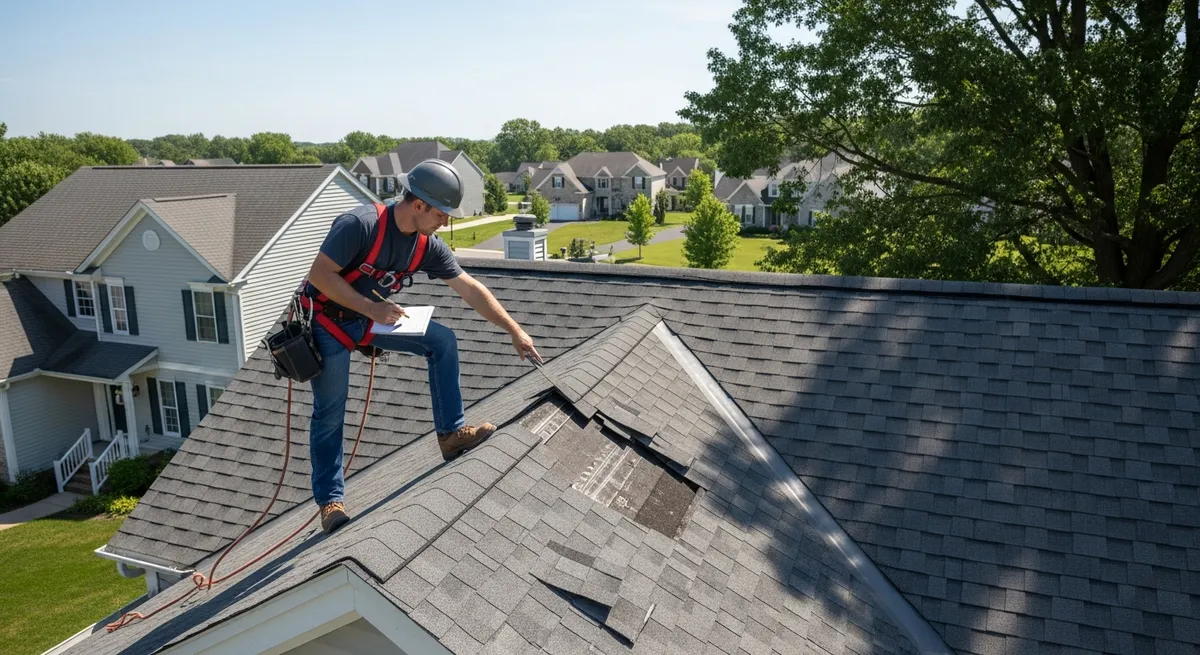
A good contractor starts with a thorough inspection. They do not quote a price over the phone based on your description of the problem or a satellite measurement of your roof. They schedule an on-site visit, walk your property, and ideally access the roof surface to evaluate its condition firsthand. They take photographs of any damage or areas of concern and share those photos with you as part of a detailed assessment. This inspection typically takes 30 to 60 minutes for a residential home, and the findings inform a specific, itemized proposal that reflects the actual condition of your roof rather than a generic template adjusted for square footage.
Transparency in pricing is another hallmark of a quality contractor. The estimate you receive should break down materials by product, type, and quantity. Labor should be listed separately. Tear-off and disposal, if applicable, should have their own line items. Permit fees should be visible. Warranty terms—both manufacturer and workmanship—should be clearly stated in the proposal document, not verbally promised and forgotten. A change-order policy should explain what happens if additional work is needed during the project, including the requirement for your written approval before any extra charges are incurred. When every element of the project is documented and priced transparently, you can make an informed decision and hold the contractor accountable to a clear set of commitments.
Communication quality separates the professionals from the amateurs. A good contractor responds to your initial inquiry within 24 hours, arrives on time for the estimate appointment, explains their findings in plain language, and answers your questions without impatience or condescension. During the project, they provide daily updates on progress, flag any issues immediately, and ensure you are always informed about what is happening on your roof and why. After the project, they deliver all documentation—warranty certificates, permit records, inspection reports—and provide clear instructions for how to reach them if you need warranty service in the future. This level of communication requires organizational discipline and genuine respect for the homeowner, and it is one of the most reliable indicators of overall contractor quality.
Workmanship standards are where the rubber meets the road. A good contractor uses proper nailing patterns in the manufacturer-specified zone, installs synthetic underlayment across the full roof deck rather than just the code-minimum areas, uses step flashing at wall transitions instead of continuous bent metal, installs kick-out flashing at the bottom of wall-to-roof junctions, and ensures that ventilation is balanced and unobstructed before the new roofing goes on. These details are invisible once the project is complete, but they are the details that determine whether your roof lasts 15 years or 30 years. A contractor who cuts corners on hidden details is a contractor who prioritizes speed and margin over your long-term protection.
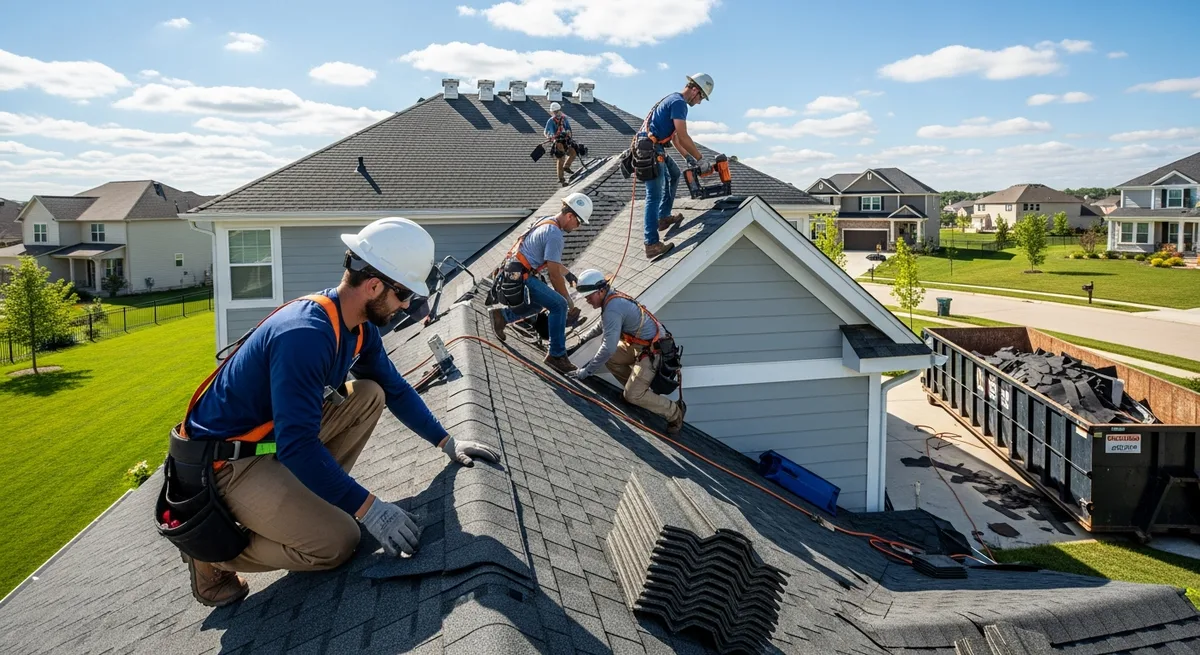
Cleanup is the final test of professionalism. A quality crew removes every piece of debris from the roof, gutters, yard, and driveway. They run magnetic nail sweepers across all surfaces where fasteners may have fallen. They remove protective tarps, clear staging areas, and haul away the dumpster. The condition of your property after the project is a direct reflection of the crew’s attitude toward their work and your home. If the crew cares enough to sweep the flower beds and clean the downspouts, they almost certainly cared enough to nail every shingle correctly and seal every flashing joint properly. A contractor who leaves your property littered with debris and nails is telling you everything you need to know about the quality of the work you cannot see.
Handling Wind Damage the Right Way
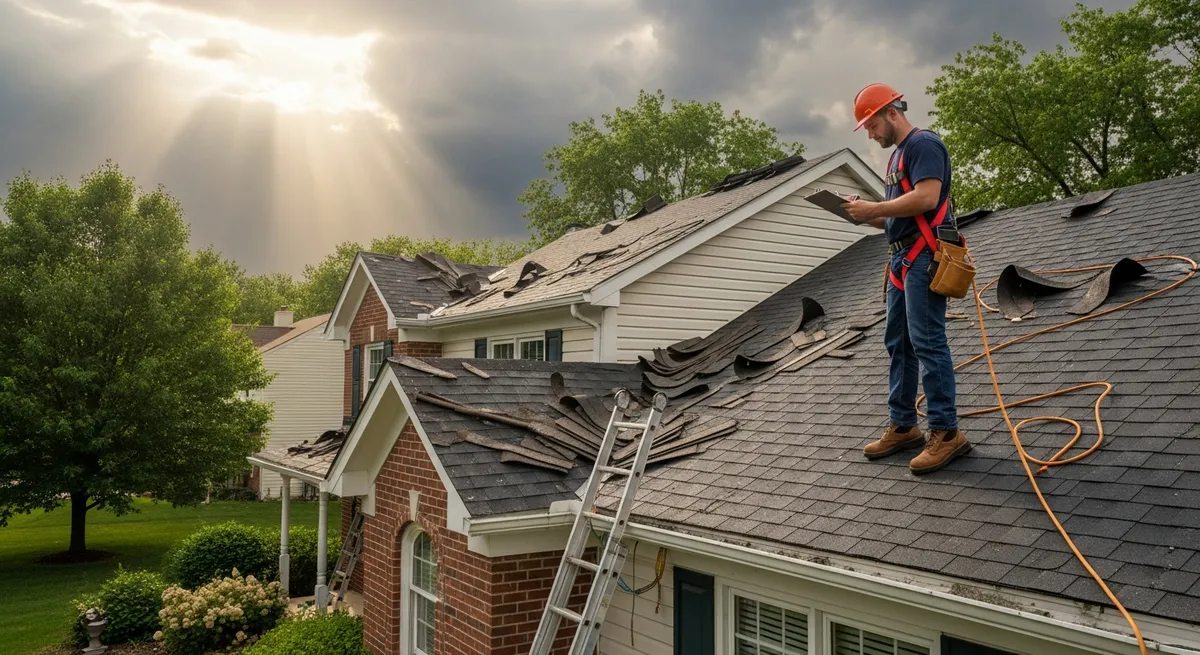
Roof repair wind damage is one of the most common roofing issues in the Centreville and Chantilly areas, and handling it correctly requires a specific sequence of steps that protects both your home and your insurance coverage. Understanding this process in advance ensures that you respond effectively when a storm hits and that you avoid the mistakes that cost homeowners time, money, and unnecessary stress.
The immediate priority after a wind event is safety. Do not climb onto your roof to assess damage—leave that to a professional with the equipment and training to do it safely. From the ground, look for obvious signs of damage: missing shingles or shingle fragments in the yard, exposed underlayment or roof deck visible from the ground, damaged or displaced ridge caps, bent or detached flashing, and debris accumulation on the roof surface. Take photographs of everything you can see from ground level, including close-up shots of any damaged materials that have fallen from the roof. These initial photographs become part of your insurance documentation and should be time-stamped for reference.
Contact your homeowner’s insurance company promptly to report the damage. Most policies require timely notification of damage, and delaying the report can jeopardize your coverage. When you call, provide a general description of the damage you have observed and ask the insurance company to send an adjuster. Do not commit to any repairs or sign any contracts before speaking with your insurer, unless the damage is severe enough to require emergency tarping to prevent active water intrusion. Emergency protective measures are typically covered by your policy, and the cost can be included in your claim.
Schedule a professional roof inspection with a licensed contractor as soon as possible after the storm. The contractor’s inspection serves a different purpose than the insurance adjuster’s visit—the contractor is evaluating the full scope of damage from a technical perspective, identifying not just the visible damage but also the less obvious issues that may not be apparent from a quick visual survey. Wind can damage shingles in ways that are difficult to see from the ground—creased tabs that have lost their adhesive bond, hairline cracks along fold lines, and loosened nails that allow the shingle to flex with subsequent gusts. A thorough contractor will document all of these conditions with photographs and measurements and provide a detailed report that your insurance adjuster can use to accurately scope the claim.
When the insurance adjuster visits, having your contractor present is highly beneficial. The contractor can walk the roof with the adjuster, point out damage that might otherwise be missed, and provide technical context that helps the adjuster understand the full scope of necessary repairs. This is not about inflating the claim—it is about ensuring that the claim accurately reflects the actual damage and the actual cost of proper repair. Adjusters are professionals, but they evaluate hundreds of claims and may not catch every detail on a single visit. Your contractor’s expertise fills that gap and helps ensure that you receive the coverage you are entitled to under your policy.
The repair itself should address not just the damaged shingles but also any underlying conditions that the wind event exposed or worsened. If the wind lifted shingles across a section of the roof, the contractor should inspect the underlayment beneath those shingles for tears or damage before installing replacements. If flashing was displaced or bent by the wind, it should be properly reset or replaced rather than simply caulked back into position. And if the wind event revealed that the original installation had nailing deficiencies or other problems, those issues should be discussed honestly so you can make an informed decision about the scope of the repair. Visit our storm and hail damage guide for a comprehensive look at the entire damage assessment and repair process.
Be cautious of storm-chasing contractors who appear in your neighborhood within hours of a major wind event. While some of these companies are legitimate, many are out-of-state outfits that follow severe weather patterns across the country, collecting insurance-funded contracts and moving on before warranty obligations come due. They may pressure you to sign an assignment of benefits or a contract before you have filed a claim, spoken with your adjuster, or obtained a second opinion. The safest approach is to work with a locally established contractor who has a verifiable track record in the Centreville area, proper Virginia licensing, and the kind of deep local presence that ensures they will be available for warranty service and follow-up for years to come. Our insurance claims page explains how we help homeowners navigate the entire process from initial damage report through final repair completion.
Questions to Ask Before Signing
The questions you ask a roofing contractor before signing a contract reveal far more about their quality and integrity than any advertisement or online review ever could. A confident, competent contractor will answer every question without hesitation, because they have nothing to hide and everything to gain from an informed homeowner. A contractor who dodges questions, gives vague answers, or becomes defensive when pressed is waving a red flag that you should take seriously.
Start with licensing and insurance. Review our roofing insurance resource for details on what coverage to expect. Ask for the contractor’s Virginia DPOR license number and verify it online before proceeding. Ask to see certificates of insurance for both general liability and workers’ compensation, and confirm that the policies are active by contacting the issuing company directly. These are not rude or intrusive questions—they are standard due diligence that every responsible homeowner should perform, and every legitimate roofing contractors Centreville VA professional will be prepared to provide the documentation without hesitation.
Ask about the specific crew that will work on your project. Will the contractor use their own employees or subcontract the work to a separate crew? If subcontractors are involved, are they covered by the same insurance policies? Who will be the on-site supervisor, and how can you reach them during the project? Understanding the labor structure helps you evaluate the contractor’s control over quality and their accountability for the finished product. A contractor who uses their own trained, supervised crews provides a level of consistency and quality control that is harder to guarantee when work is subcontracted to the lowest available bidder.
Ask about materials in detail. What specific shingle product do they recommend, and why? What type of underlayment will be installed, and will it cover the full deck or just the code-minimum areas? What type of flashing will be used at chimneys, walls, valleys, and pipe penetrations? What ventilation configuration will be installed, and how will they ensure that soffit intake vents are clear and functional? These questions demonstrate that you are an informed consumer and allow you to evaluate whether the contractor is proposing a quality installation or a bare-minimum job. Our materials page provides an overview of the products and systems we use and why we chose them.
Ask about the permit and inspection process. Will the contractor pull the required Fairfax County building permit? Will they schedule the required inspections? Have they worked with Fairfax County inspectors before, and do they understand the specific code requirements that local inspectors enforce? A contractor who tries to talk you out of a permit or suggests that one is not necessary for a replacement project is either unfamiliar with local requirements or deliberately trying to avoid oversight—neither of which is acceptable.
Ask about warranties in specific terms. What is the duration of the workmanship warranty? Is it transferable? Are there any conditions required to maintain its validity, such as annual inspections? What is the process for filing a warranty claim? Does the contractor hold manufacturer certification that qualifies the project for enhanced warranty coverage? A contractor who cannot answer these questions clearly is a contractor you should not hire, because warranty terms are the foundation of your long-term protection and you deserve to understand them fully before committing to a contract.
Ask about the change-order process. What happens if the crew discovers rotted decking, hidden mold, or additional damage once the old roofing is removed? How are additional costs calculated, and do they require your written approval before proceeding? This question alone has saved homeowners thousands of dollars in surprise charges, and any contractor who does not have a clear, written change-order policy is a contractor who is comfortable making decisions about your money without your input.
Ask about the timeline and daily logistics. When will the crew arrive each day? Where will they stage materials and equipment? How will they protect your driveway, landscaping, and exterior features? What does the property look like at the end of each workday? What is the plan for weather delays? These practical questions set expectations for the project experience and help you plan your own schedule accordingly. A contractor who has clear, specific answers to these questions has managed many projects successfully and knows how to communicate proactively with homeowners throughout the process.
Finally, ask for references from recent projects in the Centreville and Chantilly area. Contact those references and ask about their experience from start to finish. Was the contractor professional, communicative, and accountable? Did the project stay on schedule and on budget? Was the cleanup thorough? Would they hire the same contractor again? These firsthand accounts from local homeowners provide the most reliable insight into what your own experience is likely to look like. When you ask these questions, listen not just to the answers themselves but to how the contractor delivers them. Confidence, clarity, and patience are the hallmarks of a contractor who knows their craft and respects their customers. Evasiveness, vagueness, and impatience are signals to keep looking.
Hiring roofing contractors Centreville VA homeowners can trust does not require luck or guesswork. It requires preparation, the right questions, and the willingness to evaluate each contractor on the substance of their credentials, communication, and workmanship rather than the polish of their marketing. When you find a contractor who answers every question with clarity and confidence, who provides a detailed and transparent estimate, who holds proper licensing and insurance, and who treats your home with the respect it deserves, you have found a partner worth investing in—not just for this project, but for the long-term care of your roof and your home. Explore our services page to see the full range of work we do across Northern Virginia, or visit our service areas to confirm we serve your neighborhood. Check our contract checklist guide for a complete breakdown of what every roofing agreement should include to protect your interests as a homeowner.
Request a Centreville-Area Roof Inspection
Request a Centreville-area inspection with Sterling Roofers and get a written plan for wind-related damage. Call us today at (703) 436-4445 or book your free consultation online.
Schedule Free Consultation