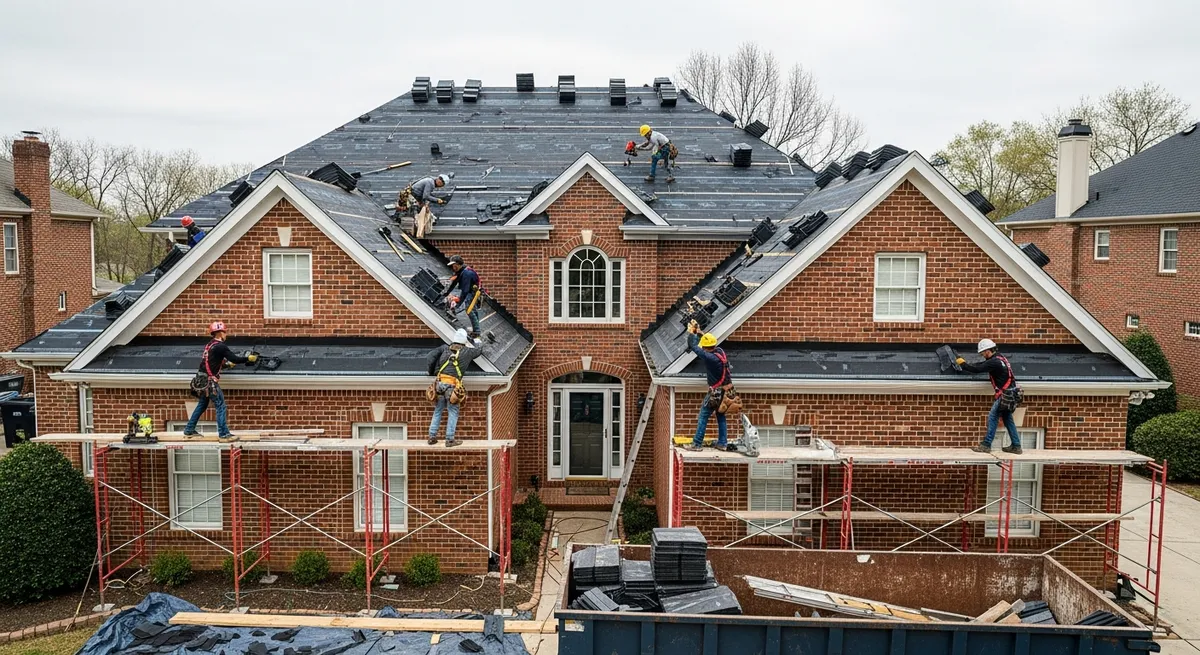
Roofing Company Bowie: What Homeowners Should Ask Before Hiring
Roofing Company Bowie: What Homeowners Should Ask Before Hiring
Key Takeaways
- All Maryland roofing contractors must hold an MHIC license — verify at mhic.maryland.gov before signing anything
- Roof replacement in Bowie and Gaithersburg runs $10,000–$22,000 for asphalt shingles in 2026
- Both Prince George’s County and Montgomery County require building permits — your contractor should pull them
- A written itemized bid with specific shingle brand, material specs, and warranty terms is non-negotiable
- A roofing inspection that skips the attic is incomplete — ventilation problems cause premature failure from the inside out
Bowie is one of the largest cities in Maryland, and its neighborhoods reflect decades of residential development, from 1960s ranch homes in the original community to newer construction in areas like Springdale and Highbridge. Gaithersburg, 40 miles to the northwest in Montgomery County, has its own mix of planned communities like Kentlands and Lakelands alongside older established neighborhoods. What these two markets share is a homeowner base that frequently encounters the same problem: too many roofing contractors to choose from, not enough easy ways to tell the qualified ones from the ones who aren’t.
This guide gives you the questions to ask, the things to look for in an inspection, what fair pricing looks like for Bowie and Gaithersburg, and the specific red flags that consistently precede bad contractor experiences in the Maryland DC metro market. Whether you need a repair after a storm or are planning a full replacement on a 20-year-old roof, this information helps you make the decision from a position of knowledge rather than guesswork.
What Makes a Good Roofing Company in Bowie MD
A quality roofing company bowie md operates with the same fundamentals regardless of the job size: proper licensing, verifiable insurance, transparent communication, written documentation at every stage, and workmanship that stands behind the warranty they issue. The difference between a good contractor and a bad one is rarely visible in the proposal stage — it shows up in what gets skipped during installation and what happens when something goes wrong after the crew leaves.
In Maryland, the licensing requirement is clear. Every contractor performing home improvement work exceeding $500 must hold a valid Maryland Home Improvement Commission (MHIC) license. This is a statewide requirement that applies equally in Prince George’s County and Montgomery County. The MHIC license number can be verified online at mhic.maryland.gov — if a contractor gives you a number that doesn’t match their company name in the database, that tells you something important.
Beyond licensing, the indicators of a quality roofing company bowie homeowners can trust are:
- A physical local presence with verifiable address. Not a P.O. box or a phone number routed through an answering service. A contractor who has been in Bowie or the surrounding Prince George’s County area for multiple years has a visible track record and a reputation to protect.
- General liability and workers compensation insurance. Request a certificate of insurance and call the carrier to confirm coverage is active. Without workers comp, an injury on your property becomes your financial liability. Without general liability, damage to your home or a neighbor’s property leaves you in a dispute with no coverage to draw on.
- Written estimates with full scope and material specs. A bid that says “tear off and replace, labor and materials included” without listing the specific shingle product, underlayment type, or warranty class is not a bid — it is a placeholder. Get specifics in writing.
- Local references from recent work. Ask for references from Bowie, Glenn Dale, Upper Marlboro, or adjacent communities. Call two or three of them. A contractor with genuine local roots has current, verifiable references without hesitation.
Questions to Ask Before Signing with Any Roofing Company
These questions should be part of every homeowner’s conversation with any contractor bidding on their Bowie or Gaithersburg roofing project. The answers tell you more about the quality of the contractor than any website, ad, or printed brochure:
- “What is your MHIC license number, and can I look it up right now?” A legitimate contractor will hand you their number without hesitation. An evasive or vague response to this question should end the conversation.
- “Who specifically installs my roof — your employees or a subcontracted crew?” Some larger contractors sell work and subcontract to crews they may have limited control over. This is not always a problem, but you should know who is on your property and whether they are vetted by the contractor you hired.
- “What shingle product are you proposing, and why?” The answer should name a specific product — GAF Timberline HDZ, Owens Corning Duration, CertainTeed Landmark Pro — with the contractor explaining why it is appropriate for your home’s specific exposure and wind rating requirements. Generic answers like “we use quality shingles” are not acceptable.
- “What does your workmanship warranty cover?” This is the warranty the contractor issues themselves, separate from the manufacturer’s material warranty. Ask for the specific term, what it covers, and whether it is transferable if you sell your home. A minimum five-year workmanship warranty is the baseline in the Bowie and Gaithersburg market.
- “Will you pull the permit, and is that cost included?” Prince George’s County and Montgomery County both require building permits for full roof replacements. The contractor should pull the permit as part of the project. If they suggest you pull it, that is a red flag — it shifts liability to you and sometimes signals they plan to work without inspection.
- “How do you handle unexpected decking damage during tear-off?” The answer should describe a clear change-order process: they identify the problem, show it to you, provide a per-sheet price, and get your approval before replacing anything. Contractors who proceed without authorization and present the bill afterward are problematic.
What a Proper Roof Inspection Covers in Bowie and Gaithersburg
A proper inspection from a roofing company in gaithersburg or Bowie takes 45 minutes to an hour and physically accesses the roof rather than eyeballing it from the driveway. It covers:
- Shingle condition across all exposures — granule loss (often visible as dark patches or granules accumulating in gutters), cracking, cupping, curling, and exposed fiberglass mat are all signs of age or manufacturing defects that warrant either targeted repair or full replacement depending on extent
- All flashing points — chimney step flashing and counter flashing, pipe boot collars, skylight frame seals, and all wall-to-roof intersections are the most common origins of residential leaks; the inspector must physically check each one, not just note their location
- Ridge and hip caps — ridge caps are exposed to direct UV, high wind, and temperature extremes; cracked, brittle, or lifted ridge caps allow water infiltration that can travel down the roof deck before appearing as a ceiling stain well away from the ridge
- Valley condition — open valleys with exposed metal flashing are checked for rust, separation, or debris dams; closed-cut and woven valleys are inspected for evidence of wear at the shingle edges where foot traffic and water volume are highest
- Attic inspection — the underside of the decking reveals water staining, mold, delamination, and soft spots that indicate active moisture infiltration; it also allows ventilation assessment, which is critical in Prince George’s County and Montgomery County homes where inadequate soffit venting is common
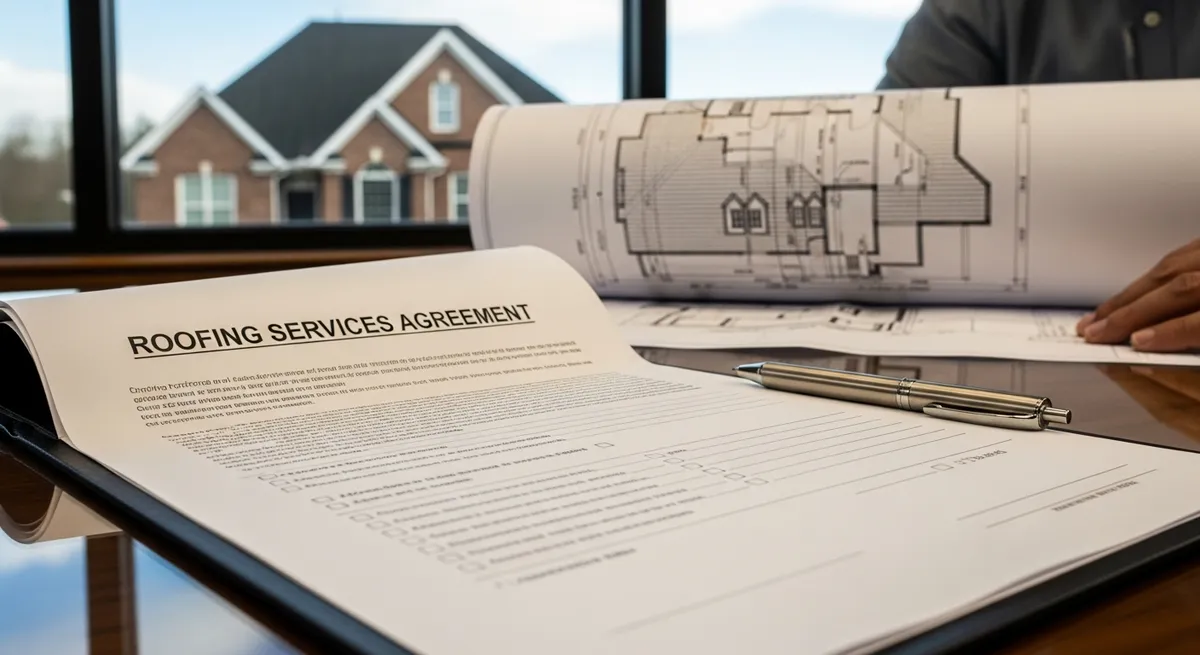
After the inspection, ask for a written summary with photographs. Any contractor who provides a verbal-only assessment is asking you to make a significant financial decision without documentation. Our roofing contract checklist outlines exactly what written documentation should accompany every roofing project.
Roofing Cost in Bowie and Gaithersburg MD: 2026 Ranges
Roofing costs in the Bowie and Gaithersburg markets run 15–20% above national averages, consistent with the broader DC metro and Maryland licensing market. Here are 2026 ranges for both markets:
| Service / Material | Low End | High End | Notes |
|---|---|---|---|
| Asphalt shingle replacement (avg. home) | $10,000 | $22,000 | 1,800–2,500 sq ft, labor + materials + tear-off |
| Architectural/dimensional shingles (upgrade) | $12,000 | $25,000 | Adds 5–10 years vs. 3-tab; best choice for most Bowie and Gaithersburg homes |
| Metal roof — standing seam | $20,000 | $40,000+ | 40–60 year lifespan; growing demand in Gaithersburg planned communities |
| Decking replacement (per sheet during tear-off) | $70 | $120 | Confirm billing method before signing — per-sheet vs. not-to-exceed |
| Minor repair (single leak, flashing, pipe boot) | $300 | $1,200 | Isolated repairs; includes materials and travel |
| Building permit (PG or Montgomery County) | $100 | $350 | Required for full replacements; contractor should include in scope |
Prices shown are typical ranges for Bowie and Gaithersburg MD as of 2026 and vary based on home size, roof pitch, material selection, and decking condition. Contact us for a free on-site estimate.
Red Flags to Watch for When Hiring in Bowie or Gaithersburg
These patterns consistently precede poor outcomes for homeowners in the Prince George’s County and Montgomery County markets:
- Storm chasers knocking after weather events. Established local roofing companies do not need to solicit door-to-door. Any crew that appears uninvited after a hailstorm or wind event with an “urgent” inspection offer should be asked for their MHIC number immediately. If they can’t provide it, the answer is no.
- Pressure to sign same-day. A time-limited offer from a roofing contractor is a sales tactic, not a genuine constraint. Materials don’t expire. Pricing doesn’t change overnight. Any contractor who pressures you to sign before you can compare bids or check references is not the contractor you want on your roof.
- A price dramatically below the other bids. If one bid is 30–40% below the others on an identical scope of work, that scope is not identical. Something is being omitted — typically ice and water shield, synthetic underlayment, drip edge, or proper flashing detail. You will find out what was skipped when the first leak appears.
- No discussion of ventilation during the estimate. A contractor who quotes a full replacement without asking about your attic ventilation and assessing whether it is adequate is not performing a complete scope evaluation. Inadequate ventilation installed under new shingles voids some manufacturer warranties and shortens the shingle’s effective life by years.
- Payment requests before permit is pulled. No legitimate contractor in Prince George’s County or Montgomery County will ask for significant payment before the permit is in hand. The permit is the county’s authorization to proceed. If they’re asking for money before that step, ask why.
Roofing Company Gaithersburg: Neighborhood-Specific Considerations
Gaithersburg presents some specific considerations that differ from other Maryland markets. The Kentlands and Lakelands communities are HOA-governed and have design standards that include restrictions on roofing materials and colors. A roofing company gaithersburg homeowners can rely on will know these community standards and verify compliance before ordering materials. Getting the wrong color or a non-approved material means re-ordering at your expense — or worse, at the contractor’s expense if they ordered without checking.
Many Gaithersburg homes in the Kentlands area were built in the 1990s and are approaching or past the 30-year mark on their original roofing systems. These homes often have complex rooflines with multiple dormers, varying pitches, and intersecting valleys that increase installation complexity and cost. When getting estimates for a Gaithersburg home with complex geometry, make sure the contractor walks every section of the roof — not just the primary visible slope — before pricing the job. Complexity in valleys and dormers is where installation quality makes the biggest difference in long-term waterproofing performance.
Older Gaithersburg communities around Quince Orchard and Diamond Farm may have homes with 1970s or 1980s construction where the original ventilation design doesn’t meet modern standards. If your contractor finds insufficient soffit venting during inspection, that should be addressed as part of any full replacement scope — adding ridge vent and ensuring soffit vents are clear of insulation are straightforward improvements that extend the new roof’s life significantly. Ask whether your contractor includes a ventilation assessment and recommendation as part of their inspection process.
Free Estimates for Bowie, Gaithersburg, and the Maryland DC Metro
Sterling Roofers serves Prince George’s County, Montgomery County, and Northern Virginia. MHIC licensed, fully insured, and GAF certified. Call (703) 436-4445 or book online.
Book Your Free EstimateUnderstanding Warranties: What They Cover and What They Don’t
Every roofing project comes with two distinct warranties, and understanding both is important before you sign anything:
Manufacturer’s material warranty: Covers defects in the shingle product itself — delamination, granule adhesion failures, manufacturing defects. Most architectural shingles carry a 30-year limited warranty with prorated coverage after the initial period. Some GAF and CertainTeed products offer enhanced non-prorated coverage when installed by certified contractors — ask specifically whether the contractor’s certification level qualifies your installation for enhanced warranty terms.
Contractor’s workmanship warranty: Covers failures that result from installation errors — improper fastening, incorrect flashing techniques, inadequate underlayment application, missed penetrations. This is often the more important warranty because most roofing failures are installation-related rather than material-related. The workmanship warranty is issued entirely by the contractor and backed only by their willingness and ability to honor it. Ask for the specific term, confirm it covers materials they supply as well as their labor, and ask what the claims process looks like if a problem appears.
A minimum five-year workmanship warranty is the baseline expectation for reputable roofing companies in Bowie and Gaithersburg. Many established firms offer ten years. Be cautious of any contractor offering a one-year workmanship warranty — it suggests they expect to be unreachable within 12 months of project completion. See our Maryland roofing repair guide for more detail on what to look for in contractor vs. manufacturer warranty coverage.