Roof Replacement Fairfax VA: Planning, Cost Drivers, and What a Proper Bid Includes
Roof Replacement Fairfax VA: Planning, Cost Drivers, and What a Proper Bid Includes
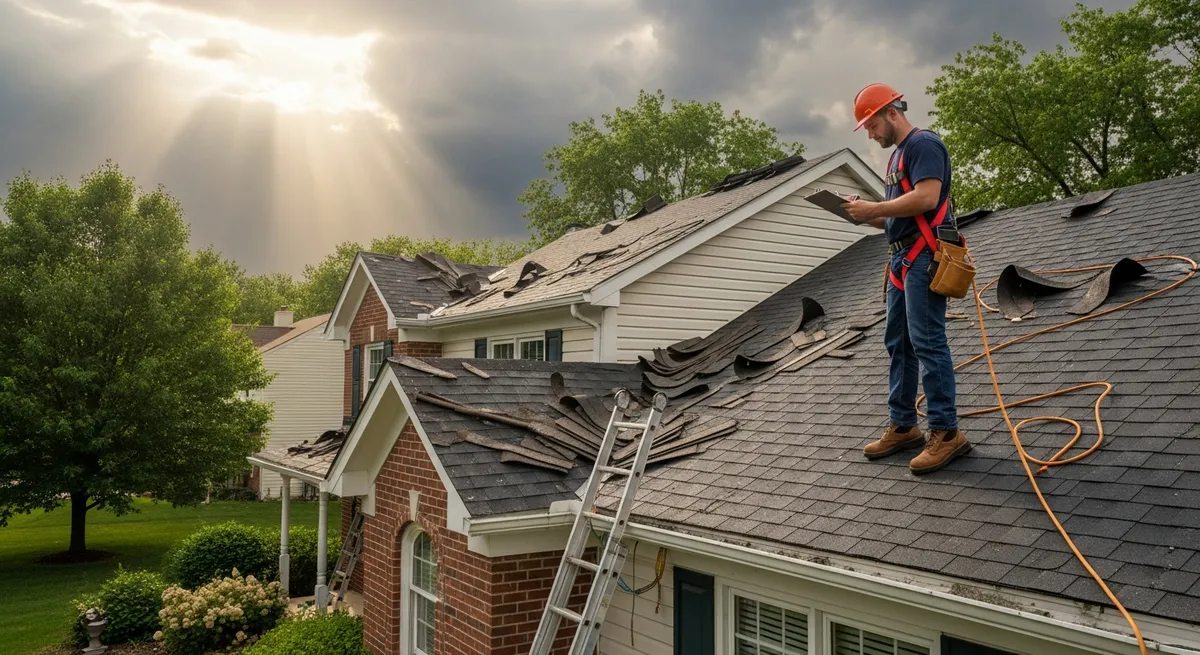
Your roof has been through a lot. Hot, humid Fairfax summers pushing attic temperatures past 140°F. Winter ice storms that force water under shingles and into the decking. Wind gusts from spring thunderstorms that lift flashing and crack aging asphalt. If your roof is approaching 20 years old, or you’ve started noticing dark streaks, curling edges, or ceiling stains after heavy rain, you may be facing what most homeowners dread: a full roof replacement. The good news is that this process does not have to be stressful or confusing if you know what to plan for, what to budget, and what to demand from the contractor standing in your driveway with a clipboard.
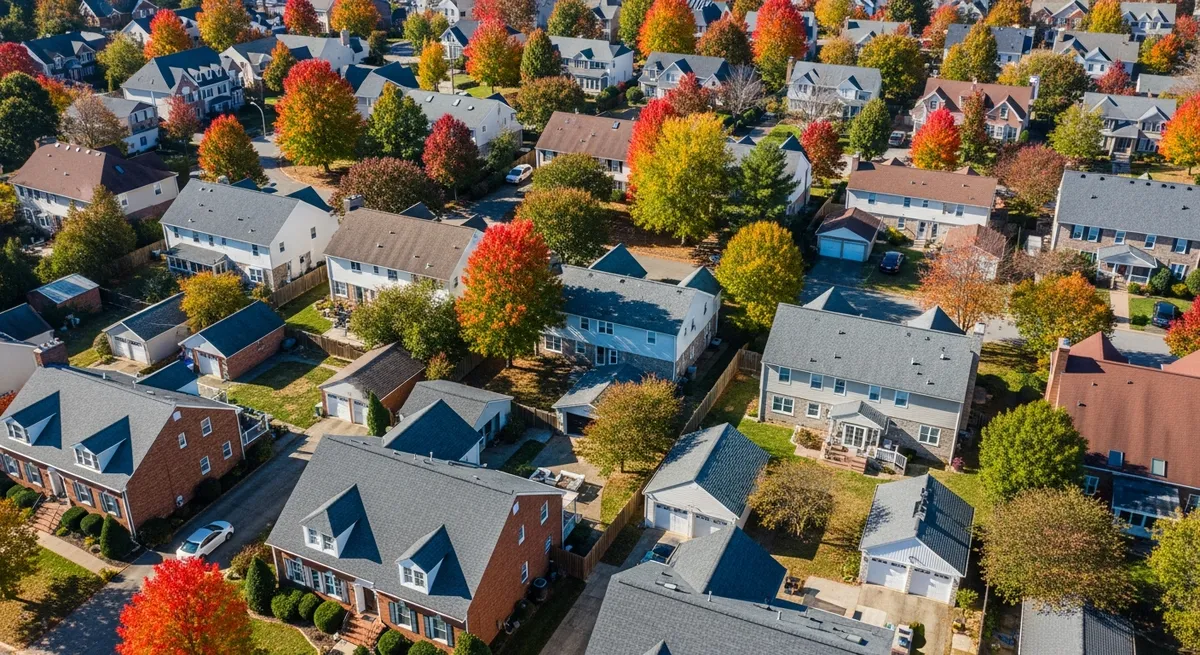
Fairfax County is one of the most populous and diverse jurisdictions in Northern Virginia, and the homes here reflect that variety. The older colonials and split-levels of Burke and Annandale, the newer construction in Centreville and Chantilly, the high-end neighborhoods of Great Falls and McLean—each brings its own roofing geometry, material history, and climate exposure. A contractor who knows this market understands that a 40-year-old colonial in Springfield has completely different needs than a newer townhouse in Herndon, and that expertise shapes every recommendation they make. Sterling Roofers has worked on hundreds of Fairfax roofs across this full range, and we want to share what we know so you can make the best decision for your home.
This guide covers every stage of the process: how to recognize when replacement is the right call, how to choose the best material for Northern Virginia’s climate, what the real cost drivers are in the Fairfax market, what every proper bid must include, and what red flags to watch for when evaluating contractors. By the time you finish reading, you will have the knowledge to move forward with confidence and avoid the most common and costly mistakes Fairfax homeowners make during a roofing project.
Key Takeaways
- Local pricing: A typical Fairfax County home (1,800–2,500 sq ft) costs $13,000–$19,000 for a full architectural shingle replacement in 2026 — 15–25% above the national average.
- Permit required: Fairfax County requires a building permit for full replacements. Your contractor pulls it — never skip this step or allow work without one.
- Bid checklist: Every legitimate bid names the exact shingle product, lists ice-and-water shield and synthetic underlayment, itemizes flashing replacement, and includes a written workmanship warranty of at least five years.
- Material matters: Architectural asphalt shingles rated 110 mph+ wind and Class 4 impact resistance are the smart baseline for Northern Virginia; metal roofing at $19,000–$38,000 offers 40–60 year lifespan.
- Red flag watch: No written quote, same-day pressure, asking you to pull the permit, or a bid dramatically below competitors are all signs to walk away.
Signs Your Fairfax Roof Needs Replacement, Not Just Repair
The first decision you face is whether a full replacement is truly necessary or whether targeted repairs can extend the roof’s life a few more years. A trustworthy contractor gives you an honest answer grounded in what they observe during an in-person inspection. These are the signs that typically push a Fairfax home from the repair column into the replacement column.
Age is the most straightforward indicator. Standard architectural asphalt shingles are rated for 25 to 30 years, but Northern Virginia’s humidity and wide temperature swings accelerate wear. If your roof is 20 or more years old and presenting multiple issues simultaneously, replacement almost always delivers better value than a series of ongoing repairs. You end up spending more on patches over three or four years than a new roof would have cost, without the fresh warranties and peace of mind that come with a complete installation.
Significant granule loss in the gutters and downspout discharge areas is another clear signal. The ceramic granules embedded in shingle surfaces protect the underlying asphalt from ultraviolet radiation. Once those granules are gone across most of the roof surface, the asphalt layer dries, cracks, and loses its ability to shed water. Some shedding is normal in the first year after installation, but heavy, persistent granule loss on a roof that is more than five years old indicates accelerated aging that repair cannot reverse.
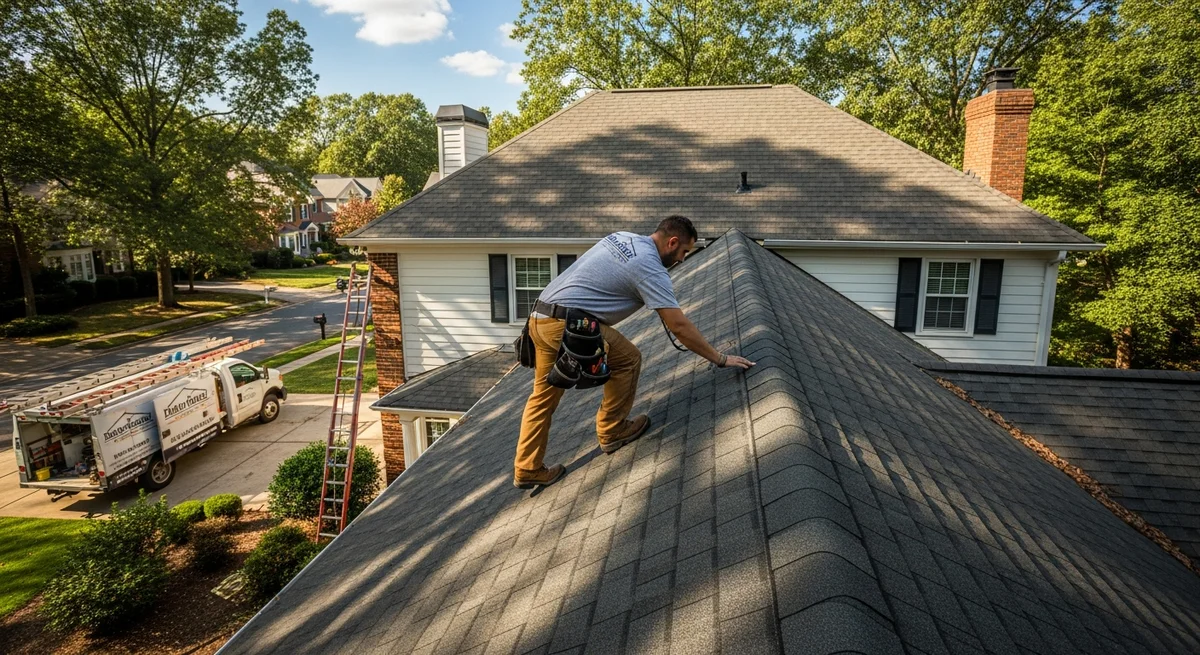
Curling or cupping shingles, visible daylight through the roof deck from inside the attic, multiple separate leak points, and any visible sagging or unevenness in the roof plane are all indicators that the system as a whole has failed rather than a localized section. Multiple leak points are particularly telling. One isolated leak is usually repairable. Three or more separate areas of water intrusion indicate that the entire roof is compromised and that patching one area at a time will cost you more over time than replacing the whole thing now. Our team provides free, no-obligation inspections and will tell you clearly which path makes more sense for your specific home and budget.
Choosing the Right Roofing Material for a Fairfax, VA Home
Material selection is the most consequential decision in your roof replacement project. It determines your upfront cost, your long-term maintenance burden, your home’s energy performance, and how well the roof handles the specific climate challenges of Northern Virginia. Understanding each option’s real-world performance in this region—not just its rated lifespan on a specification sheet—is how you make the right call for your home.
Architectural asphalt shingles are the dominant choice for residential roof replacement in Fairfax County, and for good reason. They are significantly better than the old 3-tab shingles—thicker, more wind-resistant, more dimensionally attractive, and available in a wide range of colors to match neighborhood aesthetics. A quality architectural shingle from GAF, Owens Corning, or CertainTeed carries a 30-year manufacturer warranty and, when installed by a certified contractor, can include an enhanced system warranty covering both materials and labor. For Fairfax homes, look for shingles rated for at least 110 mph wind resistance and a Class 4 impact resistance rating if you want better performance during hail events. These premium shingles typically add $150 to $250 per square over standard architectural shingles but can qualify for homeowners insurance discounts in Virginia—worth discussing with your insurer before you decide.
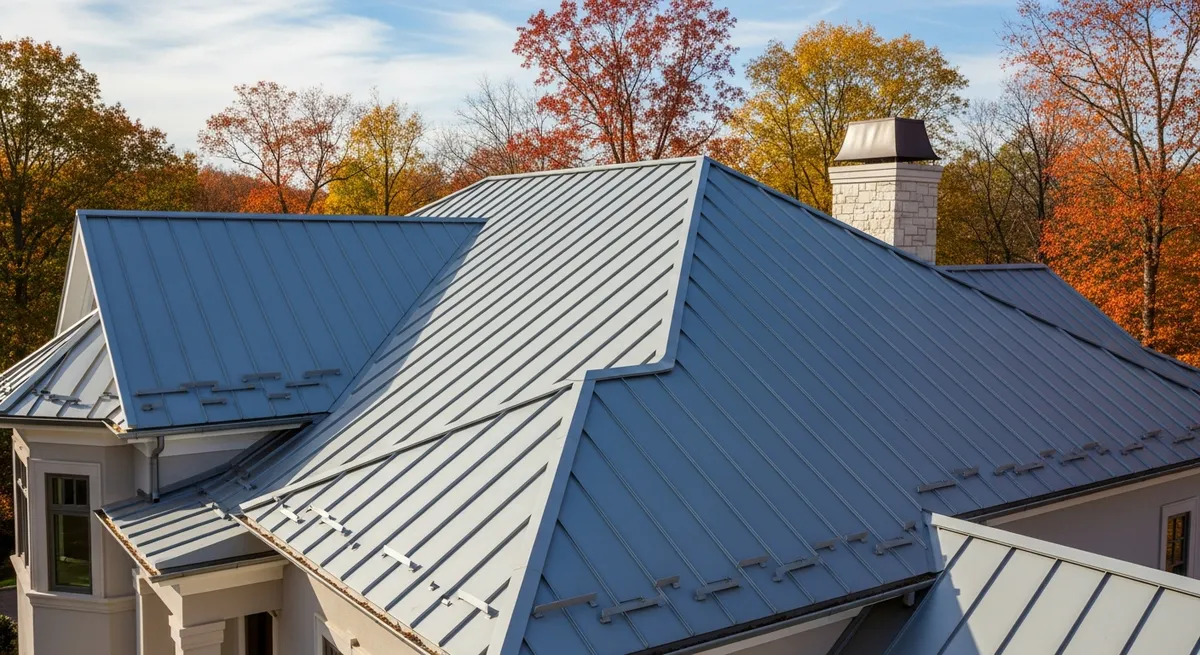
Metal roofing is becoming increasingly popular in Fairfax County, and the economics are compelling when you think long-term. A properly installed standing seam metal roof lasts 40 to 60 years, handles ice and snow dramatically better than shingles because the smooth surface sheds accumulation before it can dam, reflects summer heat to meaningfully reduce cooling costs, and requires virtually no maintenance beyond occasional inspection. The trade-off is a higher upfront cost—typically two to three times the price of architectural shingles—and the need for a contractor with documented metal roofing installation experience. If you are planning to stay in the home long-term and want to eliminate future roofing concerns, the conversation about metal is absolutely worth having.
Standard 3-tab shingles are not recommended for Northern Virginia homes. They are thinner, rated for lower wind speeds, and perform poorly in the freeze-thaw cycling and high-wind thunderstorms that characterize this region. Any contractor recommending 3-tab on a standard residential replacement is either cutting corners on cost or not considering what will hold up long-term in this climate. The difference in cost between 3-tab and a quality architectural shingle is modest relative to the lifespan difference, and the performance gap is not worth the savings.
Roof Replacement Cost in Fairfax, VA — 2026 Price Ranges
For a typical Fairfax home, budget between $9,500 and $22,000 for a full architectural shingle roof replacement, including tear-off, materials, labor, and disposal. Northern Virginia labor and material costs run 15 to 25 percent higher than national averages due to permitting requirements, local wage rates, and the complexity of work in established residential neighborhoods. Here is how costs break down by scenario.
How these prices are estimated: Ranges below are compiled from Sterling Roofers’ actual project invoices completed in Fairfax County between January 2024 and February 2026, cross-referenced against supplier material pricing updates for Q1 2026. Roof area is measured as the total sloped surface, not floor square footage. Your specific number depends on pitch complexity, access difficulty, current material lead times, and any structural findings during tear-off. We provide free on-site estimates so you receive a number tied to your actual home, not a formula.
| Roof Type / Scenario | Typical Range (2026) | Notes |
|---|---|---|
| Architectural shingles — small home (1,200–1,600 sq ft) | $9,500 – $13,500 | Standard pitch, single-layer tear-off, no structural repairs |
| Architectural shingles — avg. home (1,800–2,500 sq ft) | $13,000 – $19,000 | Most common Fairfax County residential scenario |
| Architectural shingles — large home (2,500–3,500 sq ft) | $18,000 – $27,000 | Complex geometry, multiple valleys and dormers add cost |
| Premium / Class 4 impact-resistant shingles (upgrade) | +$1,500 – +$4,000 | May qualify for Virginia homeowners insurance discount |
| Standing seam metal roof — avg. home | $19,000 – $38,000 | 40–60 year lifespan; higher labor skill required |
| Decking replacement (per 4x8 sheet OSB) | $75 – $120 per sheet | Only if rot or damage found during tear-off |
| Fairfax County building permit | $100 – $300+ | Required for full replacement; contractor must pull this |
Several factors push your project toward the higher end of these ranges beyond roof size. Steep pitch—anything above 8/12—requires additional safety equipment and slows crew progress, increasing labor cost by 20 to 40 percent compared to a walkable 4/12 pitch. Many of Fairfax’s older colonials and Victorians fall into this category. If your existing roof already has two layers of asphalt shingles (the maximum Virginia code allows), both must be torn off before installation can begin, which doubles disposal cost. Flashing replacement at chimneys, skylights, and pipe boots adds cost but is not optional on a full replacement—reusing old flashing to save money is a false economy that leads to new leaks within a few years. Attic ventilation upgrades, if your current ventilation is inadequate, add cost but dramatically extend the life of the new shingles.
What a Proper Roofing Bid Must Include for a Fairfax Home
Many homeowners choose a contractor based on price alone, not realizing that a low bid often reflects what is left out of the scope. A proper bid for a Fairfax roof replacement is a detailed written document—not a handwritten number on a business card—and its quality tells you a great deal about how that contractor will manage the actual work. The following elements belong in every legitimate bid you receive.
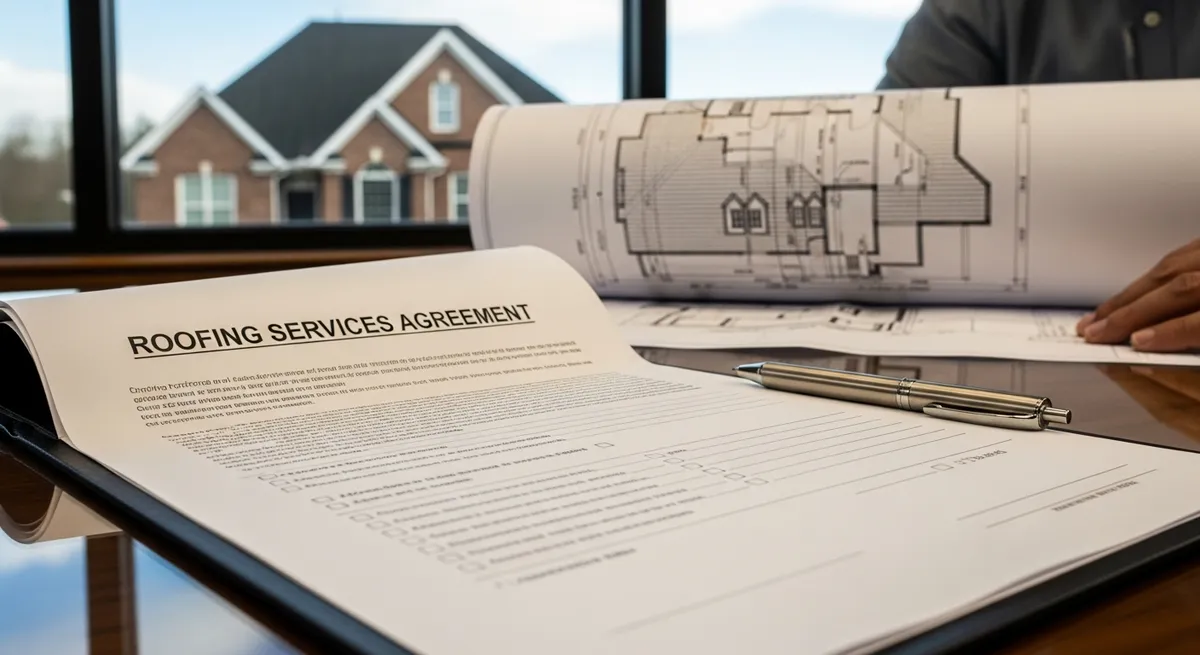
Complete tear-off and disposal should be explicitly stated, not implied. The bid should confirm full removal of all existing layers, loading into a dump trailer, and removal from your property. Disposal is sometimes billed separately as a surprise after the project. Ask directly whether it is included in the quoted price. A typical disposal fee for a standard Fairfax home runs $400 to $800, and knowing it is accounted for eliminates an unpleasant post-project surprise.
Underlayment specification should name both types required for a Northern Virginia home. Ice and water shield—a self-adhesive waterproof membrane—must be applied at the first three to six feet of every eave, in all valleys, and around all penetrations. This is not optional in a climate that experiences ice dams. Synthetic underlayment should cover the remainder of the roof deck; it dramatically outperforms the old 15-lb felt in moisture resistance and tear strength. A bid that does not specify underlayment type is a bid that may be hiding budget materials.
Material specification by exact product protects you from substitution. The bid should name the manufacturer, product line, and color—for example, “GAF Timberline HDZ, Pewter Gray, 130 mph warranty, Lifetime limited, 28 squares.” A bid that simply says “30-year architectural shingles” gives you no assurance about what will actually be installed on your home. The same level of specificity should apply to underlayment, pipe boots, drip edge, and flashing materials.
Fairfax County permit procurement should be confirmed as the contractor’s responsibility. Never allow work to begin without a permit on a full replacement. Unpermitted work creates problems when you sell your home and eliminates the county inspection that verifies code compliance. The permit fee should appear as a line item in the bid, not be buried in overhead or omitted entirely.
Workmanship warranty in writing, separate from the manufacturer material warranty, is essential. Manufacturer warranties cover defective materials. Contractor workmanship warranties cover installation errors, which are actually the more common cause of early failure. Any serious contractor offers a minimum five-year workmanship warranty; better ones offer ten. Get it in writing before you sign. Our roofing contract checklist covers every item that belongs in a complete bid and contract.
Red Flags to Watch for in Fairfax

After major storm events, Fairfax County sees an influx of out-of-area contractors who work door-to-door in hard-hit neighborhoods, collect deposits, and disappear before completing the work. Even outside storm season, the roofing industry has more than its share of operators who use pressure tactics and vague contracts to their advantage. Knowing what to watch for protects you from these situations.
A verbal quote with nothing in writing is the most common warning sign. Every scope item must be in the contract. If it is not written down, it does not exist legally, and you have no recourse when the finished job does not match what was promised. Same-day pressure—offers that expire if you do not sign immediately—is a manipulation tactic, not a sign of high demand. A legitimate contractor gives you the time you need to review the proposal and ask questions.
A contractor who asks you to pull the permit is almost always doing so because they are not properly licensed or insured to work in Fairfax County. When you hire a licensed contractor, they pull the permit. That is what the licensing process is designed to ensure. Similarly, a bid that comes in dramatically lower than all competing bids—if three bids cluster around $16,000 and one arrives at $9,500—signals that something is missing from the scope, whether ice and water shield, proper flashing, the permit itself, or adequate labor. Price gaps of that magnitude do not reflect a better deal; they reflect a different, and inferior, scope of work.
Always verify Virginia DPOR contractor license status and request current certificates of general liability and workers compensation insurance before signing anything. Confirm those certificates directly with the issuing insurance company. A contractor who resists providing this documentation or offers excuses for why their coverage has lapsed is not a contractor you should trust with your home. Sterling Roofers is fully licensed, bonded, and insured, and we are transparent about all of this from the first conversation. Learn more about our team and our approach on our about us page.
Fairfax County Permits and the Inspection Process
Fairfax County’s Department of Code Compliance requires a building permit for full residential roof replacements, and the process is straightforward when your contractor handles it correctly. The contractor applies for the permit online, typically one to five business days before the project start date. The permit must be on-site or accessible during the work. Once the installation is complete, a county inspector verifies the ice and water shield coverage, underlayment installation, flashing at all penetrations, and shingle fastening patterns. That inspection is your independent confirmation that the work meets the Virginia Building Code—a benefit that makes the permit cost entirely worthwhile.
If you plan to sell your home in the future, a home inspector will check whether permits were pulled for major work. An unpermitted roof replacement can delay a sale, trigger renegotiation, or require costly remediation to satisfy a buyer’s lender. It is never worth skipping. And if your home is in an HOA, check whether the HOA architectural review process requires approval of exterior changes including roofing material or color before work begins—your contractor should be aware of this requirement and factor the lead time into the schedule. For a broader look at what roof replacement costs across the Northern Virginia region, see our detailed roof replacement cost guide.
Comparing Bids and Making Your Final Decision
Get at least three written bids before deciding, and compare them line by line rather than by bottom-line number alone. Align every bid on the same shingle product, underlayment specification, flashing scope, decking contingency rate, permit handling, and warranty terms—then compare. The bid that offers the most complete scope, the strongest workmanship warranty, and the clearest communication about what is included almost always delivers the best value, even if its number is not the lowest. A contractor who is transparent, thorough, and responsive during the estimate process will be the same way once your roof is open to the weather.
A reasonable payment schedule is a deposit of 10 to 30 percent at contract signing with the remainder due at satisfactory completion. Never pay 50 percent or more upfront to a contractor you have not previously worked with. If your project involves a homeowners insurance claim, our roofing insurance page covers how to navigate that process, and our roof financing page outlines options that make larger projects more accessible. Sterling Roofers serves Fairfax, Arlington, Falls Church, Springfield, Burke, Vienna, and communities throughout the Northern Virginia region, and we bring the same standard of transparency and care to every project we take on.
Get a Free Roof Replacement Estimate in Fairfax, VA
Sterling Roofers provides detailed, itemized estimates for Fairfax County homeowners at no charge. We handle all required permits, use premium documented materials, and back every installation with a workmanship guarantee. Call us at (703) 436-4445 or schedule your free consultation online.
Schedule Free Consultation