Roof Replacement Maryland: Cost Drivers, Planning Checklist, and Decking Basics
Roof Replacement Maryland: Cost Drivers, Planning Checklist, and Decking Basics
Key Takeaways
- Maryland roof replacement costs are driven by roof size in squares, pitch complexity, material grade, and decking replacement needs
- MHIC license verification is required before signing any Maryland roofing contract — unlicensed work voids homeowner protections
- Montgomery, Prince George’s, and Baltimore counties each have separate permit requirements — confirm jurisdiction at the outset
- Decking replacement is billed per sheet and discovered at tear-off — request a clear per-sheet rate in writing before work begins
- Manufacturer-certified installation programs provide extended warranties and are worth asking about when selecting a Maryland contractor
What Drives Roof Replacement Cost in Maryland
If you’re a Maryland homeowner researching what a new roof actually costs, you’ve probably already discovered that the internet is full of wide price ranges that don’t feel particularly helpful. “Between $8,000 and $25,000” is technically accurate but tells you almost nothing about what your specific project will cost or why. The truth is that roof replacement cost maryland homeowners face depends on a combination of measurable factors, and understanding each one puts you in a much stronger position to evaluate contractor estimates, ask informed questions, and avoid the sticker shock that catches unprepared homeowners off guard.
Sterling Roofers serves Northern Virginia and nearby Maryland communities across the DMV. We work extensively throughout Montgomery County, Bethesda, Silver Spring, Rockville, Gaithersburg, and surrounding areas, and over the years we have walked hundreds of Maryland homeowners through the replacement process. This guide reflects what we’ve learned from those conversations and projects—the real factors that drive cost, the planning steps that prevent surprises, and the decking decisions that most homeowners don’t think about until they’re already mid-project.
Roof size is the most straightforward cost driver. Roofing is measured in “squares,” where one square equals 100 square feet of roof surface. A typical Maryland single-family home has between 20 and 35 squares of roof area, though larger homes, homes with complex roof lines, and homes with multiple dormers and additions can exceed that range considerably. Every estimate you receive should express the roof size in squares so you can see exactly what surface area is being priced. If a contractor can’t or won’t tell you how many squares your roof measures, the accuracy of their roof replacement estimate is immediately questionable.
Pitch, or the steepness of the roof, is the second major cost factor. A low-slope roof that a crew can walk comfortably is faster, safer, and less expensive to work on than a steep roof that requires harnesses, toe boards, and specialized staging. Most Maryland homes fall somewhere between a 4/12 and an 8/12 pitch, which represents a moderate range that most crews handle efficiently. Homes with steeper pitches—common in certain colonial and Victorian architectural styles found throughout older Montgomery County neighborhoods—will see higher labor costs per square because every step of the installation process takes longer when the crew is working against gravity.
Material selection has the most dramatic impact on the total price after roof size. Standard architectural shingles are the most popular choice for roof replacement maryland projects and offer an excellent combination of durability, appearance, and value. They carry rated lifespans of 25 to 30 years in typical Maryland conditions and come in a wide range of colors and profiles. Premium designer shingles cost more but provide enhanced aesthetics, thicker profiles, and rated lifespans that extend to 40 or even 50 years. Metal roofing sits at a higher initial price point but can last 40 to 60 years with minimal maintenance, which makes its per-year cost competitive with or lower than shingle systems over a long enough time horizon. Our materials page provides a deeper comparison of the options available and what each brings to the table.
The number and complexity of roof penetrations affect cost more than most homeowners anticipate. Every chimney, skylight, vent pipe, exhaust fan, and plumbing stack that exits through the roof requires custom flashing work. Chimneys, in particular, are labor-intensive because they involve step flashing along the sides, counter-flashing embedded in the mortar joints, and a cricket or saddle on the uphill side to divert water flow. A roof with three or four penetrations will cost more to replace than a simple gable roof with none, even if the total square footage is identical. This is one reason why comparing roof replacement cost estimate figures requires looking at the scope detail, not just the bottom line.
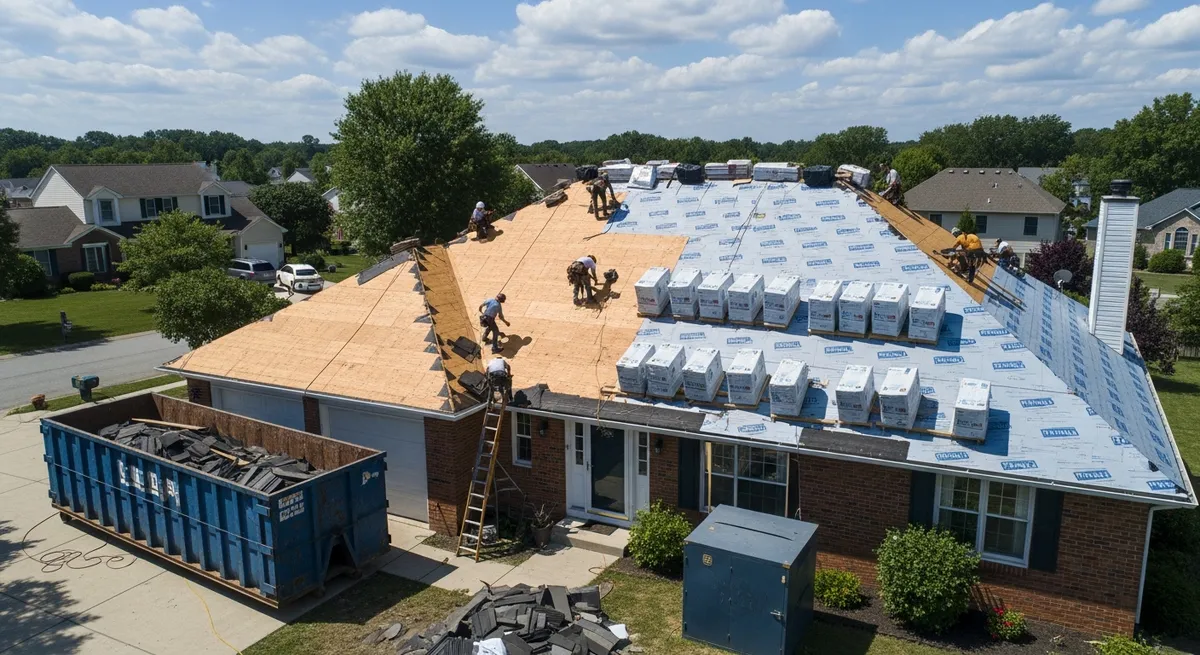
Tear-off and disposal costs represent a significant line item that many homeowners don’t think about until they see it on the estimate. Removing the existing roofing material—shingles, underlayment, damaged flashing, and sometimes the old drip edge—generates a substantial volume of heavy debris that must be loaded into a dumpster and hauled to an approved disposal facility. If the existing roof has two layers of shingles rather than one, the tear-off takes longer and generates more waste, which increases both labor and disposal costs. Local disposal fees vary across Maryland jurisdictions, and some areas charge by weight while others charge by volume. A reputable contractor will list tear-off and disposal as a separate line item so you can see exactly what this component costs.
Permit and inspection fees are another cost component that varies by jurisdiction. Montgomery County, for example, requires building permits for roof replacements and charges fees based on the project value. The contractor should handle the entire permit process—from application through scheduling inspections to resolving any inspector comments—and the permit cost should appear as a line item on your estimate. If a contractor suggests that permits are not required for a full roof replacement in your jurisdiction, that suggestion should raise immediate concerns about their familiarity with local codes and their willingness to comply with them.
Ventilation improvements are sometimes recommended as part of a replacement project, and they add cost but also add significant value. Many Maryland homes built before current ventilation codes were established have attics that don’t move enough air to prevent moisture buildup in winter or excessive heat buildup in summer. Adding ridge vent, upgrading soffit intake, or installing additional ventilation during a replacement is far less expensive than doing it as a standalone project later, because the crew is already on the roof with materials staged. Proper ventilation directly extends the lifespan of the new roofing system, making it one of the most cost-effective additions you can make during a roof replacement in maryland.
A Simple Roof Replacement Checklist
A roof replacement checklist helps you stay organized throughout a process that involves multiple decisions, several contractors, and a significant financial commitment. Having a structured approach prevents the kind of oversights that lead to surprise costs, miscommunication, and regret. Here is a practical checklist that Maryland homeowners can follow from start to finish.
Begin with a professional inspection of your existing roof. Before you request estimates from contractors, understand the current condition of your roof as objectively as possible. An experienced inspector will assess the roof surface, check the attic for ventilation adequacy and moisture issues, evaluate flashing and penetrations, and document everything with photos. This baseline assessment gives you the information you need to have informed conversations with contractors and to evaluate whether their proposals address all the issues that exist, not just the ones that are visible from the ground.
Get estimates from at least three contractors. Requesting multiple proposals is not about finding the cheapest price—it’s about understanding the range of approaches, materials, and costs that different professionals recommend for your specific roof. When estimates are detailed, you can compare them line by line: material types and quantities, labor rates, tear-off costs, ventilation recommendations, and warranty terms. The differences between proposals tell you where contractors disagree about what your project needs, and those disagreements are exactly the topics you should ask about before making a decision.
Verify credentials for every contractor on your shortlist. In Maryland, this means confirming active MHIC registration, verifying general liability and workers compensation insurance, and checking references from recent local projects. This step takes less than an hour for three contractors and eliminates risks that could cost you thousands of dollars. Do not skip it because a contractor seems nice or comes recommended by a neighbor—verification is verification, and assumptions are not substitutes for it.
Review each estimate for completeness. A professional roof replacement estimate should include specific materials by brand and product line, quantities in roofing squares, labor costs, tear-off and disposal fees, permit costs, ventilation work if recommended, the projected timeline, payment schedule, change-order policy, and warranty terms for both materials and workmanship. If any of these elements are missing from a proposal, request that they be added before you compare it against the others. Our roofing repair contract checklist provides a detailed template of what your agreement should cover.
Check HOA requirements before selecting materials. Many Maryland communities—particularly in Montgomery County, Howard County, and Anne Arundel County—have homeowners associations with architectural review committees that regulate shingle color, material type, and sometimes brand. Getting HOA approval for your material selection before the contractor orders anything prevents the costly scenario where a newly installed roof must be modified or replaced because it doesn’t meet community standards.
Plan for the disruption. A roof replacement generates noise, debris, and crew activity around your home for two to five days. If you work from home, plan for the noise factor. If you have pets, plan to keep them secure and away from the work zone. If you have a home security system, notify your monitoring service that construction will be taking place on the roof. Move vehicles out of the driveway so materials can be staged efficiently, and remove or protect any fragile landscaping directly below the roofline. These small preparations make the project smoother for both you and the crew.
Confirm the payment structure before signing the contract. The standard approach is a deposit of 10 to 30 percent upon contract signing, with the balance due upon completion and your satisfaction with the work. Never pay the full amount before the project is finished, and always pay by check or credit card so there is a documented trail. If the project includes financing, confirm the terms and approval before work begins so there are no surprises about your payment obligations.
Schedule a final walk-through with the project manager upon completion. They should show you the finished work, explain any areas where they found additional issues during the project, and provide documentation of all materials installed and warranty terms. Take your own photos of the completed roof for your records—these can be valuable documentation if you ever need to file an insurance claim or reference the work during a future home sale.
Why Roof Decking Matters
Roof decking is the structural layer beneath your shingles and underlayment—the plywood or OSB sheathing that your entire roofing system rests on. It’s invisible once the roof is installed, which is exactly why it gets overlooked in so many roofing conversations. But decking is arguably the most important component in the entire assembly, because everything above it depends on its structural integrity. If the decking is compromised, even the most premium shingles and expertly installed flashing cannot perform as designed.
The decision to replace roof decking is one that most Maryland homeowners don’t anticipate when they begin planning a roof replacement. In many cases, the decking is perfectly sound and needs nothing more than a visual inspection during tear-off to confirm its condition. But in a meaningful percentage of projects—particularly on older homes or homes that have experienced prolonged leak exposure—some sections of decking will need replacement. Understanding why this happens and how it’s handled takes the anxiety out of what can otherwise feel like an unexpected and unwelcome addition to your project cost.
Moisture is the primary enemy of roof decking. When water penetrates the roofing surface through damaged shingles, failed flashing, or deteriorated pipe boots, it reaches the decking and is absorbed by the wood. Over time, that moisture causes the decking to swell, delaminate, soften, and eventually rot. Plywood decking that has been exposed to persistent moisture loses its structural rigidity and can no longer support the weight of roofing materials or the foot traffic of installation crews. OSB decking is even more susceptible to moisture damage because its composition of compressed wood strands swells and breaks down more rapidly when wet than solid plywood layers do.
The challenge is that decking damage is almost always invisible from the outside. A roof can look perfectly fine from the ground—shingles intact, flashing in place, no visible sagging—while the decking beneath has been quietly deteriorating for years. Even during a roof inspection, the full condition of the decking cannot be assessed until the existing roofing material is removed. This is why every reputable roof replacement maryland contractor includes a change-order policy in their contract that addresses decking replacement: it specifies the per-sheet cost for new decking, the process for notifying you of the discovery, and the requirement for your approval before additional work is performed.
When damaged decking is discovered during tear-off, the compromised sections are cut out and replaced with new plywood or OSB of the same thickness. The new sheets are secured to the rafters with appropriate fasteners, and the seams between new and existing decking are checked for flatness to ensure a smooth surface for the underlayment and shingles. On most projects, decking replacement adds one to several sheets at a cost that, while not trivial, is manageable when you understand it in advance. The real cost of not replacing damaged decking is far higher—installing new shingles over rotted wood creates a roof that looks new on the surface but fails structurally within years, and the resulting damage extends to everything beneath it.
There are situations where extensive decking replacement is needed. Homes with chronic leak issues that went unaddressed for years, homes with severely inadequate attic ventilation that trapped moisture against the decking for decades, and homes where previous reroofing was done over existing layers without ever inspecting the decking beneath can all present scenarios where a significant portion of the sheathing needs replacement. In these cases, the decking cost becomes a major component of the total project price, and it’s important to evaluate whether the additional expense still makes economic sense compared to other options. In almost every case it does, because the alternative—installing premium materials over a structurally compromised substrate—is throwing money away.
One way to gauge the likely condition of your decking before tear-off is through an attic inspection. From the underside, an experienced inspector can look for water stains, mold growth, soft spots, and areas where the sheathing has separated from the rafters. While this view can’t reveal every issue—some damage is only visible from the exterior surface—it provides strong indicators that can help you and your contractor plan for the possibility of decking work and budget accordingly.
How to Compare Replacement Quotes
Comparing roof replacement cost estimate proposals from different contractors is one of the most valuable things you can do before committing to a project, but it only works if you know how to read the estimates side by side. A line-by-line comparison reveals where contractors agree on what your roof needs and where they disagree, and those disagreements are often the most important conversations to have before signing a contract.
Start by confirming that every estimate is based on the same roof measurements. If one contractor says your roof is 28 squares and another says it’s 32 squares, the difference in their bottom-line prices may have nothing to do with material quality or labor rates—it may simply reflect a measurement discrepancy. Ask each contractor how they measured the roof and verify that the numbers are reasonably consistent. A variance of one to two squares is normal and reflects minor differences in measurement methodology, but anything beyond that suggests someone miscounted and needs to re-measure.
Compare the materials being proposed. One contractor may specify CertainTeed Landmark, another may propose GAF Timberline HDZ, and a third might recommend Owens Corning Duration. All three are quality architectural shingle lines, but they differ in weight, warranty structure, wind rating, and price per square. Understanding what each contractor is proposing helps you determine whether a lower price reflects a less expensive material, a tighter labor estimate, or simply lower profit margins. If you have a strong preference for a particular material, ask all three contractors to requote using the same product so you can isolate the differences in labor and other costs.
Look at what’s included beyond the shingles. Underlayment, drip edge, ice-and-water shield, ridge vent, pipe boots, flashing, and starter strip are all components that should appear on a complete estimate. If one contractor includes full-deck synthetic underlayment while another specifies felt paper only in code-required areas, the difference in material cost is small but the difference in long-term protection is significant. If one estimate includes new pipe boots and another doesn’t mention them, the second estimate is either reusing the old boots—which is generally not recommended during a full replacement—or the cost is hidden somewhere else.
Warranty terms are a comparison point that many homeowners overlook, but they should not. The manufacturer warranty depends partly on the shingle line and partly on the installer’s certification status with that manufacturer. A contractor who holds GAF Master Elite certification or CertainTeed SELECT ShingleMaster status can offer enhanced manufacturer warranties that a non-certified installer cannot. The workmanship warranty—issued by the contractor themselves—varies widely, from as little as one year to as long as lifetime. A contractor offering a two-year workmanship warranty on a roof they expect to last 30 years is not expressing much confidence in their own work. Five to ten years is standard among reputable firms; anything less deserves a direct question about why.
The change-order policy is another critical comparison point, especially regarding decking. Compare how each contractor handles the discovery of damaged decking during tear-off: what is the per-sheet replacement cost, how will they notify you, and what approval is required before additional work is performed? A contractor who won’t specify a per-sheet price for decking replacement upfront is creating the conditions for a dispute when the crew discovers damage mid-project and presents you with a number you have no way to verify.
Finally, compare the payment structures. A 10 to 30 percent deposit is standard. The balance should be due upon completion. Any deviation from this standard—particularly requests for larger deposits, cash payments, or payment before the project is finished—should prompt careful consideration. The payment structure is not just a financial detail; it’s a reflection of the contractor’s business practices and your leverage to ensure the work is completed to your satisfaction. If you’re considering siding repair alongside your roof replacement, combining both projects with the same contractor can sometimes reduce overall costs.
Your Next Step
You now understand the factors that drive roof replacement cost maryland homeowners face, you have a practical roof replacement checklist to guide your planning, you know why decking matters and how to prepare for the possibility of decking work, and you have a framework for comparing contractor quotes on a level playing field. That knowledge is worth thousands of dollars in prevented mistakes and informed decision-making.
The most productive next step is a professional roof inspection. Whether you already know your roof needs replacement or you’re trying to determine how much life remains in your current system, an on-site inspection by an experienced contractor gives you the objective data to make a confident decision. The inspector will evaluate every aspect of your roof—surface condition, flashing integrity, ventilation adequacy, and attic-level indicators of decking health—and present the findings with photos and clear explanations.
If your roof is showing signs that replacement is approaching—widespread granule loss, multiple areas of curling or cracking shingles, recurring leaks in different locations, or visible deterioration around flashing and penetrations—don’t wait for a catastrophic failure to force your hand. Planning a replacement on your timeline gives you the luxury of comparing contractors, selecting materials thoughtfully, scheduling work during favorable weather, and potentially taking advantage of off-season pricing. Emergency replacements driven by sudden failures remove all of those advantages and typically cost more because urgency eliminates your ability to negotiate and compare. For a look at replacement costs in the Virginia market for comparison, our Northern Virginia roof replacement cost guide provides detailed numbers.
Sterling Roofers has helped Maryland homeowners navigate the replacement process with transparency, expertise, and craftsmanship for years. We provide detailed estimates that itemize every component, we explain our findings and recommendations in plain language, and we stand behind our work with strong warranty terms. Our crews are experienced, our materials are premium, and our commitment to doing the job right the first time has earned us the trust of homeowners across the DMV.
Whether you’re ready to move forward with a roof replacement in maryland or you simply want to understand where your current roof stands, the process starts with a conversation. Call us, tell us what you’re seeing, and let us take a look. We’ll give you an honest assessment, a detailed plan, and the confidence to make the right decision for your home and your budget. Visit our services page to see the full range of roofing solutions we offer, or explore our service areas to confirm we cover your community.
Your roof is the largest single protective system on your home. It shelters your family, protects your possessions, and plays a direct role in your home’s energy efficiency, indoor air quality, and long-term value. Investing in a quality replacement, performed by a qualified contractor, using the right materials for your home and your climate, is one of the smartest financial decisions you can make as a homeowner. Don’t let wide price ranges and conflicting advice paralyze your decision—use the framework in this guide to cut through the noise, ask the right questions, and move forward with confidence.
Get Your Maryland Roof Replacement Estimate
Get a Maryland replacement estimate from Sterling Roofers and compare quotes by scope, not guesswork. Call us at (703) 436-4445 or book online to get started.
Request Free Estimate