Maryland Roof Repair Guide: What's Covered, What It Costs, and When to Replace
Maryland Roof Repair Guide: What’s Covered, What It Costs, and When to Replace
Key Takeaways
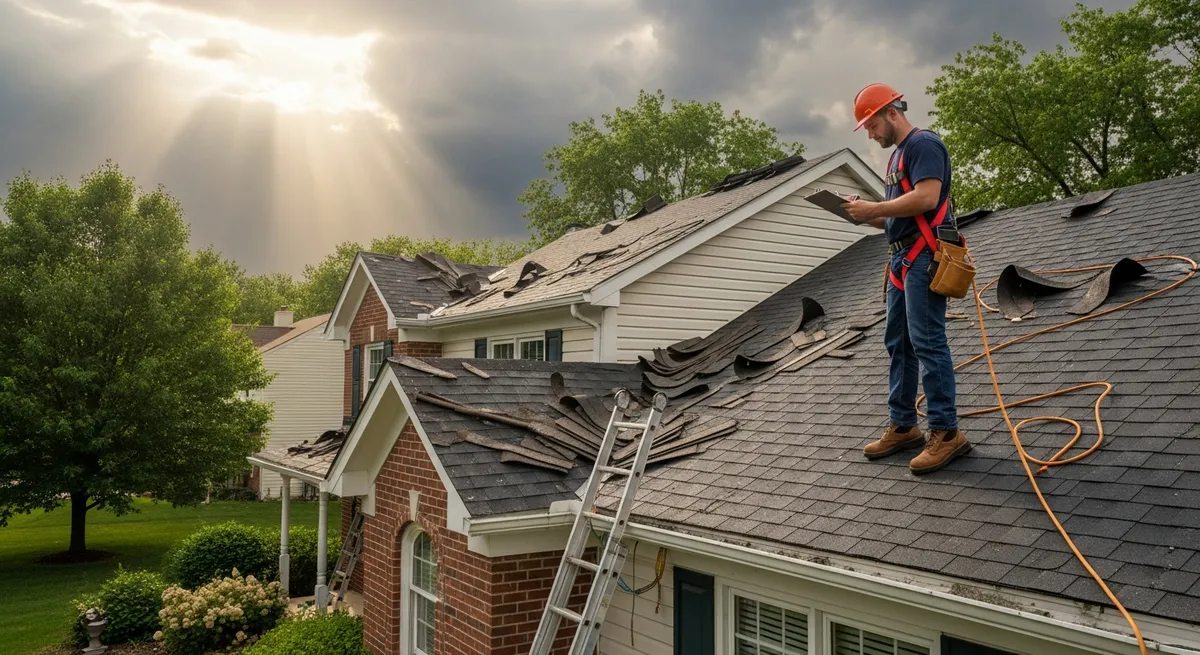
- Maryland homeowners insurance typically covers sudden storm damage but not gradual wear — document all damage with photos immediately
- MHIC license verification is the first step before allowing any Maryland roofing contractor to begin work
- Flashing repairs, shingle replacements, and pipe boot fixes are common repair calls that cost significantly less than a full replacement
- Roof age is the primary driver of replacement vs. repair decisions — most asphalt systems have a 20–25 year functional lifespan
- Montgomery, Prince George’s, and Baltimore County each have different permit requirements — confirm jurisdiction before work begins
Why Roof Repair Pricing Varies So Much
If you’ve ever called two different roofers about the same problem and received quotes that were hundreds or even thousands of dollars apart, you’re not alone. Maryland roofing repair pricing varies more than almost any other home improvement category, and the reasons behind that variation are worth understanding before you commit to any contractor. The price you’re quoted is not simply a reflection of the work that needs to be done—it’s a reflection of the contractor’s experience, their overhead, the materials they use, how thoroughly they inspected the problem, and sometimes how badly they want or need the job.
Sterling Roofers serves Northern Virginia and nearby Maryland communities across the DMV. We work on roofs throughout Montgomery County, Bethesda, Silver Spring, Rockville, and surrounding areas, and we see the pricing question come up in nearly every conversation with new customers. Homeowners want to know why one contractor quoted $800 and another quoted $2,400 for what seems like the same repair. The answer almost always comes down to differences in scope, materials, and the level of detail in the inspection that generated the quote.
A contractor who spends 15 minutes on your roof and provides a verbal estimate is not seeing the same things as a contractor who spends 45 minutes examining the roof surface, checking the attic, photographing every deficiency, and tracing a leak to its actual entry point rather than guessing based on where the water stain appears on your ceiling. The thorough inspector may identify three problem areas where the quick inspector only noticed one. Their quote will naturally be higher because their scope of work is larger—but it’s also more likely to solve the problem completely rather than temporarily.
Material quality is another major driver of price variation. A contractor who replaces damaged shingles with an exact match from the same manufacturer and product line will charge more than one who grabs whatever is cheapest at the supply house. The difference in materials may not be visible to an untrained eye on installation day, but it becomes obvious over time as mismatched shingles weather at different rates, creating a patchwork appearance that can also affect the integrity of the repair. When evaluating roof repair maryland quotes, always ask what specific materials are being proposed and whether they match your existing roofing system.
Labor rates in Maryland vary by region and by the experience level of the crew performing the work. A seasoned crew that has worked together for years and can handle complex flashing details, valley transitions, and chimney work will cost more per hour than a less experienced team. That cost difference shows up in the overall price, but it also shows up in the quality and durability of the finished repair. In roofing, the skill of the installer matters at least as much as the quality of the materials, and sometimes more. A mediocre shingle installed perfectly will outperform a premium shingle installed carelessly every time.
Overhead is the invisible cost factor that most homeowners never consider. A properly licensed and insured maryland roofing repair company carries significant overhead: MHIC registration fees, general liability premiums, workers compensation coverage, vehicle insurance, office expenses, and training costs for their crews. These expenses are real and necessary, and they are reflected in the price. A contractor who quotes dramatically lower than everyone else may be cutting costs in one of these areas—which means either they lack proper licensing, they are underinsured, or they are paying their crews wages that don’t attract or retain skilled workers. The cheapest quote is rarely the best value when you factor in the risk that comes with it.
Top Cost Drivers Homeowners Can Understand
Rather than getting lost in the complexity of roofing pricing, it helps to focus on the specific factors that have the biggest impact on what your roof repair in maryland will actually cost. These are the variables that move the needle most, and understanding them lets you evaluate any quote with clarity and confidence.
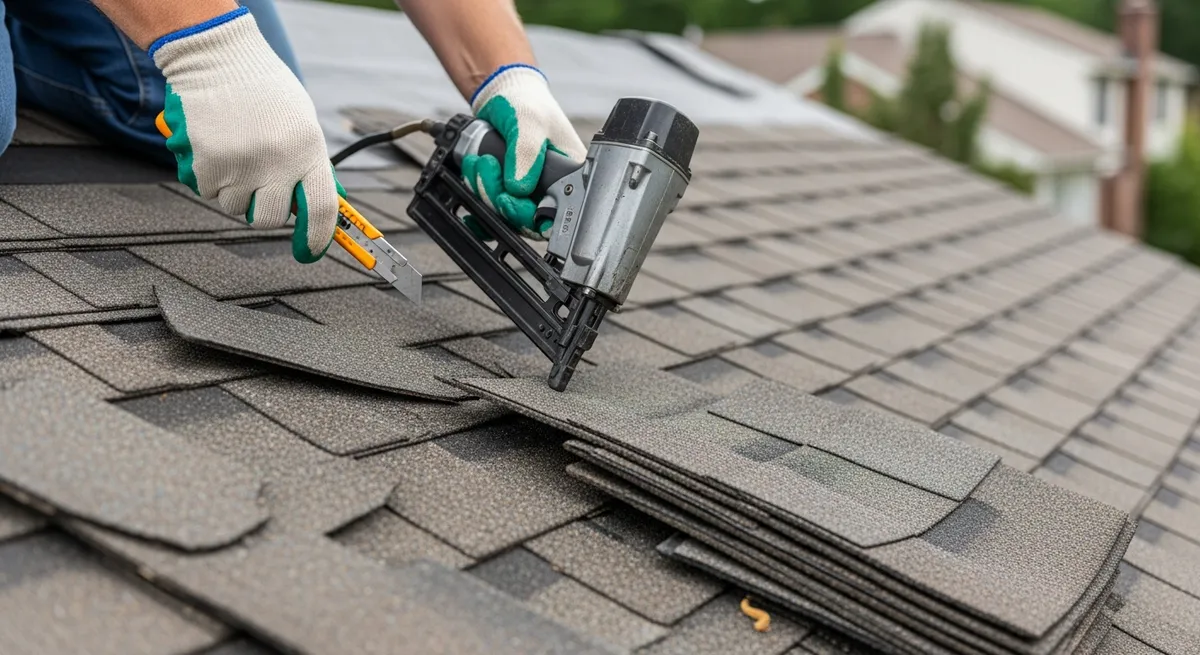
The type of damage is the most obvious cost driver. A few missing shingles that can be replaced in an hour sits at one end of the spectrum. A multi-point flashing failure around a chimney that requires removing counter-flashing, resealing step flashing, and replacing the cricket sits at the other end. Between those extremes are pipe boot replacements, valley repairs, ridge cap work, and small sections of shingle replacement that each carry their own labor and material requirements. The more complex the damage, the more time and skill the repair demands, and the higher the cost.
Roof pitch significantly affects the labor component of any repair. Low-slope roofs that crews can walk comfortably are faster and safer to work on, which translates to lower labor costs. Steep roofs require harnesses, toe boards, and specialized equipment that slow the pace of work and increase the physical risk for the crew. Many Maryland homes—especially colonials and cape cods common throughout Montgomery County—have moderately steep pitches that fall in the middle range, but homes with dramatic roof lines or architectural features may sit at the high end of the pitch scale and cost accordingly.
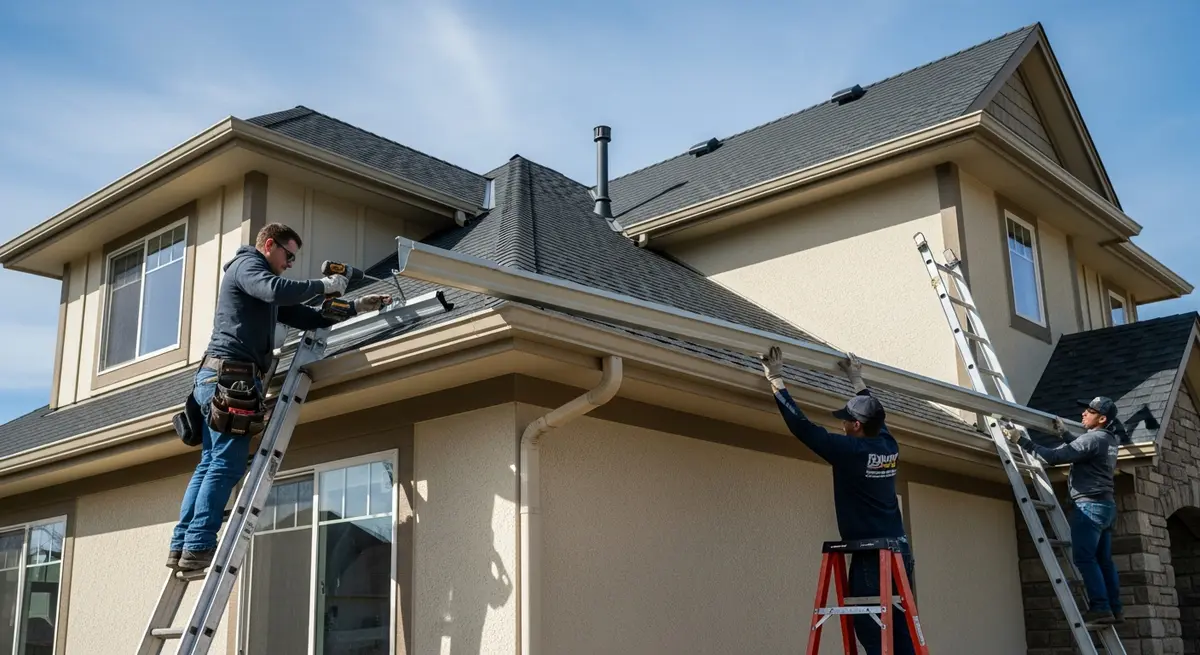
Accessibility is closely related to pitch but includes additional considerations. A roof section that is easily reachable with a standard extension ladder costs less to work on than a section that requires special rigging, staging, or crane access for material delivery. Homes on sloped lots, homes surrounded by dense landscaping, and homes with limited driveway access for material staging all present logistical challenges that add time and cost to the project. The contractor should note any accessibility issues during the inspection and reflect them honestly in the estimate.
The condition of the decking beneath the repair area is a cost factor that often reveals itself only after work has begun. When a contractor removes damaged shingles, they may discover that the plywood or OSB sheathing underneath has also been compromised by moisture. Rotted decking must be cut out and replaced before new roofing material can be installed, and this adds both material and labor costs to the project. A responsible contractor will have a clear change-order policy in their contract that specifies per-sheet pricing for decking replacement and requires your approval before proceeding with any additional work.
Material type matters for repairs just as it does for replacements. Repairing an architectural shingle roof costs more than repairing a three-tab shingle roof because the materials themselves are more expensive and the installation technique is more involved. Repairs to metal roofing, slate, tile, or flat roofing systems each come with their own material costs and skill requirements that affect the price. If your roof uses a premium or specialized material, expect repair costs to reflect that premium, and be cautious of any contractor who proposes using a different material type for the repair—mismatched materials can create both aesthetic and performance problems.
Timing influences cost as well. Emergency repairs during active storms or in the immediate aftermath of severe weather typically carry a premium because of the urgency and the demand on available crews. Repairs scheduled during the off-season—late fall through early spring, when demand is typically lower—may come in at the lower end of the price range because contractors have more availability and less competition for their time. If your roof repair in md is not an emergency, scheduling it during a slower period can save you money without compromising quality.
What’s Included in a Good Repair Quote
A repair quote from a professional contractor should give you a complete picture of the work being proposed, the materials being used, the cost of each component, and the protections you receive through warranties and change-order policies. If a quote leaves you with more questions than answers, it’s not detailed enough to serve as the basis for a sound decision.
The scope of work should be described in clear, specific language. Instead of “repair leak near chimney,” a quality quote will specify something like “remove and replace step flashing along left side of chimney, install new counter-flashing with proper mortar seal, replace six shingles adjacent to chimney, and apply ice-and-water shield membrane beneath replaced shingles.” This level of detail tells you exactly what the contractor plans to do, which makes it possible to evaluate the thoroughness of their approach and compare it against other proposals.
Materials should be specified by type and, where relevant, by brand. If the repair involves new shingles, the quote should indicate whether they are matching the existing product line. If new flashing is being installed, the quote should specify the material—aluminum, galvanized steel, copper—and any sealant or adhesive products being used. This matters because material choices affect both the durability of the repair and its compatibility with the existing roofing system.
The cost should be presented with enough detail that you can see what you’re paying for. A single lump-sum number tells you how much but not why. A quote that breaks down materials, labor, and any additional expenses like disposal or permit fees gives you the context to judge whether the price is reasonable. It also makes it much easier to compare proposals from multiple maryland roof repairs contractors, because you can see exactly where costs differ and ask informed questions about those differences.
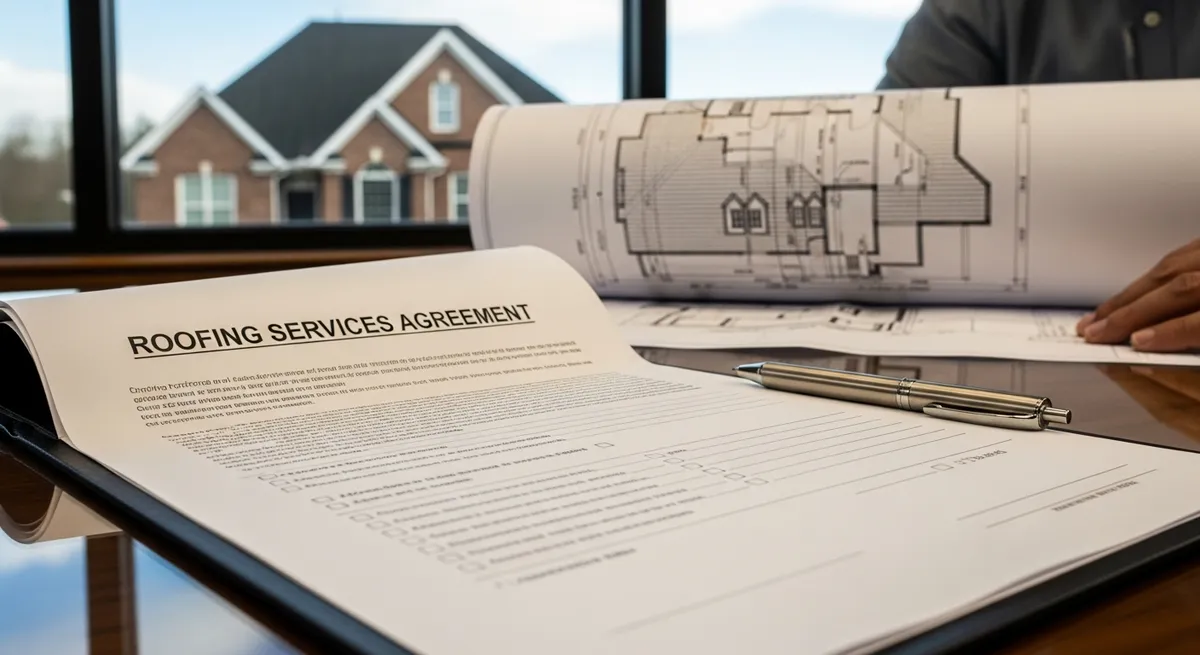
Warranty terms should be stated explicitly in the quote or the accompanying contract. You should know what the manufacturer warranty covers, how long it lasts, and whether any conditions could void it. You should also know the workmanship warranty term—how long the contractor stands behind their labor—and what the process is for making a warranty claim if something goes wrong after the project is completed. These terms are your long-term protection, and they should be in writing before a single nail is driven.
The change-order policy is especially important for repair work because surprises are more common than in new installations. When a contractor removes damaged material, they may find additional damage that was hidden beneath the surface. A clear change-order policy specifies how they will communicate the discovery to you, what the additional cost will be calculated at, and the requirement for your written approval before extra work is performed. Without this policy, you’re vulnerable to the classic “we found more damage” scenario where the final bill is significantly higher than the original quote with no documented authorization for the increase. Our roofing repair contract checklist covers these protections in detail.
Ways to Reduce Cost Without Cutting Corners
Every homeowner wants to spend as little as possible on roof repairs, and there are legitimate ways to reduce your costs without sacrificing the quality or longevity of the work. The key is understanding the difference between being smart about spending and being cheap about your roof—because the latter almost always costs more in the long run.
Scheduling repairs promptly is the most effective cost-reduction strategy available to any Maryland homeowner. The math is brutally simple: a $400 shingle repair that you delay for six months can easily become a $2,000 decking-and-shingle repair once water has had time to penetrate beneath the surface and saturate the plywood underneath. Every rain event that passes over an exposed area pushes moisture deeper into the roofing system, expanding the damage zone and increasing the scope of the eventual fix. The homeowner who calls on the first sunny day after noticing a problem almost always pays less than the homeowner who “keeps an eye on it” for a season.
Combining multiple small repairs into a single service call can reduce your overall cost compared to scheduling each repair separately. Roofers incur mobilization costs—loading equipment, driving to your home, setting up ladders and safety equipment—every time they come to your property. If you have two or three minor issues that each need attention, addressing them all in one visit eliminates the duplicated setup costs and often qualifies for a better per-item rate than individual calls would.
Scheduling during off-peak periods can also help. The busiest time for Maryland roofers runs from late spring through early fall, driven by a combination of favorable weather and storm damage demand. If your repair is not urgent, scheduling it during late fall, winter, or early spring may get you lower pricing simply because crews have more availability and contractors are more flexible with their rates. Weather permitting, roofing work can be performed year-round in Maryland’s climate, and many homeowners are surprised to learn that winter repairs are not only possible but sometimes preferable for certain types of work.
Maintaining your roof proactively is the best long-term cost reducer. Cleaning your gutters twice a year, trimming overhanging tree branches, and performing a visual inspection after every major storm catches problems at their smallest and cheapest stage. A biennial professional inspection adds a modest expense but consistently identifies issues that would cost five to ten times more to fix if left to develop unchecked. Think of maintenance as the interest you earn on your roof investment—small, consistent deposits of attention that compound into significant savings over time.
Understanding your insurance coverage before you need it can also reduce your out-of-pocket costs significantly. If your roof sustains damage from a covered event—hail, high winds, a fallen tree—your homeowner’s policy may pay for a substantial portion of the repair. Knowing your deductible, understanding what your policy covers, and documenting damage promptly and thoroughly all increase the likelihood of a successful claim. Our storm and hail damage repair guide walks through the claims process in detail and explains how to work with your adjuster to ensure all legitimate damage is captured.
What you should never do to reduce cost is hire an unlicensed contractor, skip the permit process, accept a quote without a written scope of work, or choose the cheapest bid without understanding why it’s so much lower than the others. Each of these shortcuts carries risks that far outweigh the savings: liability exposure, code violations, warranty voidance, and substandard work that creates bigger problems down the road. The most expensive md roof repair is the one you have to do twice.
When Repairs Stop Making Sense
There comes a point in every roof’s life when the math shifts and continued repairs become less economical than a full replacement. Recognizing that tipping point is important because it prevents you from pouring money into a system that has fundamentally reached the end of its useful life. The challenge is that the transition from “repair makes sense” to “replacement is the better investment” is rarely a bright, clear line—it’s a gradual shift that depends on your specific roof, your budget, and your long-term plans for the home.
The 30 percent rule is the most widely used benchmark for this decision. If the total cost of needed repairs exceeds 30 percent of what a complete roof replacement would cost, replacement typically delivers better value. You get an entirely new system with a fresh warranty, modern underlayment and ventilation, consistent materials across every slope, and the peace of mind that comes from knowing nothing is being patched or bandaged. For a detailed look at what replacement costs in this region, our roof replacement cost guide for Northern Virginia provides the numbers.
Age is a strong indicator, though not an absolute one. Standard three-tab asphalt shingles in the Maryland climate typically last 15 to 20 years. Architectural shingles can reach 25 to 30 years with proper ventilation and maintenance. If your roof is within a few years of its expected lifespan and is already showing multiple signs of wear—widespread granule loss, cracking, curling, and flashing deterioration—investing in repairs on a system that is approaching the end of its rated life is essentially funding a temporary fix on a permanent problem.
Repair frequency is another telling signal. If you’ve called a roofer two or three times in the past three years for different issues on the same roof, the pattern itself is diagnostic. It suggests that the roofing system is deteriorating broadly rather than failing in isolated spots, which means today’s repair is just buying time until the next one. When the interval between repairs shrinks to less than 18 months, the cumulative cost and disruption of ongoing patching usually exceeds the one-time cost of replacing the system entirely.
The nature of the problems matters as much as their frequency. Surface-level issues like a few missing shingles or a cracked pipe boot are normal maintenance items that do not signal the end of a roof’s life. But systemic issues—widespread granule loss across multiple slopes, multiple flashing failures, soft spots in the decking, or visible sagging in the roof plane—indicate that the system is failing as a whole rather than in parts. When the problems are systemic, repairs become a game of whack-a-mole: you fix one area and another develops problems within months because the underlying materials are uniformly degraded.
Your plans for the home should also factor into the decision. If you plan to sell within the next two to three years, a new roof is one of the highest-return investments you can make—it improves curb appeal, eliminates buyer concerns about hidden damage, and often allows you to recoup a significant portion of the cost through a higher sale price. If you plan to stay in the home for another 15 to 20 years, the math favors replacement even more strongly, because you’ll enjoy the full warranty period and avoid the escalating repair costs that come with nursing an aging roof through its final years.
Your Next Step
You now have a clear understanding of why roof repair maryland pricing varies, what drives those costs, what a professional repair quote should include, and when the smarter investment shifts from repair to replacement. That knowledge puts you in a strong position to evaluate any contractor’s proposal with clarity and to ask the right questions before committing to a path forward.
The best next step is always a professional roof inspection. A thorough inspection by an experienced contractor gives you an objective assessment of your roof’s current condition, identifies every issue that needs attention—both the obvious ones and the hidden ones—and provides the baseline data you need to compare repair options or evaluate whether replacement makes more sense. This process typically takes 30 to 60 minutes for a standard Maryland home and includes photo documentation of all findings.
If you’ve noticed any of the warning signs discussed in this guide—missing or damaged shingles, granule accumulation in your gutters, water stains on ceilings or walls, soft spots when walking on the roof surface, or deterioration around flashing and penetrations—schedule that inspection now rather than later. Every week of delay allows water to push deeper into the roofing system, expanding the scope and cost of whatever fix is ultimately needed. The repair you can do for $500 today may cost $3,000 if you wait through another storm season.
Sterling Roofers has been serving Maryland homeowners with honest, quality roofing work for years. We handle everything from minor leak repairs and maintenance services to complete roof replacements and storm damage restoration. We are fully licensed, insured, and committed to the kind of transparent communication and detailed documentation that this guide recommends you expect from any contractor you hire.
Whether you’re dealing with a specific roof repair in maryland issue or you’re simply wondering whether your roof has a few more years left in it, the process starts with a conversation. We’ll inspect your roof, explain what we find in plain language, present your options with honest cost comparisons, and let you make the decision that’s right for your home and your budget—without any pressure or obligation. That’s how we’ve earned the trust of homeowners across the DMV, and it’s how we plan to earn yours.
Book Your Maryland Roof Repair Evaluation
Book a Maryland roof repair evaluation with Sterling Roofers and get a clear scope and warranty options. Call us at (703) 436-4445 or book online to get started.
Schedule Free Evaluation