The Complete Fairfax Roof Repair Guide: Signs of Damage, Cost Factors & Contractor Selection
The Complete Fairfax Roof Repair Guide: Signs of Damage, Cost Factors, and How to Choose a Contractor
Key Takeaways
- Fairfax County requires permits for full replacements — a contractor who skips the permit creates legal and insurance risk for the homeowner
- The most common Fairfax repair calls involve pipe boots, flashing around chimneys, and shingles displaced by wind
- Repair timelines depend heavily on material availability — asphalt shingles ship faster than tile or slate
- Virginia DPOR Class A or B license is mandatory — unlicensed contractors cannot legally perform roofing work in Virginia
- Written quotes should include material grade, manufacturer, labor warranty duration, and debris disposal
Why Fairfax VA Homeowners Face Unique Roofing Challenges
Fairfax, Virginia sits at the heart of Northern Virginia’s suburban corridor, and its rooftops bear the full brunt of a climate that refuses to pick a lane. Summers push temperatures into the mid-nineties with suffocating humidity, winters deliver ice storms and the occasional nor’easter, and spring thunderstorms roll through with wind gusts strong enough to send lawn furniture across the yard. If you own a home anywhere in Fairfax County—from the established neighborhoods near Fairfax City to the sprawling subdivisions of Burke, Centreville, and Chantilly—your roof is quietly absorbing all of it, every single day.
Understanding fairfax roof repair starts with understanding the environment your roof operates in. Unlike drier climates where roofing materials degrade slowly and predictably, the Fairfax area subjects shingles, flashing, and underlayment to rapid temperature swings, persistent moisture, and intense UV exposure in roughly equal measure. That combination accelerates wear in ways that homeowners who relocated from other parts of the country might not expect. A roof that would last 30 years in Phoenix may show significant fatigue after 18 to 22 years in Fairfax.
Sterling Roofers has served the greater Northern Virginia area from our office at 8466 Tyco Road Suite B in Vienna, and over the years we have seen the same patterns repeat across thousands of Fairfax VA roofing projects. The goal of this guide is to walk you through every aspect of roof repair fairfax va homeowners need to understand—from recognizing the earliest signs of damage to choosing the right contractor, understanding realistic costs, and knowing what to do when an emergency strikes. Whether your home is a 1970s colonial, a 1990s production build, or a brand-new construction, this guide applies to you.
We have written this as a conversation, not a textbook. Roofing decisions involve real money and real consequences, and you deserve clear, honest information rather than industry jargon designed to confuse you into spending more than necessary. So grab a cup of coffee, and let’s talk about your roof.
One more thing before we get into the details. Many Fairfax homeowners assume that roof problems only matter when water is actively dripping from the ceiling. In reality, by the time you see a water stain on drywall, the damage has usually been progressing for weeks or months behind the scenes—soaking insulation, warping decking, and potentially encouraging mold growth in spaces you cannot see without pulling things apart. The earlier you catch a problem, the simpler and cheaper the fix. That principle runs through everything we are about to discuss.
Common Signs Your Fairfax Roof Needs Repair
Knowing when to call a roofer starts with knowing what to look for. The signs of roof damage range from obvious to subtle, and catching the subtle ones early is what separates a $400 repair from a $4,000 headache. If you are a Fairfax homeowner, here are the warning signals that should prompt a professional inspection.
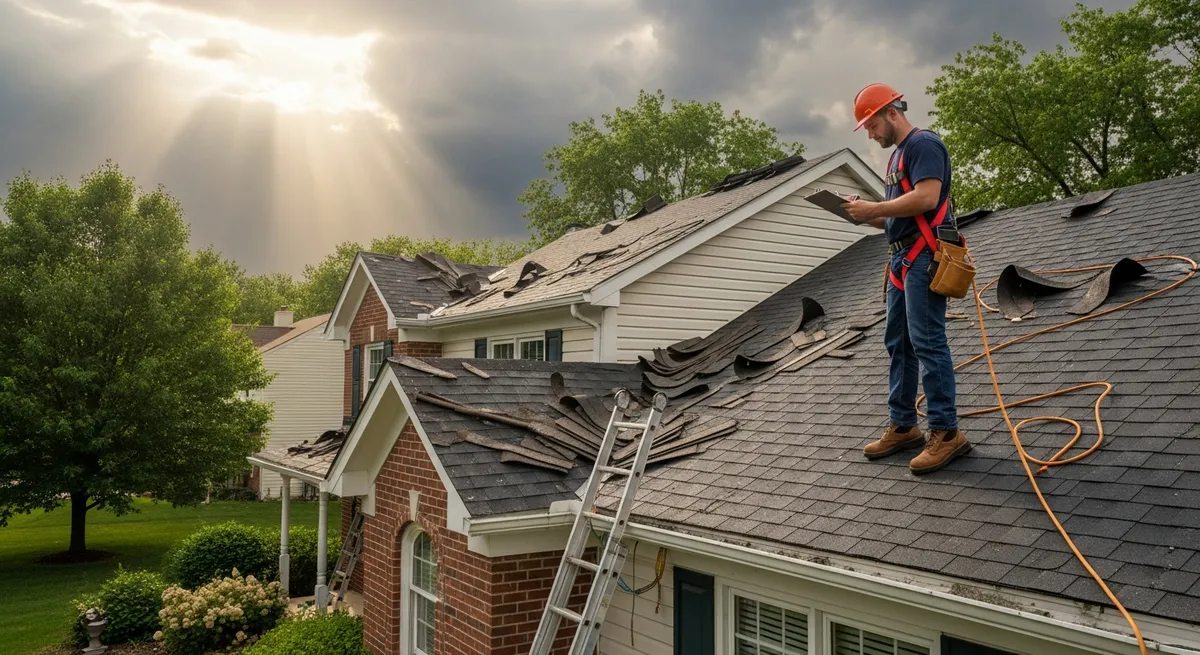
Missing or damaged shingles are the most visible indicator that your roof needs attention. After any significant wind event—and Fairfax gets plenty of them between March and November—take a few minutes to scan your roof from ground level. Binoculars make this easy. If you see bare patches where shingles have blown off, tabs that are lifted or curling at the edges, or cracked shingles with visible splits, those areas are actively vulnerable to water intrusion. Even a single missing shingle can allow enough water behind the remaining courses to cause decking rot if the exposure lasts through several rain cycles.
Granule loss is a more gradual signal but equally important. Asphalt shingles are coated with ceramic granules that protect the underlying asphalt mat from UV radiation. As shingles age, those granules loosen and wash into the gutters during rainstorms. If you notice a gritty residue collecting at the bottom of your downspouts or see dark, bare patches on the shingle surface where the granule coating has worn away, your shingles are losing their protective layer. This is especially common on south-facing and west-facing slopes in Fairfax, where afternoon sun exposure is most intense. Homes needing residential roof repair fairfax virginia often show this pattern first on the slopes that get the most direct sunlight.
Interior water stains are the signal most homeowners notice first, even though they are actually a late-stage symptom. A brown or yellowish ring on a ceiling or upper wall means water has already traveled from the roof surface, through the decking, past the insulation, and onto the drywall. The actual entry point on the roof is often several feet away from the stain, because water follows the path of least resistance along rafters and sheathing before it finally drips onto the ceiling. This is why roof leak repair fairfax requires a trained eye—patching the stain without tracing the leak to its source guarantees the problem will return.
Sagging areas on the roof surface are a more serious warning sign that suggests structural compromise. If any section of your roofline appears to dip or bow rather than maintaining a straight, even plane, the underlying decking or rafters may be weakened by prolonged moisture exposure. Sagging does not happen overnight; it is the result of sustained water damage over months or years. If you see this on your Fairfax home, do not delay—a structural assessment is needed promptly to determine whether targeted repair can address the issue or whether more extensive work is required.
Damaged flashing around chimneys, skylights, and vent pipes is another common problem across fairfax va roofing systems. Flashing consists of thin metal strips and sealant that waterproof the joints where the roof surface meets vertical structures. Over time, the sealant cracks, the metal corrodes or lifts, and water finds its way into the seam. Wind-driven rain is particularly effective at exploiting flashing failures, which is why some leaks only appear during storms that come from a specific direction. If you have a chimney, pay special attention to the step flashing along its sides and the counter-flashing where the chimney meets the roof surface—these are the most failure-prone areas on any roof.
Finally, inspect your attic if you have access. Look for daylight coming through the roof boards, damp or discolored insulation, and any signs of mold or mildew on the underside of the decking. These attic-level clues often reveal problems that have not yet manifested on the ceiling below, giving you a valuable head start on repairs.
What Causes Roof Damage in Fairfax Virginia
Understanding why roofs fail helps you anticipate problems before they escalate. In Fairfax, the causes of roof damage fall into a few major categories, and most homes deal with a combination of them simultaneously.
Climate is the primary driver. Fairfax County sits in USDA Hardiness Zone 7a, which means the area experiences everything from blistering summer heat to winter freeze-thaw cycles that test every material on your roof. When temperatures drop below freezing at night and rise above freezing during the day—a pattern that can repeat dozens of times between November and March—moisture trapped in small cracks and seams expands and contracts repeatedly. This freeze-thaw action is one of the most destructive forces in roofing, gradually widening gaps in flashing, cracking sealant, and loosening shingle tabs from the adhesive strip that holds them flat. Homeowners researching roof repair fairfax va solutions often discover that freeze-thaw damage is at the root of problems they initially attributed to age alone.
Wind damage is another major factor. Fairfax is far enough inland to avoid direct hurricane impacts, but the area regularly experiences severe thunderstorms between April and September, and nor’easters can deliver sustained winds above 50 mph during winter months. Wind does not need to be extreme to cause damage—gusts in the 40 to 60 mph range are sufficient to lift shingle tabs, peel back ridge caps, and drive rain underneath roofing materials at angles that the original installation was not designed to handle. After every significant wind event, a quick visual inspection can catch problems while they are still minor.
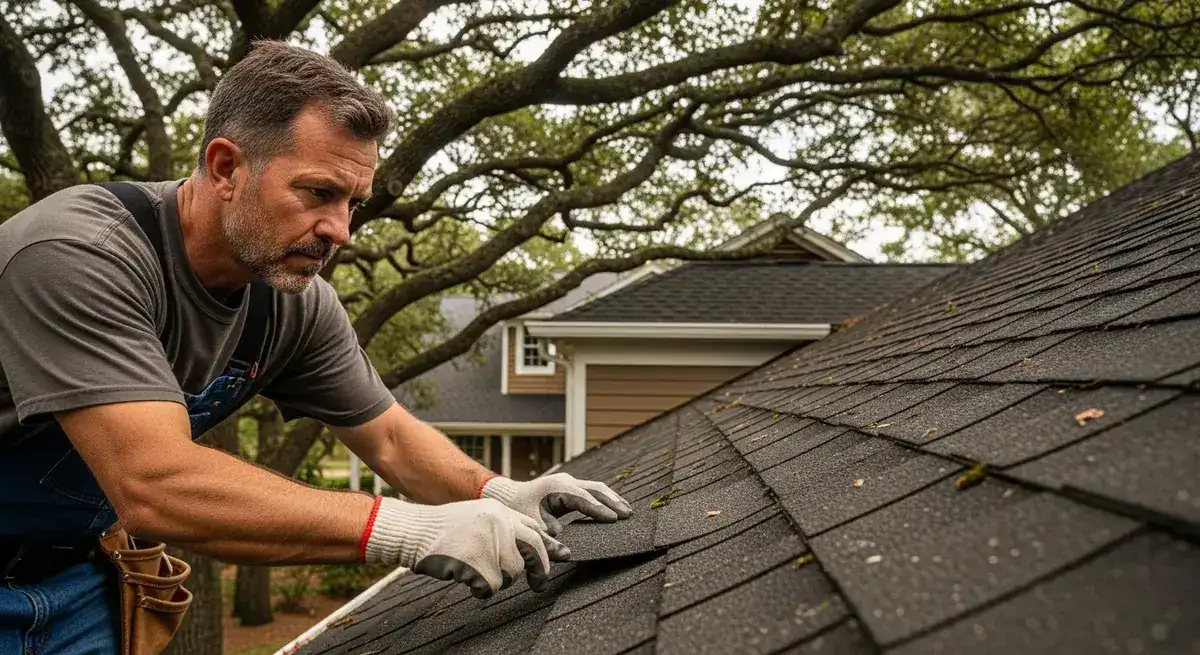
Trees are a beautiful part of Fairfax’s landscape, but they are also a leading cause of roof damage. Mature oaks, maples, and tulip poplars tower over many Fairfax neighborhoods, and their branches pose several distinct threats. Falling limbs during storms can crack shingles, dent metal flashing, or punch through aging decking. Overhanging branches that rub against the roof surface act like sandpaper, gradually wearing away the granule coating on shingles. Leaf debris that accumulates in valleys and behind dormers traps moisture against the roof surface, accelerating algae growth and shingle deterioration. Even tree roots can affect roofing indirectly by clogging underground drainage systems, which causes water to pool near the foundation and increase overall moisture levels around the home.
Aging is the final and most inevitable cause. Every roofing material has a finite lifespan. Standard three-tab asphalt shingles typically last 15 to 20 years in the Fairfax climate, architectural shingles can reach 25 to 30 years with proper ventilation and maintenance, and metal roofing systems can last 40 years or more. As materials approach the end of their rated life, failure points multiply. Sealant dries out, fasteners corrode, underlayment becomes brittle, and the cumulative effect of thousands of weather cycles takes its toll. If your Fairfax home has a roof that is approaching or has exceeded its expected lifespan, proactive inspection becomes especially important because the margin for error shrinks with every passing season.
Poor ventilation accelerates all of these factors. An improperly ventilated attic traps heat in summer—sometimes exceeding 150 degrees—which bakes shingles from below while the sun bakes them from above. In winter, trapped warm air melts snow on the roof surface, and the resulting water refreezes at the eaves to form ice dams. Many Fairfax homes built before current ventilation codes were established have marginal airflow that does not meet today’s standards. Upgrading ventilation during a repair project is one of the most cost-effective ways to extend the life of your roofing system, and experienced roofing companies fairfax va homeowners trust will evaluate ventilation as part of any thorough inspection.
Roof Repair vs. Roof Replacement: When Does Each Make Sense?
This is the question that keeps Fairfax homeowners up at night: do I pay to fix what I have, or do I invest in an entirely new roof? The answer depends on several factors, and a trustworthy contractor will walk you through the math rather than pushing you toward the more expensive option.
Repair is almost always the right call when damage is localized. If a windstorm lifted a dozen shingles on one slope, or a falling branch cracked a section of ridge cap, targeted repair addresses the problem completely without disturbing the rest of the roof. A qualified contractor can match the replacement materials closely enough that the repair blends in after a season of weathering. The cost is a fraction of a full replacement, and the repair can typically be completed in a day or two. For homeowners dealing with isolated roof leak repair fairfax situations, a focused repair is usually the most sensible and economical approach.
Replacement enters the conversation when problems are systemic rather than localized. If your Fairfax roof is over 20 years old and you have already paid for multiple repairs over the past several years, continuing to patch is often a case of throwing good money after bad. A useful rule of thumb is the 30 percent threshold: when the estimated cost of needed repairs exceeds 30 percent of a new roof’s price, replacement usually offers better long-term value. You get a fresh warranty, modern materials with improved performance characteristics, and the peace of mind that comes with knowing every component on your roof is new and properly integrated. Our roof replacement cost guide for Northern Virginia breaks down the numbers in detail if you are approaching that decision point.
There is also a middle ground that experienced fairfax va roofing contractors understand well. Sometimes one slope of a roof is significantly more deteriorated than the others—typically the south-facing or west-facing slope that absorbs the most sun and weather. In those cases, a partial re-roof that replaces only the damaged slope while leaving the healthier slopes intact can be a smart compromise. This approach is not always possible—it depends on how the slopes tie together and whether matching materials are available—but when it works, it delivers most of the benefits of a full replacement at roughly half the cost.
Age alone does not dictate whether you need repair or replacement. A well-maintained 22-year-old roof with good ventilation may have several more years of reliable service ahead of it, while a 15-year-old roof that was poorly installed or inadequately ventilated might already be past the point of economical repair. The condition of the roof matters more than its birthday, which is why a thorough professional inspection—not a quick glance from the driveway—is essential before making a decision. If you are considering your options, our Fairfax VA roof repair overview provides additional context specific to the local area.
Insurance also plays a role in the repair-versus-replacement decision. If your roof sustained damage from a covered event such as a hail storm or fallen tree, your homeowner’s policy may cover a significant portion of the cost. In some cases, an insurance claim can fund a full replacement even when the homeowner was only expecting to pay for repairs. Our storm and hail damage repair guide explains how to navigate this process and maximize your claim.
How Much Does Roof Repair Cost in Fairfax?
Cost is the elephant in the room for every roofing conversation, so let’s address it directly. Fairfax roof repair costs vary widely depending on the type of damage, the materials involved, the roof’s pitch and accessibility, and the contractor you choose. That said, Fairfax County pricing follows predictable ranges that can help you evaluate whether a quote you receive is reasonable.
Minor repairs—replacing a handful of damaged shingles, resealing a pipe boot, or patching a small flashing defect—typically run between $350 and $1,500. These are the kinds of fixes that a competent crew can complete in a few hours, and they represent the sweet spot where a small investment prevents a much larger problem down the road. If you are catching issues early through regular inspections, most of your repair bills should fall in this range.
Mid-range repairs fall between $1,500 and $4,500. This category includes work like replacing a larger section of shingles (say, a 200-square-foot area), addressing rotted decking beneath the shingle layer, or replacing deteriorated flashing around a chimney or skylight. These repairs require more time, more material, and more skill than minor fixes, and they often involve removing and reinstalling components in a sequence that maintains the waterproof integrity of the surrounding roof. Residential roof repair fairfax virginia projects in this range are common on homes that are 15 to 25 years old, where age-related wear has progressed beyond simple cosmetic fixes.
Major repairs can run from $5,000 to $15,000 or more. At this level, you are typically dealing with structural issues—replacing significant sections of decking, addressing rafter damage, or re-roofing an entire slope. These projects often blur the line between repair and partial replacement, and the cost comparison with a full roof replacement becomes important. If a major repair quote comes in above the 30 percent threshold mentioned earlier, it is worth asking your contractor for a full replacement estimate for comparison.
Several factors influence where your specific repair falls within these ranges. Roof pitch matters because steeper roofs require more safety equipment, slow down the work pace, and increase labor costs. Material type matters because architectural shingles cost more to replace than three-tab shingles, and metal or slate repairs require specialized skills. Accessibility matters because a roof that is easy to reach with a standard ladder costs less to work on than a roof that requires scaffolding or a crane for material delivery. And timing matters because emergency repairs during peak storm season typically carry a premium over planned work scheduled during slower periods.
One often-overlooked cost factor is the underlying condition of the decking. Shingles are the visible layer, but they rest on plywood or OSB decking that can rot, delaminate, or weaken without any visible symptoms on the surface. A contractor may quote a shingle repair at $800, only to discover during tear-off that two sheets of decking need replacement—adding $400 to $800 to the project. Reputable contractors have a clear change-order process for situations like this, where they notify you of the additional work and cost before proceeding. Make sure this process is spelled out in your contract before work begins. Our roofing repair contract checklist walks you through exactly what your agreement should include.
Choosing a Roofing Contractor in Fairfax VA
Selecting the right contractor is arguably more important than any other decision in the repair process. A skilled contractor with quality materials will deliver a repair that lasts for years, while a careless one can make problems worse regardless of how much you spend. Here is how to separate the professionals from the pretenders when evaluating roofing companies fairfax va residents should consider.
Start with licensing. Virginia requires roofing contractors to hold a license issued by the Department of Professional and Occupational Regulation (DPOR). A Class A license covers projects over $120,000, a Class B covers projects between $10,000 and $120,000, and a Class C covers projects under $10,000. Most residential roof repairs fall under Class B or C, but verify that the contractor’s license is current and appropriate for your project scope. You can check license status online through the DPOR website in about two minutes. Any contractor who cannot produce a valid license number on request should be eliminated from consideration immediately.
Insurance is equally non-negotiable. Your contractor must carry both general liability insurance and workers compensation coverage. General liability protects your property if the crew damages something during the project. Workers compensation protects you from liability if a worker is injured on your property. Ask for a certificate of insurance dated within the last 90 days, and call the insurance carrier to verify it is active. This step takes five minutes and can save you from catastrophic financial exposure. Roofing companies fairfax va homeowners trust will provide this documentation without hesitation.
References and local experience matter more than you might think. A contractor who has completed dozens of projects in Fairfax understands the local building codes, knows which inspectors cover which jurisdictions, and has experience with the specific roofing challenges that this area presents. Ask for at least three references from projects completed within the past year, and actually call them. Ask about communication, cleanliness, adherence to the timeline, and whether the final result matched the initial proposal. Patterns in reference feedback—both positive and negative—are far more reliable than a single review posted online.
Communication style during the evaluation phase tells you a lot about what the working relationship will look like. A contractor who takes the time to inspect your roof thoroughly, explain findings in plain language, show you photos of problem areas, and present options rather than ultimatums is a contractor who respects your intelligence and your investment. Conversely, a contractor who offers a quote based on a drive-by visual or pressures you to sign immediately is prioritizing their schedule over your interests.
Warranty terms deserve careful attention. Every roofing material comes with a manufacturer’s warranty that covers defects in the product itself, but workmanship warranties—issued by the installing contractor—cover labor-related failures. A five-year workmanship warranty is standard in the Fairfax market, and many reputable firms offer ten years or more. Anything shorter than five years should prompt questions about why the contractor is unwilling to stand behind their work for a longer period. Read the warranty language carefully, paying attention to what is excluded and what conditions could void the coverage.
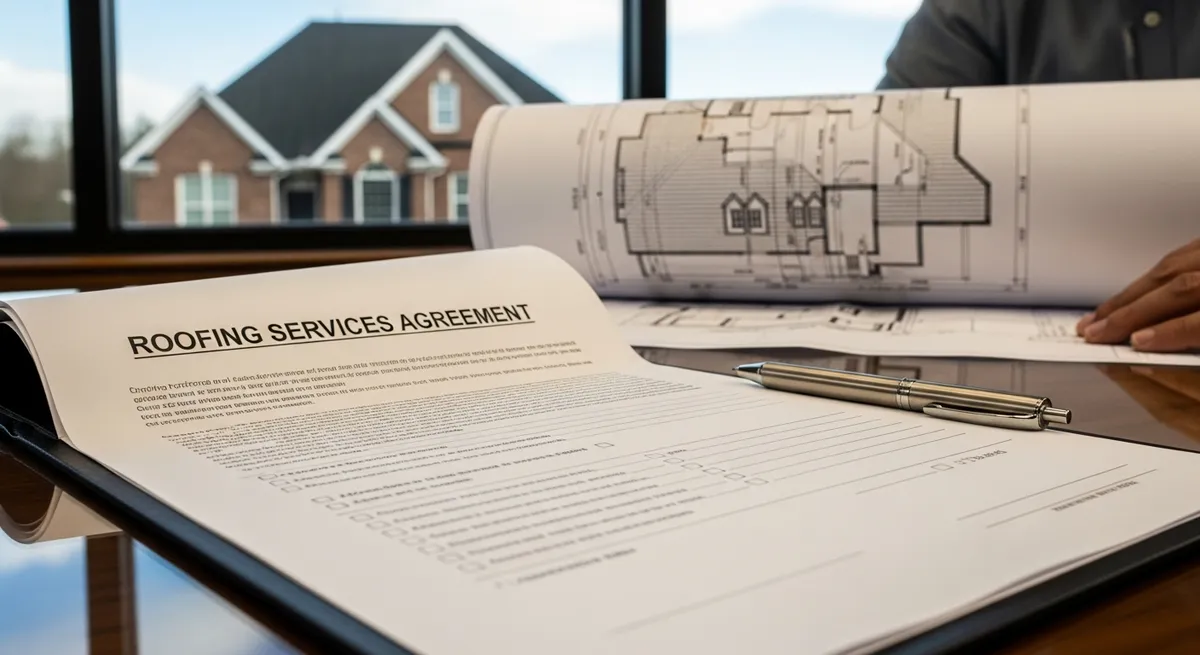
Finally, get everything in writing. A verbal agreement is worth the paper it is not printed on. Your contract should specify the scope of work, materials to be used (including brand and product line), start and completion dates, payment schedule, change-order procedures, cleanup expectations, and warranty terms. If any of these elements are missing from a proposal, ask for them to be added before you sign. Visit our services page to learn more about the roofing solutions we offer throughout the Fairfax area.
What to Expect During a Roof Repair
If you have never been through a roof repair before, the process can feel uncertain. Knowing what to expect at each stage removes the anxiety and helps you hold your contractor accountable for a professional experience from start to finish.
The process begins with an inspection. A thorough contractor will examine the roof surface, check the attic from below, evaluate flashing and penetrations, and document every finding with photos. This inspection should be free for most reputable fairfax roof repair companies, and it forms the basis of the repair proposal. The inspector should walk you through the findings and explain which issues are urgent, which can wait, and which are cosmetic rather than structural. Expect this phase to take 30 to 60 minutes for a typical single-family home.
After the inspection, you will receive a written proposal that itemizes the recommended work, the materials to be used, the total cost, and the estimated timeline. Review this document carefully and do not hesitate to ask questions about anything that is unclear. If terms like “ice-and-water shield” or “step flashing” do not mean anything to you, ask the contractor to explain them. A professional will welcome your questions rather than brushing them aside.
On the day of the repair, the crew will typically arrive between 7:00 and 8:00 in the morning. They will set up safety equipment, stage materials, and protect your landscaping and walkways with tarps or drop cloths. For minor repairs, tear-off and installation may happen simultaneously as the crew works across the repair area. For larger projects, tear-off of the damaged section comes first, followed by inspection of the exposed decking, any necessary decking repairs, underlayment installation, and finally the new roofing material.
Noise is part of the deal. Roofing work involves nail guns, hammers, material loading, and the general commotion of a crew working on an elevated surface. If you work from home, plan for disruption during the repair day. Most minor repairs generate three to five hours of active noise, while larger projects may span the full workday.
Cleanup should be thorough and included in your contract. At the end of each workday, the crew should remove all debris, sweep the surrounding area, and run a magnetic roller across the lawn and driveway to pick up stray roofing nails. Finding a nail in your tire two weeks after a roof repair is a sign of sloppy cleanup practices, and it is entirely preventable. Before signing off on the completed project, walk the perimeter of your home and inspect the work area yourself. Any debris that the crew missed should be addressed before final payment is released.
A final walk-through with the crew leader or project manager is the last step. They should show you the completed work, point out any areas where they found additional issues that may need future attention, and provide documentation of the materials installed and the warranty terms. Take photos of the completed repair for your records—they can be valuable if you ever need to file an insurance claim or sell the home.
Emergency Roof Repair in Fairfax
Not every roof problem gives you the luxury of shopping around for quotes and scheduling work at your convenience. When a tree crashes through your roof during a thunderstorm, when a major leak appears during a downpour, or when wind peels back an entire section of shingles, you need immediate help. Emergency roof leak repair fairfax situations require a different approach than planned maintenance repairs.
The first priority in any roofing emergency is protecting the interior of your home from further water damage. If water is actively entering the house, place buckets or containers to catch drips, move furniture and valuables away from the affected area, and use towels to absorb standing water on floors. If the leak is severe, shut off electricity to the affected room as a safety precaution—water and electrical systems are a dangerous combination.
The second priority is contacting a roofing contractor who offers emergency service. In the Fairfax area, Sterling Roofers can be reached at (703) 436-4445 for emergency situations. An emergency response typically involves tarping the damaged area to prevent further water intrusion, assessing the extent of the damage, and providing a temporary solution that holds until a permanent repair can be scheduled. Emergency tarping can usually be completed within a few hours of your call, even during evening hours or weekends.
Document everything before, during, and after the emergency response. Take photos and video of the damage from as many angles as possible, including both the exterior roof damage and any interior water damage. Note the date and time the damage occurred, the weather conditions, and a description of what happened. This documentation is critical if you plan to file an insurance claim, and it needs to be as thorough as possible before any temporary repairs alter the scene. Your insurance company will want to see the damage as it appeared before mitigation efforts began.
Contact your insurance company as soon as practical after securing the property. Most homeowner’s policies require prompt notification of damage, and some include time limits on filing claims. Provide your claims adjuster with the documentation you collected and request that they schedule an inspection as quickly as possible. A reputable Fairfax roofing contractor can work directly with your adjuster to ensure the damage assessment is complete and accurate, which helps prevent disputes during the claims process.
Be cautious of storm chasers—out-of-town contractors who appear in neighborhoods immediately after severe weather, knocking on doors and offering quick repairs at suspiciously low prices. These operators often collect deposits and disappear, or they perform substandard work using inferior materials and vanish before problems surface. Legitimate roofing companies fairfax va residents rely on do not need to solicit business door-to-door after storms. They have established reputations, verifiable addresses, and a track record you can research before handing over a deposit.
Maintaining Your Roof After Repairs
The best fairfax roof repair is the one you never need in the first place. Once your current issues are resolved, a modest investment of time and attention in ongoing maintenance can dramatically extend the life of your roof and keep future repair bills to a minimum.
Clean your gutters at least twice a year—once in late November after the leaves have fallen and again in late spring after pollen season winds down. Clogged gutters are one of the most common indirect causes of roof damage in Fairfax. When gutters overflow, water backs up under shingle edges and sits against fascia boards, wicking moisture into areas that were designed to stay dry. Gutter cleaning takes about an hour for most single-family homes, and it is one of the most cost-effective maintenance tasks you can perform.
Trim tree branches that hang within six feet of your roof surface. Overhanging branches drop leaves and debris into valleys, scratch the granule coating off shingles during wind events, and provide a direct pathway for squirrels and raccoons that can tear through underlayment and vent screens with surprising speed. A certified arborist can handle the trimming if the branches are large enough to require professional equipment, and the cost is modest compared to the roof damage that unchecked tree growth can cause.
Inspect your roof visually after every major storm. You do not need to climb onto the roof—a careful scan from ground level with binoculars is sufficient to spot missing shingles, displaced ridge caps, or visible debris impacts. Walk the interior of your home and check ceilings and upper walls for new water stains, damp spots, or musty odors that were not present before the storm. These five-minute post-storm checks can catch new damage before it has time to compound.
Schedule a professional roof inspection every two to three years, or immediately after any weather event that brought hail or sustained winds above 50 mph. A professional inspector will identify issues that are invisible from the ground—cracked pipe boots, deteriorating sealant, lifted flashing, and early signs of decking deterioration. Think of it as preventive medicine for your home: catching small problems early keeps treatment simple and affordable.
Check your attic twice a year, ideally during the extremes of summer and winter. In summer, excessive heat in the attic indicates inadequate ventilation that is accelerating shingle aging from below. In winter, look for frost on the underside of the decking or damp insulation, both of which point to moisture infiltration that needs to be addressed before it causes mold or structural damage. If your attic shows signs of poor ventilation, ask your roofing contractor about adding ridge venting or additional soffit intake during your next repair or maintenance visit—the incremental cost is minimal when crews are already on the roof.
Keep a simple maintenance log that records the date of each inspection, any issues found, repairs performed, and the contractor who did the work. This log becomes valuable documentation if you ever sell the home, file an insurance claim, or need to reference past work for warranty purposes. A spiral notebook in your filing cabinet works just as well as any app—the point is to have a continuous record that shows your roof has been properly maintained throughout its life.
Protect Your Fairfax Home with Proactive Roof Care
Your roof is the single most important protective system on your Fairfax home, and it deserves the same attention you give to your HVAC system, your plumbing, and your electrical panel. The difference is that roof problems are easy to ignore because they develop slowly and silently—until the day they become impossible to ignore and exponentially more expensive to fix.
Everything in this guide circles back to one central principle: early detection and professional response. Whether you are dealing with a few worn shingles, a persistent leak around a chimney, or the aftermath of a storm that tore through your neighborhood, the playbook is the same. Inspect regularly, document what you find, choose a licensed and insured contractor with local experience, get everything in writing, and do not let urgency override diligence.
Residential roof repair fairfax virginia homeowners invest in today protects the value, safety, and comfort of their homes for years to come. A well-maintained roof does not just keep water out—it preserves your insulation’s effectiveness, supports healthy indoor air quality, and contributes to the overall energy efficiency of your home. Ignoring roof problems does the opposite, creating a cascade of secondary issues that are far more costly than the original repair would have been.
Sterling Roofers is here to help Fairfax homeowners at every stage of the process. Whether you need a routine inspection, a targeted repair, or an honest assessment of whether it is time for a full replacement, our team brings over 15 years of Northern Virginia experience to every project. We are licensed, bonded, and insured, and we stand behind our workmanship with industry-leading warranty terms.
Schedule Your Free Fairfax Roof Inspection
Sterling Roofers provides thorough inspections and honest repair assessments for homeowners throughout Fairfax County. Call us at (703) 436-4445 or schedule online to get started.
Schedule Free Inspection