Roof Replacement Planning: Gutters, Decking, Overlays, and Estimating the Cost
Roof Replacement Planning: Gutters, Decking, Overlays, and Estimating the Cost
Key Takeaways
- Roof replacement does not automatically include gutters — they are a separate scope and must be requested explicitly
- Gutters typically do not have to be removed when replacing a roof — they are detached and re-attached rather than discarded
- Full tear-off is almost always better than an overlay — it allows decking inspection and proper waterproofing layer installation
- Replace roof decking decisions happen during tear-off — confirm the billing method (per sheet) before work begins
- A proper roof replacement estimate accounts for roof area in squares, pitch factor, material grade, decking contingency, and permit fees
Planning a roof replacement involves more decisions than most homeowners anticipate. Before a contractor sets foot on your roof, you should understand what your project actually includes, what happens to your gutters during the process, when decking needs to be replaced and how that cost is handled, whether an overlay is a legitimate option or a shortcut you should avoid, and how to get from a roof size to a realistic cost range before comparing bids. This guide covers all of these questions with the specificity you need to make informed decisions about one of the largest home improvement investments you’ll make.
Does Roof Replacement Include Gutters?
This is one of the most common questions homeowners ask when planning a roof replacement, and the clear answer is: no — roof replacement does not include gutters unless they are explicitly quoted as part of the scope.
A standard roof replacement scope covers the roofing system itself: tear-off of existing shingles and underlayment, inspection and repair of the decking surface, installation of new ice and water shield, synthetic underlayment, drip edge, shingles, and all flashing at penetrations and transitions. The gutter system is a separate component that attaches to the fascia below the roof edge. It is not part of the roofing system and is not included in a standard replacement unless a contractor specifically proposes it and it is written into the contract with its own pricing.
That said, a roof replacement is a logical time to upgrade your gutters if they are nearing the end of their life. When the roofing crew has the area around the eave exposed and active, adding gutter replacement to the same project can save you a second mobilization cost later. If your gutters are more than 15–20 years old, sagging, pulling away from the fascia, or showing widespread corrosion, ask your roofing contractor to include a gutter replacement quote as a separate line item. Compare that price to what a dedicated gutter company would charge for the same scope — sometimes the combination pricing is competitive, sometimes it isn’t.
Do Gutters Have to Be Removed When Replacing a Roof?
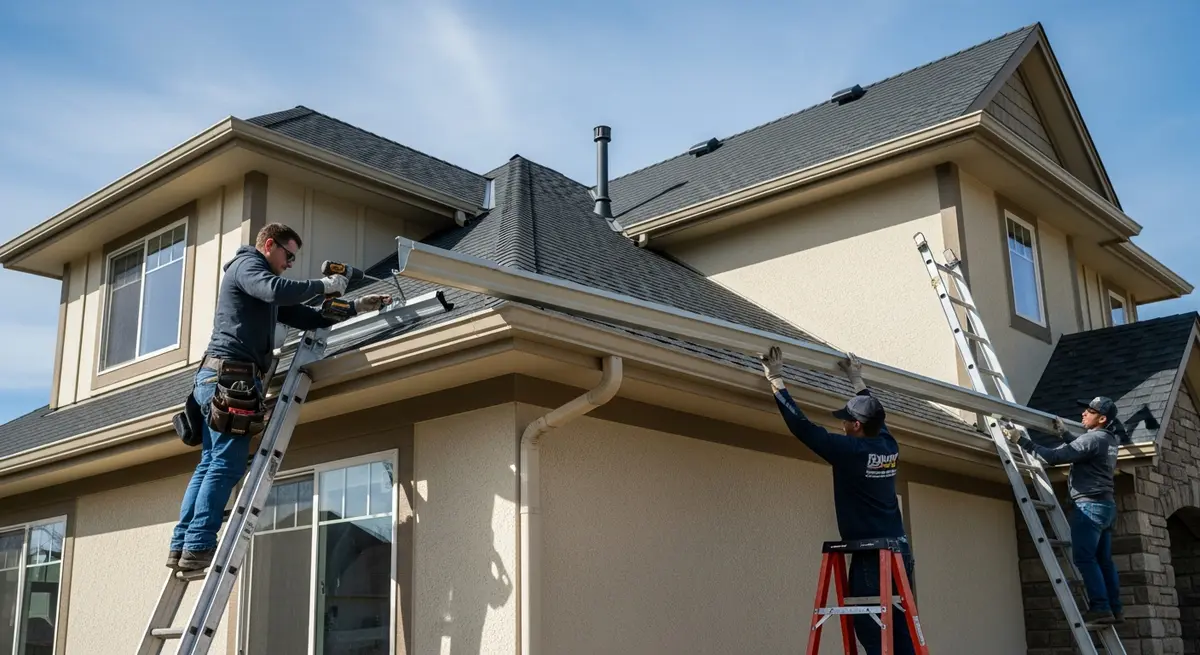
In most cases, gutters do not have to be fully removed when replacing a roof. The standard approach is:
- The roofing crew detaches the gutters from the fascia board at the beginning of the project, allowing them to swing away slightly from the eave.
- With the gutter out of the way, the crew installs new drip edge metal at the eave and begins shingle installation, allowing shingles to overhang the fascia correctly over the gutter position.
- After the shingle installation at the eave is complete, the gutters are re-attached to the fascia with new hanger screws.
Gutters are fully removed and discarded only if they are being replaced as part of the project, or if their condition makes temporary removal and re-attachment impractical — for example, if the gutter system is so deteriorated that re-hanging it would require as much effort as installing new gutters.
One important nuance: if your gutters were installed over the drip edge (a common installation error), the crew will need to remove the gutters completely to install new drip edge properly, then re-hang the gutters. Ask your contractor how the existing gutters are attached and whether the drip edge is installed correctly — this determines whether gutter detachment or full removal is needed for your project.
Replace Roof Decking: When It’s Needed and How It’s Priced
Replacing the roof decking — the plywood or OSB panels that form the structural surface the shingles attach to — is one of the most common “surprises” homeowners encounter during a roof replacement. It doesn’t have to be a surprise if you understand when it happens and how to plan for it.
When decking needs replacement: During tear-off, a crew member walks the exposed decking systematically, probing for soft spots with foot pressure and examining the surface visually. Any sheet of decking that shows:
- Visible moisture staining or discoloration
- Surface delamination (layers of plywood separating)
- Soft deflection under foot pressure
- Mold or rot on the underside (visible when checked from the attic)
- Insufficient nail-holding capacity (the nail head pulls through rather than holding)
...is flagged for replacement. On average, Northern Virginia homes undergoing full replacement have decking replacement in 30–50% of cases, with a higher rate on older homes and homes with documented past leak history.
How decking replacement should be priced: The cost to replace roof decking should be established as a per-sheet price in the contract before work begins — typically $80–$140 per 4x8 sheet of 5/8” plywood installed in Northern Virginia. The number of sheets needed cannot be known until tear-off is complete, which is why it is handled as a change order. A contract that establishes the per-sheet rate upfront — and requires your approval before decking replacement proceeds — is operating correctly. A contractor who simply replaces decking without notifying you and adds the cost to the final invoice is not.
Some contractors offer a “not to exceed” decking replacement provision, where they commit to a maximum number of sheets or a maximum additional cost for decking. This is a consumer-friendly approach that limits your exposure to the unknown — ask about it if your contractor does not offer it proactively.
Framing New Roof Over Existing Roof: Overlay vs. Full Tear-Off
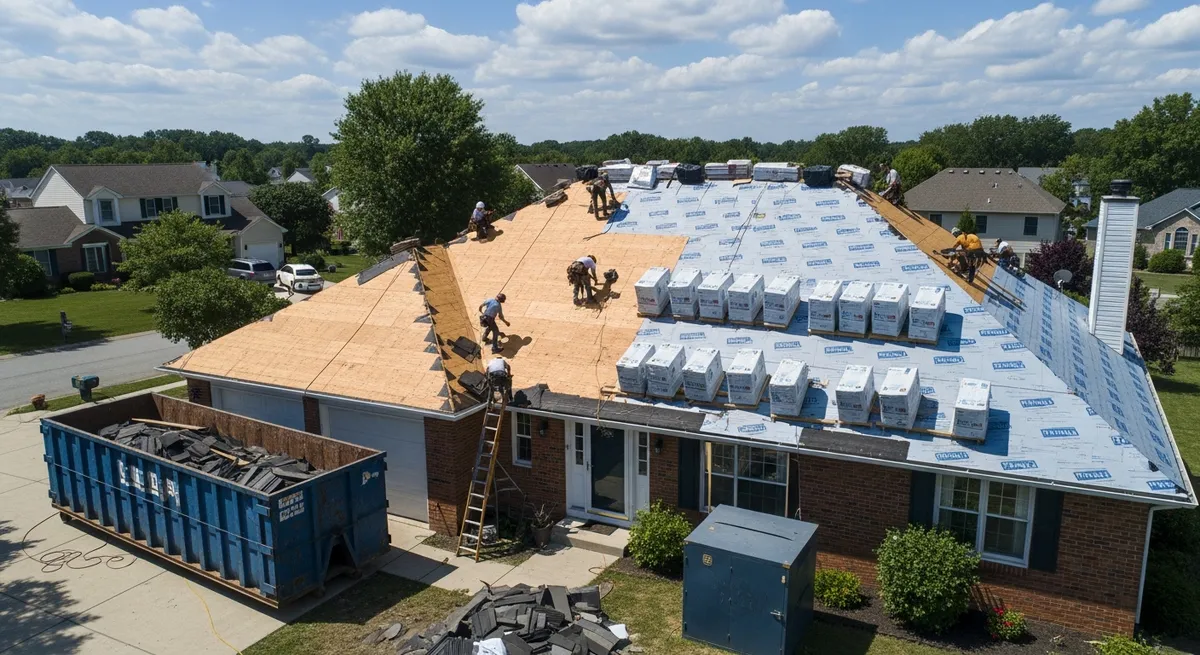
One decision every homeowner faces during a roof replacement is whether to do a full tear-off — removing all existing roofing material down to the decking — or an overlay, also called a lay-over or re-roof, which involves framing new roof over existing roof material by installing new shingles directly on top of the existing layer.
Overlays are less expensive in the short term because they eliminate the cost of tear-off and disposal. But they come with significant disadvantages that affect long-term value:
- No decking inspection. The entire reason decking replacement matters — protecting against hidden water damage — is eliminated in an overlay. Any soft spots, rot, or delamination in the existing decking remain under the new shingles and continue to deteriorate.
- Compromised waterproofing. Ice and water shield — the peel-and-stick membrane that protects against ice dam infiltration — cannot be properly installed over existing shingles. On a tear-off, it bonds directly to the decking at the eave and in the valleys. On an overlay, it sits on top of existing shingles with an uneven bonding surface, significantly reducing its effectiveness.
- Added weight. A second layer of shingles adds 2–4 pounds per square foot to the roof structure. While most Northern Virginia homes are framed to handle this, homes with undersized rafters or existing structural issues are put under additional load stress.
- Shortened lifespan. Shingles installed over an existing layer run hotter than shingles installed over a clean decking surface, because heat from both layers accumulates. Studies by manufacturers show that overlay installations can reduce shingle lifespan by 15–20% compared to tear-off installations.
- Code limitations. Virginia code generally limits asphalt shingle roofs to two layers maximum. If your home already has two layers of shingles — which is discoverable by checking the eave edge — an overlay is not a code-legal option regardless of cost savings.
The one scenario where an overlay can be a reasonable choice is when the existing single layer of shingles is in good condition, the decking beneath is confirmed to be in good shape, the home has adequate structural capacity, and budget is the primary constraint. In that limited scenario, an overlay buys time. For most homeowners planning a roof replacement with a 20+ year horizon on the next one, full tear-off is the better investment.
How to Estimate Roof Replacement Cost in Northern Virginia
Getting to a rough roof replacement estimate before meeting with contractors requires a few key inputs. Here is the framework:
Step 1 — Determine roof area in squares. One roofing square equals 100 square feet of roof surface. Start with your home’s footprint square footage. For a simple gable or hip roof, multiply the footprint by 1.1 to 1.5 depending on pitch:
| Roof Pitch | Pitch Factor | Example (2,000 sq ft footprint) |
|---|---|---|
| 4:12 | 1.06 | 2,120 sq ft = 21.2 squares |
| 6:12 | 1.12 | 2,240 sq ft = 22.4 squares |
| 8:12 | 1.20 | 2,400 sq ft = 24 squares |
| 10:12 | 1.30 | 2,600 sq ft = 26 squares |
Step 2 — Apply cost per square for your material choice. In Northern Virginia as of 2026:
- Standard architectural shingles (30-year): $700–$1,000 per square installed
- Premium architectural shingles (50-year): $900–$1,300 per square installed
- Metal roofing (standing seam): $1,500–$2,500 per square installed
Step 3 — Add permits and contingency. Virginia building permits for roof replacement add $100–$350 depending on jurisdiction. Add a 10–15% contingency for potential decking replacement — this is not guaranteed, but it prevents sticker shock if the crew finds damaged sheets during tear-off.
For the example of a 2,000 square foot footprint home with a 6:12 pitch and standard architectural shingles: 22.4 squares × $850/square = $19,040 + permit ($200) + 10% contingency (~$1,900) = approximately $21,140. This is a reasonable pre-bid estimate range, not a final price — actual bids may vary 10–20% in either direction based on contractor overhead, material costs at the time of installation, and site-specific factors.
Free Roof Replacement Estimates for Northern Virginia Homeowners
Sterling Roofers provides written roof replacement estimates across Fairfax, Loudoun, Prince William, Arlington, Alexandria, and Maryland. We explain every line item before you sign. Call (703) 436-4445 or book online.
Book Your Free EstimateRoof Replacement Checklist: What to Confirm Before Signing
Use this roof replacement checklist to verify that every critical item is covered in your contractor’s written proposal before you authorize work:
- Complete tear-off of existing shingles and underlayment down to the decking (number of existing layers specified)
- Disposal of all removed material (confirm this is included, not a separate charge)
- Ice and water shield: minimum 3 feet at all eaves, in all valleys, and at all penetrations
- Synthetic underlayment on the field (not 15-lb felt)
- New drip edge at both eaves and rakes
- New flashing at all penetrations: chimneys, pipe boots, skylights, wall intersections
- Specific shingle product name, color, wind rating, and warranty class
- Decking replacement: per-sheet price documented; approval required before replacement proceeds
- Permit: who pulls it, what jurisdiction, who pays (typically included in the project cost)
- Gutter handling: detach and re-attach, or full removal? Who pays for gutter re-hanging?
- Ventilation: does the proposal address ridge vent and soffit vent adequacy?
- Timeline: project start date, estimated completion, weather delay policy
- Payment schedule: deposit amount, progress payment structure, final payment at completion
- Warranty: manufacturer material warranty class and contractor workmanship warranty term both in writing
- Cleanup: magnetic nail sweep, debris removal, gutter clearing after shingle installation