Commercial Roofing Contractor Checklist
Commercial Roofing in Arlington & Maryland: Systems, Maintenance, and Contractor Checklist
Key Takeaways
- Commercial flat roofs require a different contractor skill set than residential sloped roofing — verify the firm’s commercial portfolio
- TPO, EPDM, and modified bitumen each have different lifespans, maintenance requirements, and installation standards
- Core sampling is the industry standard for evaluating existing flat roof insulation before re-roofing
- Roofing contractors on commercial projects should carry higher liability limits — request certificates of insurance before work starts
- A preventive maintenance agreement signed after installation protects the warranty and extends roof lifespan by years
Property managers and business owners in the DMV region face unique challenges when it comes to commercial roofing arlington projects. Unlike residential roofing, commercial systems must withstand heavy foot traffic, support HVAC equipment, and minimize business disruption during installation or repairs. Sterling Roofers serves Sterling, VA and nearby Northern Virginia areas including Arlington, Fairfax, and the greater DMV region with comprehensive commercial roofing solutions.
This guide covers everything you need to know about commercial roof systems, maintenance planning, and selecting qualified contractors. Whether you manage a retail center, office building, or industrial facility, understanding these fundamentals helps protect your investment and avoid costly emergency repairs.
Common Commercial Roof Types
Commercial buildings typically feature flat or low-slope roofing systems designed for durability and functionality. Understanding the primary options helps property managers make informed decisions about repairs, restoration, or replacement.
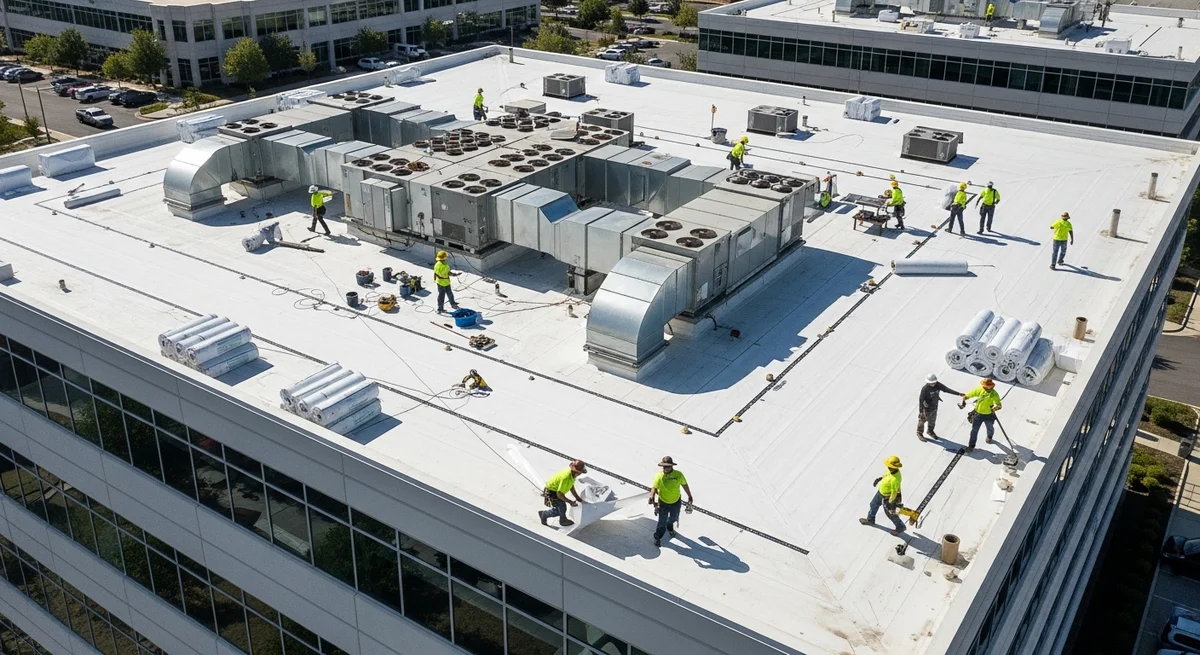
TPO (Thermoplastic Polyolefin): TPO has become the most popular choice for commercial roofing in maryland and throughout the region, including our TPO roofing services in Sterling. This single-ply membrane offers excellent UV resistance, energy efficiency through its reflective white surface, and strong seam welds. TPO typically lasts 20-30 years with proper maintenance.
EPDM (Ethylene Propylene Diene Monomer): Often called rubber roofing, EPDM provides proven performance at a lower cost than TPO. The black membrane absorbs heat, making it suitable for buildings that benefit from passive heating. EPDM excels in flexibility and weather resistance, with lifespans reaching 25-30 years.
PVC (Polyvinyl Chloride): PVC membranes offer superior chemical resistance, making them ideal for restaurants, manufacturing facilities, and buildings with rooftop grease exhaust. The material resists ponding water and provides excellent fire ratings.
Modified Bitumen: This multi-layer system combines the proven durability of built-up roofing with modern polymer technology. Modified bitumen works well for buildings requiring exceptional puncture resistance and performs reliably in extreme temperature variations.
Metal Commercial Systems: Standing seam and architectural metal panels provide the longest lifespan of any commercial roofing option, often exceeding 40-50 years. Metal systems work for both flat and pitched applications and offer superior wind resistance.
For detailed information about our commercial services, visit our commercial roofing page.
What a Good Commercial Roof Maintenance Plan Includes
Proactive maintenance extends roof life, prevents emergency repairs, and protects warranty coverage. A comprehensive maintenance program for commercial roofing arlington properties should include the following components:
Semi-Annual Inspections: Professional inspections in spring and fall identify developing issues before they cause leaks. Inspectors examine membrane condition, seams, flashings, and penetrations while documenting findings with photos and detailed reports.
Drain and Gutter Clearing: Clogged drainage causes ponding water, the leading cause of premature flat roof failure. Maintenance plans should include quarterly drain cleaning and debris removal, with additional clearing after heavy storms.
Membrane Condition Checks: Technicians examine the roof surface for punctures, tears, bubbling, or UV degradation. Early membrane repairs cost a fraction of full replacement and prevent water infiltration.
Flashing Review: Flashings around HVAC units, vents, skylights, and roof edges represent the most failure-prone areas. Maintenance visits should verify sealant integrity and flashing adhesion.
Documentation: Every inspection should produce written reports with photographs, condition ratings, and prioritized recommendations. This documentation proves invaluable for warranty claims and budgeting future repairs.
How to Spot Early Warning Signs Before a Leak Becomes a Shutdown
Commercial roof failures rarely happen overnight. Recognizing early warning signs allows property managers to address issues during planned maintenance rather than emergency shutdowns.
Ponding Water: Water remaining on a flat roof more than 48 hours after rain indicates drainage problems. Ponding accelerates membrane degradation, adds structural weight, and creates leak pathways at seams.
Clogged Drains: Leaves, debris, and sediment accumulate at roof drains, particularly in fall. When drains back up, water finds alternative paths including through the roof assembly.
Membrane Bubbles or Blisters: Air or moisture trapped beneath the membrane creates bubbles that expand in heat and contract in cold. Over time, this movement causes membrane fatigue and cracking.
Seams Lifting or Separating: Single-ply membranes rely on welded or adhered seams. When seams begin separating, water enters the roof assembly. Seam repairs cost far less than addressing resulting water damage.
Interior Water Stains: Ceiling stains, wall discoloration, or musty odors indicate active leaks. By the time stains appear, water has often traveled significant distances through the roof assembly.
HVAC Curb Issues: Equipment curbs experience constant vibration and thermal movement. Failed curb flashings represent one of the most common commercial roof leak sources.
For storm-related damage assessment, our storm damage repair team provides rapid response inspections.
If you observe active leaking during rain, widespread membrane deterioration, or structural sagging, contact a commercial roofing contractor immediately. These conditions can compromise building safety and require urgent professional assessment.
Repair vs Restoration vs Replacement: A Decision Guide
Understanding when to repair, restore, or replace a commercial roof impacts both immediate costs and long-term building value. Each approach serves specific situations.
When Repair Makes Sense
Repairs address localized damage on otherwise sound roofs. Punctures from foot traffic, failed flashings around specific penetrations, or isolated seam issues warrant repair rather than broader intervention. Repairs make sense when the roof is less than 15 years old and the membrane remains in good overall condition.
For comprehensive repair services, visit our roofing services page.
When Restoration Applies
Roof restoration involves applying a coating system over the existing membrane. This approach works for roofs with moderate wear but sound underlying structure. Restoration extends roof life 10-15 years at roughly half the cost of replacement. The process causes minimal business disruption since the existing roof remains in place.
When Replacement Becomes Necessary
Full replacement applies when the roof has exceeded its service life, sustained widespread damage, or when deck deterioration prevents restoration. Multiple previous repairs, persistent leaks despite interventions, or visible deck damage indicate replacement need. While more expensive upfront, replacement provides a completely new warranty period and optimal performance.
How to Choose Commercial Roofing Contractors Maryland
Selecting qualified commercial roofing contractors maryland requires evaluating multiple factors beyond price. The right contractor minimizes business disruption, ensures quality installation, and stands behind their work.
- Proper Credentials: Verify state licensing, manufacturer certifications for specific roof systems, and current bonding. Maryland and Virginia maintain contractor registration databases for verification.
- Safety Program: Commercial roofing involves significant hazards. Qualified contractors maintain written safety programs, OSHA compliance documentation, and trained crews. Ask about EMR (Experience Modification Rate) as an indicator of safety performance.
- Commercial References: Request references from similar projects, specifically other commercial buildings in the region. Contact property managers to ask about communication, timeline adherence, and post-project support.
- Warranty Offerings: Understand both manufacturer warranties on materials and contractor workmanship warranties. NDL (No Dollar Limit) warranties provide the strongest protection but require manufacturer-certified installation.
- Project Management: Large commercial projects require dedicated project managers who coordinate scheduling, communicate with building management, and ensure specification compliance.
- Insurance Coverage: Obtain certificates of insurance showing general liability (minimum $1 million) and workers compensation coverage. Your building insurance may require specific contractor coverage limits.
Request three detailed proposals specifying identical materials and scope. This allows true comparison rather than evaluating different systems at different price points.
What to Expect During a Commercial Roofing Project
Understanding project phases helps property managers prepare tenants, coordinate operations, and set realistic expectations.
Pre-Project Scheduling: Professional contractors conduct pre-construction meetings to establish material delivery schedules, work hours, and access requirements. This meeting identifies potential conflicts with building operations.
Building Access: Crews require roof access, staging areas for materials, and parking for equipment. Discuss access routes to minimize tenant disruption and identify any restricted areas.
Safety Zones: Active work areas require barricades and restricted access. The contractor should clearly mark zones and communicate restrictions to building occupants.
Noise Considerations: Certain operations, particularly tear-off and equipment installation, create significant noise. Coordinate with tenants regarding timing of loud work phases.
Daily Cleanup: Professional crews secure materials and clean work areas at the end of each day. The roof should remain watertight overnight whenever possible.
Final Walkthrough: Project completion includes a formal walkthrough with the property manager, documented inspection, and turnover of warranty documentation. This walkthrough verifies work meets specifications and identifies any punch-list items.
Request a Commercial Roof Inspection
Get a comprehensive roof assessment with documented findings and maintenance recommendations for your commercial property.
Schedule Inspection