Chantilly Roof Repair Guide: Common Damage, Contractor Questions, and Cost Drivers
Chantilly Roof Repair Guide: Common Damage, Contractor Questions, and Cost Drivers
Key Takeaways
- Chantilly and Westfield neighborhoods see concentrated storm damage in late spring and summer — inspect after every significant event
- Pipe boot failures are the single most common source of interior leaks in Chantilly townhomes and single-family homes
- Virginia DPOR Class A or B license is required for any roofing contractor — verify before allowing work to begin
- Repairs covering less than 30% of roof area are usually cost-effective; above that, replacement provides better long-term value
- Always request a written itemized scope — verbal estimates are not enforceable if disputes arise
If you own a home in Chantilly and your roof is showing signs of wear, you are not alone. Chantilly roof repair is one of the most common home maintenance needs in this part of Northern Virginia, and the combination of seasonal weather extremes and aging housing stock means that roofing issues are something virtually every homeowner here will deal with at some point. Sterling Roofers serves Northern Virginia and nearby Maryland communities across the DMV, and through years of working on homes in the Chantilly area, we have developed a deep understanding of the specific challenges that local roofs face and what it takes to address them properly.
Chantilly’s housing landscape is dominated by subdivisions built during the suburban expansion of the 1980s and 1990s, with pockets of newer construction and some older properties closer to the historic corridor. Many of the homes built during that boom era are now reaching the 30- to 40-year mark, which means original roofs are at or past the end of their expected service life. Even homes with roofs replaced 15 to 20 years ago are entering the window where maintenance issues become more frequent and repairs start to add up. Understanding the common damage patterns, knowing what questions to ask contractors, and having a clear sense of what drives repair costs will put you in a much stronger position when the time comes to make a decision about your roof.
This guide covers everything a Chantilly homeowner needs to know about roof repair, from the most common problems we encounter to the factors that influence pricing, the questions you should be asking any roofing company Chantilly VA contractor before signing a contract, and the realistic timelines you should expect for different types of work. Whether you are dealing with a current leak, evaluating damage after a storm, or simply planning ahead for a roof that is showing its age, the information here will give you the confidence to make smart decisions and avoid the mistakes that cost homeowners time, money, and peace of mind.
Chantilly Roofing Problems Homeowners See Most
The climate in Northern Virginia creates a demanding environment for roofing materials. Chantilly experiences hot, humid summers where attic temperatures can exceed 140 degrees, cold winters with periodic freeze-thaw cycles, and transitional seasons marked by heavy rain and severe thunderstorms. Each of these conditions stresses your roof in different ways, and understanding the most common problems helps you catch issues early before they escalate into expensive emergencies that disrupt your daily life.
Shingle deterioration is the most widespread issue on Chantilly roofs, particularly on homes where the original builder-grade three-tab shingles are still in place. These entry-level shingles were designed with a 20- to 25-year lifespan, and many have exceeded that window significantly. As shingles age, they lose the ceramic granules that protect the asphalt layer from UV radiation. You can see evidence of this granule loss in your gutters and at the base of your downspouts, where gritty residue accumulates after every rain. Once the granule layer thins sufficiently, the exposed asphalt dries out, cracks, and curls at the edges, creating pathways for water to penetrate the roof system. This process is gradual enough that homeowners often do not notice it until significant damage has already occurred to the underlayment or decking beneath.
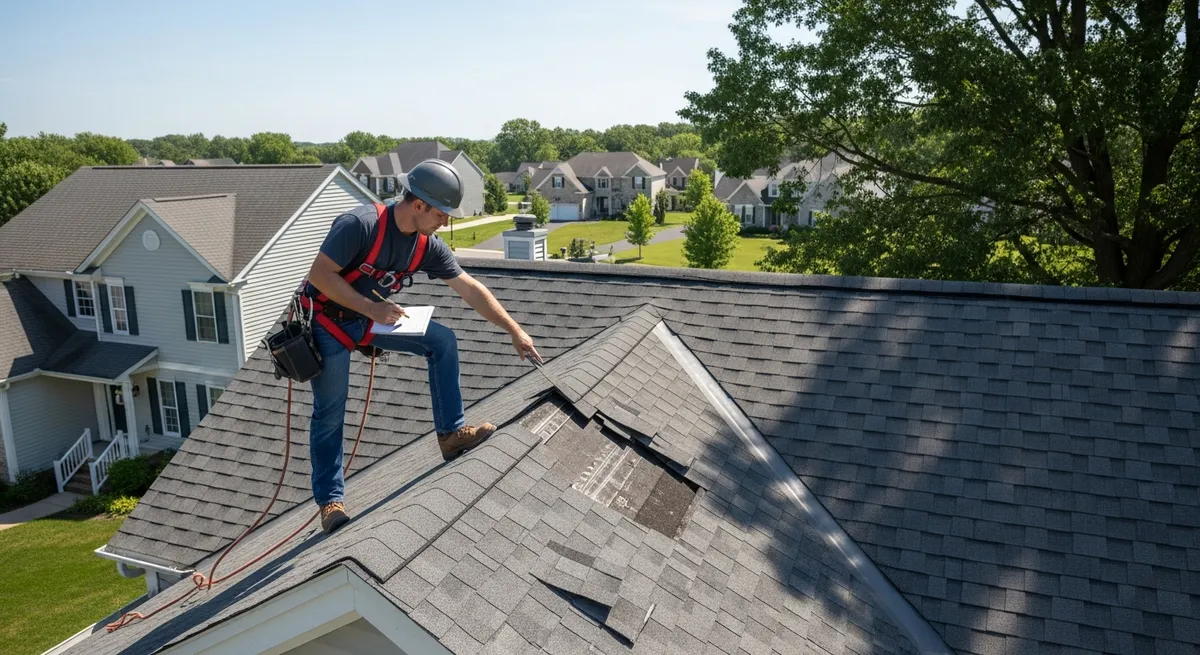
Wind damage is the second most common issue, and Chantilly’s position in the Dulles corridor means it receives its share of strong wind events throughout the year. Summer thunderstorms regularly produce gusts exceeding 50 miles per hour, and nor’easters in the cooler months can sustain high winds for hours at a time. Shingle tabs that have weakened with age or were not properly adhered during installation are particularly vulnerable. Once a tab lifts and the adhesive bond breaks, the damage is permanent—that shingle will continue to flex and deteriorate with every subsequent wind event until it either tears free entirely or is replaced by a qualified roof repair Chantilly contractor.
Flashing failures account for a disproportionate number of roof leaks in the Chantilly area. Every roof has multiple penetration points—chimneys, plumbing vents, exhaust fans, skylights—and each one requires carefully installed flashing to redirect water away from the vulnerable seam between the penetration and the roof surface. The sealant that secures flashing degrades over time, particularly around chimneys where the differential thermal expansion between masonry and metal puts constant stress on the bond. Valley flashing, which channels water where two roof slopes meet, is also a common failure point because it handles the highest volume of water flow during heavy rain. When valley flashing corrodes, lifts, or develops gaps in its sealant, the resulting leaks can be severe and cause significant damage to the interior before the source is identified.
Ventilation deficiencies are a silent problem on many Chantilly homes, particularly those where past renovation or insulation work inadvertently blocked soffit intake vents. A properly ventilated attic maintains a continuous flow of air from the soffit intakes at the eaves to the exhaust vents at the ridge, removing heat and moisture that would otherwise damage the roof system from the inside out. When this airflow is disrupted, summer heat bakes the shingles from below and winter moisture condenses on the underside of the roof deck, promoting mold growth and weakening the plywood sheathing over time. The symptoms of poor ventilation—premature shingle aging, ice dams in winter, and unexplained moisture in the attic—often mimic other roofing problems, making proper diagnosis essential before any repair work begins.
Gutter-related roof damage is another issue that Chantilly homeowners frequently overlook. When gutters become clogged with leaves and debris—a common occurrence given the mature tree canopy in many Chantilly neighborhoods—water backs up along the roof edge and can wick beneath the shingle overhang, saturating the fascia board and the edge of the roof deck. Over time, this leads to wood rot that compromises the structural integrity of the roof edge and creates entry points for water, pests, and additional deterioration. Regular gutter cleaning and maintenance is one of the simplest and most cost-effective ways to protect your roof, yet it is one of the most frequently neglected maintenance tasks. Our gutter installation guide covers the role gutters play in your overall roof health and what to consider when your gutter system needs upgrading.
Pipe boot failures round out the list of common Chantilly roofing problems. The neoprene rubber boots that seal around plumbing vent pipes on your roof have a typical lifespan of 10 to 15 years. After that, the rubber dries out, cracks, and shrinks away from the pipe, creating a gap that allows rainwater to follow the pipe directly into the attic. Because the leak is often slow and intermittent, the damage can accumulate for months before the homeowner notices a water stain on the ceiling below. The good news is that pipe boot replacement is one of the quickest and most affordable roof repairs available, taking less than an hour for an experienced contractor to complete.
Signs You Need Repairs vs a Full Replacement
The repair-versus-replacement question is one of the most consequential decisions a homeowner faces, and it deserves a thoughtful, data-driven answer rather than a snap judgment based on anxiety or a contractor’s sales pitch. A trustworthy roofing contractors Chantilly VA professional will evaluate the full picture—the age of the roof, the extent and pattern of the damage, the condition of the decking and underlayment, and the homeowner’s long-term plans for the property—before making a recommendation.
Roof age provides important context but should not be the sole deciding factor. An asphalt shingle roof in Chantilly typically lasts 20 to 30 years, with architectural shingles at the upper end and three-tab shingles at the lower end. If your roof is under 15 years old and the damage is limited to a specific area, repair is almost always the right choice. The cost of replacing a section of shingles, resealing flashing, or swapping out a pipe boot is a fraction of what a full replacement costs, and the rest of the roof still has many years of reliable service ahead. Conversely, if your roof is over 20 years old and showing widespread signs of aging—granule loss across all slopes, curling or cracking shingles, recurring leaks at multiple penetrations—the cost-effectiveness of continued patching diminishes rapidly, and replacement becomes the more financially sound path forward.
The distribution of damage is as important as its severity. Localized damage—one slope affected by wind, a single area of failed flashing, a few missing shingles on the windward side—is a clear repair situation. Widespread damage that spans multiple slopes and involves several different types of failure simultaneously points toward replacement. A useful benchmark is the 40-percent rule: if the estimated cost of repairing all identified issues exceeds 40 percent of the cost of a full replacement, the replacement typically delivers better long-term value because it resets every component with new materials and fresh warranty coverage.
Decking condition is the hidden variable that often tips the decision. The plywood or OSB sheathing beneath your shingles can only be fully assessed once the old roofing is removed, but an experienced contractor can identify warning signs during a visual inspection—sagging between rafters, soft spots when walking the roof, and water stains visible from the attic. If the decking shows signs of widespread deterioration, a full replacement that includes decking inspection and selective panel replacement is almost always preferable to a repair that leaves compromised decking in place beneath new shingles.
Your plans for the property also matter. If you intend to sell within the next three to five years, a new roof can be one of the most impactful investments you make in terms of both curb appeal and buyer confidence. Buyers and home inspectors scrutinize roofs closely, and a property with a recently installed roof from a reputable roofing company Chantilly VA contractor attracts more interest and commands a higher price than one with a patchwork of repairs and uncertain remaining lifespan. On the other hand, if you plan to stay in your home for the long term and the roof is in generally good condition with an isolated problem, a targeted roof repair Chantilly VA approach lets you extend the life of the current system while deferring the larger investment until it is truly necessary.
Energy efficiency is another factor worth considering, especially in a climate like Northern Virginia’s where cooling and heating costs are significant year-round expenses. An aging roof with failing shingles, deteriorated underlayment, and compromised ventilation contributes to poor thermal performance that shows up on your utility bills every month. A new roof installed with modern synthetic underlayment, properly balanced ridge and soffit ventilation, and reflective or cool-roof shingle options can meaningfully reduce energy costs over the life of the roof. Our roof replacement cost guide provides detailed pricing benchmarks to help you evaluate whether replacement makes financial sense for your specific situation.
What a Proper Estimate Should Include
The estimate you receive from a roofing contractor is the single most important document in the entire project. It defines the scope of work, the materials being used, the timeline, the cost, and the protections you have if something goes wrong. A vague, one-line estimate that says “roof repair — $2,500” tells you almost nothing and leaves you exposed to surprises that a detailed estimate would prevent. Understanding what a proper estimate should contain empowers you to compare chantilly roof repair contractors on equal terms and choose the one that offers the best combination of value, quality, and transparency.
Materials should be itemized by product name, type, and quantity. Instead of “shingles,” you should see the specific manufacturer, product line, color, and number of squares. Instead of “flashing,” you should see the type of metal, the gauge, and the linear footage being replaced. Underlayment type and coverage area, drip edge specifications, pipe boot quantities, ridge vent length, and any specialty materials like ice-and-water shield should all be listed separately. This level of detail allows you to verify that the products being proposed are appropriate for your roof and to compare material quality across multiple estimates accurately. Visit our materials page to learn more about the roofing products we recommend and install throughout the Chantilly area.
Labor costs should be shown as a distinct line item, separate from materials. This separation is important because labor quality is the single biggest variable in roofing outcomes—the same shingle installed by an experienced, careful crew and a hurried, undertrained one will perform dramatically differently over its lifespan. Seeing labor as its own cost line also prevents the common practice of inflating material prices to disguise labor markup, which makes fair comparison between contractors much more difficult.
Tear-off and disposal should be clearly priced if your project involves removing existing roofing material. This cost is significant—typically $1,500 to $3,000 or more depending on roof size and the number of layers being removed—and it should not be buried in a general overhead charge where you cannot see it. Some contractors include disposal in their labor line while others list it separately; either approach is acceptable as long as the cost is visible and you know it is accounted for in the total.
Permit fees should be itemized when applicable. In Fairfax County, where much of the Chantilly area falls, building permits are required for roof replacements and certain structural repairs. The permit fee is typically a few hundred dollars, and a reputable contractor will handle the application, scheduling, and inspection process as part of their standard service. If the estimate does not mention permits at all, ask whether the project requires one and whether the contractor intends to pull it—a contractor who suggests skipping the permit to save money is a contractor to avoid.
Warranty information should be detailed in the estimate, not referenced vaguely or deferred to a separate conversation. You should see the duration of the workmanship warranty, any conditions required to maintain its validity, the process for filing a claim, and whether the warranty transfers to a new owner if you sell the home. The estimate should also reference the manufacturer warranty and indicate whether the contractor holds certification from the shingle manufacturer that qualifies the project for enhanced warranty coverage with extended terms and labor inclusion.
A change-order policy belongs in every estimate. This policy describes what happens if additional work is needed once the project begins—rotted decking discovered during tear-off, mold found on the underside of sheathing, or damage that was not visible during the initial inspection. The policy should require your written approval before any additional charges are incurred and should explain how the extra costs are calculated. This single provision eliminates the most common source of disputes between homeowners and contractors and ensures that the final bill reflects only work you explicitly authorized.
Payment terms should be clearly stated. The standard approach is a deposit of 10 to 30 percent upon signing, with the balance due upon completion. Avoid contractors who demand full payment upfront, insist on cash-only transactions, or pressure you to pay before the work is finished and inspected. Documented payment methods—check or credit card—create a trail that protects both parties. If financing options are available, the terms should be outlined so you can make an informed decision about the most comfortable way to fund the project. Check out our roofing contract checklist for a comprehensive list of what every roofing agreement should include to protect your interests.
How to Choose a Contractor Without Stress
The process of selecting a roofing contractor does not have to be stressful or confusing. When you approach it with a clear set of criteria and a willingness to ask straightforward questions, the right contractor will emerge naturally from the comparison process. The wrong contractors will reveal themselves just as clearly—through vague answers, missing credentials, aggressive tactics, or estimates that do not add up.
Start with licensing verification. Every roofing contractor working in Virginia must hold a valid license from the Department of Professional and Occupational Regulation. You can look up any contractor’s license status online through the DPOR website in just a few minutes. A valid license confirms that the contractor has met minimum competency and financial responsibility standards and is subject to state regulatory oversight. Never hire a contractor who cannot provide a current license number or whose license status shows as expired, revoked, or under disciplinary action.
Insurance verification is the next essential step. A professional roof repair Chantilly contractor carries both general liability insurance and workers’ compensation coverage. General liability protects you if the contractor damages your property during the project, and workers’ compensation protects you from personal liability if a worker is injured on your property. Request certificates of insurance directly from the contractor, and take the extra step of calling the insurance company to verify that the policies are active and current. An expired or lapsed policy provides no protection, and a contractor without proper insurance coverage exposes you to significant financial risk.
Local references provide the most reliable indicator of a contractor’s actual performance. Ask for three to five references from projects completed in the Chantilly area within the past 12 months, and follow up by contacting those homeowners directly. Ask whether the work was completed on schedule, whether the final cost matched the estimate, how the crew handled the property during and after the work, and whether any issues have arisen since the project was finished. These firsthand accounts give you a much more accurate picture than online reviews alone, where the context and authenticity of individual ratings can be difficult to evaluate.
The estimate visit itself is your best opportunity to assess a contractor’s professionalism before you commit. A quality contractor arrives on time, conducts a thorough inspection of the roof surface rather than just viewing it from the ground, documents their findings with photographs, and explains everything in clear language you can understand. They answer your questions without rushing, provide a realistic timeline, and do not pressure you into making an immediate decision. If a contractor dismisses your questions, cannot explain their findings clearly, or attempts to create artificial urgency to push you into signing on the spot, those behaviors are reliable indicators of how the rest of the project will go.
Comparing three estimates is a proven strategy, but the comparison must go deeper than price alone. Evaluate each estimate for completeness, material quality, warranty terms, and the professionalism of the contractor who presented it. Two estimates within 10 to 15 percent of each other with comparable scope and materials suggest a fair market price. A dramatically lower bid should prompt questions about what is being omitted—cheaper materials, no workmanship warranty, no permit, or less experienced labor are all common explanations for a price that seems too good to be true.
Manufacturer certifications add another layer of confidence to your decision. Major shingle manufacturers like GAF, CertainTeed, and Owens Corning offer certification programs that recognize contractors who meet specific training, quality, and business standards. Certified contractors can offer enhanced warranty coverage that standard installers cannot, including non-prorated terms and labor coverage. While certification alone does not guarantee quality, it demonstrates that the contractor has invested in professional development and has been vetted by the manufacturer whose products they install. For homeowners in the Chantilly area, working with a certified roofing contractors Chantilly VA professional provides an additional layer of protection and warranty value that can save thousands of dollars over the life of the roof.
Typical Timelines and What to Expect on Job Day
Understanding the typical timeline for a roofing project and knowing what to expect when the crew arrives on job day helps you plan your schedule, prepare your property, and evaluate whether the work is proceeding normally. A well-run project follows a predictable arc, and familiarity with that arc removes the uncertainty that many homeowners find most stressful about the entire experience.
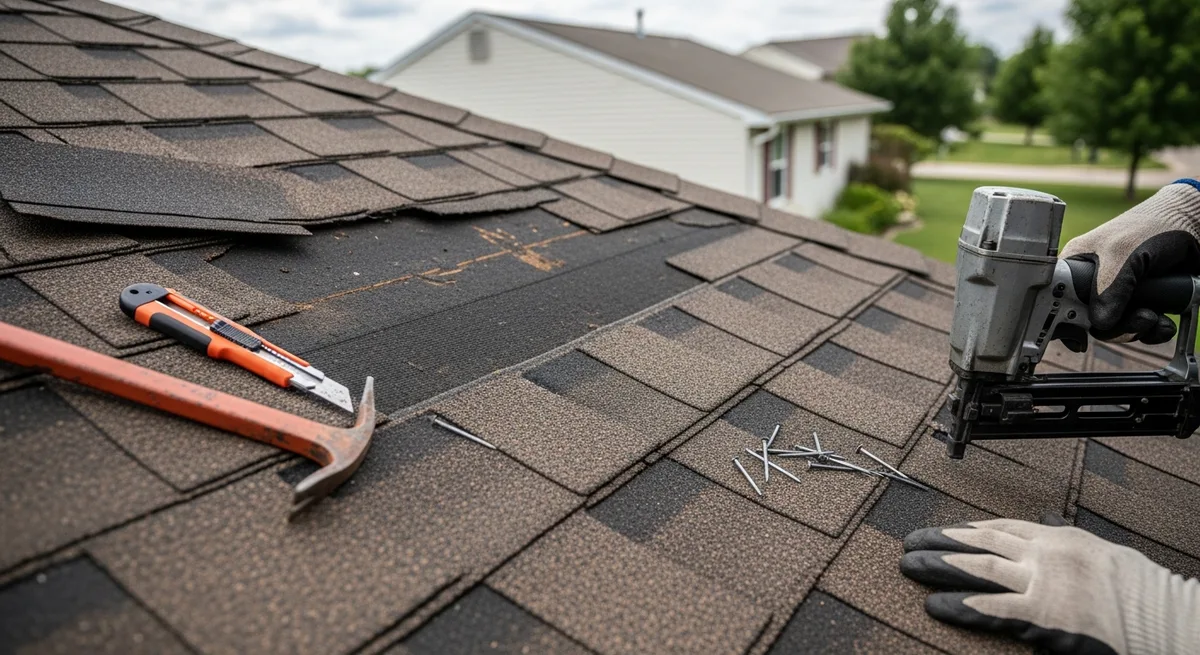
Minor repairs—a section of replaced shingles, a flashing reseal, a pipe boot swap—typically take two to six hours and can often be completed in a single visit. More involved chantilly roof repair projects that address multiple problem areas, involve selective decking replacement, or require valley rework may extend to one or two full working days. The contractor should provide a specific timeline in the estimate and communicate any factors that could affect the schedule, including material lead times and weather contingencies.
A full roof replacement on a typical Chantilly home takes two to four days from start to finish. The first day is usually the most intensive, involving material staging, complete tear-off of the existing roofing, and thorough inspection of the exposed decking. Any damaged or deteriorated decking panels are replaced before the new underlayment is installed. Subsequent days focus on installing drip edge, flashing at all penetrations and transitions, shingles across every slope, ridge vent, and all finishing details. The final day includes comprehensive cleanup and a walkthrough with the homeowner to review the completed work.
On the morning of job day, the crew typically arrives between 7:00 and 8:00 AM and begins by positioning equipment, placing a dumpster for debris, and laying down protective tarps over landscaping, walkways, and the driveway. If you have vehicles parked near the house, move them well clear of the work area before the crew arrives. Falling debris during tear-off can dent hoods, scratch finishes, and crack windshields, and having the area clear also gives the crew better access for material staging and equipment positioning.
Noise is an unavoidable part of roofing work. Tear-off involves prying up old materials with flat bars and shovels, and installation uses pneumatic nail guns, cutting tools, and the general commotion of a crew working on a sloped surface. If you work from home, expect that phone calls and video meetings may be challenging during the most intensive work periods, typically the morning hours. Young children, pets, and anyone sensitive to sustained noise will be more comfortable spending the day at an alternate location. The afternoon installation phase is noticeably quieter than the morning tear-off, but noise will be present throughout the workday.
Throughout the project, the project manager or lead installer should keep you informed about progress, any discoveries made during the work, and the plan for the remainder of the day. If unexpected conditions are found—soft decking, hidden water damage, mold on the underside of sheathing—you should be consulted immediately before any additional work is performed. This communication is not just a courtesy; it is a fundamental requirement of professional project management that protects your interests and ensures that every dollar you spend is authorized and accounted for.
Final cleanup is the last step of every professional roofing project. The crew removes all debris from the roof surface, cleans the gutters, sweeps the yard and driveway, and runs magnetic nail sweepers across every area where fasteners may have fallen. Protective tarps are removed, staging areas are restored, and the dumpster is hauled away. Walk the entire property with the project manager during the final inspection, checking the roof line for clean edges, verifying that all penetration flashing looks neat and properly sealed, and confirming that the property is free of debris. The condition of your property after the project is a direct reflection of the crew’s attitude toward their work, and any reputable contractor will welcome your thorough inspection.
After the project is complete, collect all documentation: warranty certificates for both workmanship and materials, a copy of the building permit and inspection report if applicable, photographs of the completed work, and contact information for future warranty service. Store these documents where you can access them easily if the need arises years from now. If your project involved an insurance claim, keep copies of all claim-related correspondence and the adjuster’s report alongside your roofing documentation.
Navigating chantilly roof repair does not have to be complicated or stressful. The key is approaching the process with clear expectations, asking the right questions, and choosing a contractor whose credentials, communication, and character give you confidence that the job will be done right. When you understand what common damage looks like, when repair makes sense versus replacement, what a proper estimate should contain, how to evaluate contractors fairly, and what to expect on job day, you are in control of the process rather than reacting to it. Your roof protects everything beneath it, and it deserves a contractor who treats that responsibility with the seriousness it demands. If you are ready to take the next step, we are here to help with an honest inspection, clear photographs, and a written scope you can understand and trust. Visit our services page to explore everything we offer, or check our service areas to confirm coverage in your neighborhood.
Get a Chantilly Roof Inspection
Get a Chantilly roof inspection with Sterling Roofers and receive photos plus an easy-to-understand scope. Call us today at (703) 436-4445 or book your free consultation online.
Schedule Free Consultation