Synthetic Slate and Premium Shingles: Installation Basics, Repairs, and Cost Expectations
Synthetic Slate and Premium Shingles: Installation Basics, Repairs, and Cost Expectations
Key Takeaways
- Synthetic slate weighs 50–200 lbs per square — far less than real slate at 700–1,500 lbs per square — and typically does not require structural reinforcement
- Presidential roof shingles cost $600–$900 per square installed in Northern Virginia (as of 2026), compared to $350–$550 for standard architectural shingles
- Synthetic slate requires manufacturer-certified installers for warranty compliance — general roofing experience is not sufficient
- Tile roof repair costs run $250–$600 per tile for isolated repairs; underlying system failure (battens, underlayment) requires more extensive work
- Matching aged synthetic slate or tile is imperfect — review matching samples before committing to a repair approach
Premium roofing — synthetic slate, presidential-style shingles, clay and concrete tile — is a growing segment of the Northern Virginia and Maryland market as homeowners invest in curb appeal, longevity, and material performance that goes beyond standard asphalt shingles. Sterling Roofers serves Northern Virginia and nearby Maryland communities across the DMV and works with premium roofing materials including synthetic slate products and heavy-weight architectural shingles. This guide explains what makes these roofs different, what synthetic slate roofing installation requires, how presidential roof shingles cost compares to standard products, and what homeowners should know about repairs and contractor selection.
What Makes These Roofs “Premium”
The word “premium” in roofing describes materials that go beyond the functional baseline of standard 3-tab or entry-level architectural shingles. Premium products typically offer:
Greater material thickness and weight. Standard architectural shingles weigh approximately 220–240 lbs per square. Presidential and premium laminated shingles weigh 380–500 lbs per square. Synthetic slate products vary but often run 120–200 lbs per square. The additional mass contributes to wind resistance, impact resistance, and the tactile quality that distinguishes premium products from budget alternatives.
Enhanced aesthetics. Presidential shingles are engineered with deep shadow lines, varying tab dimensions, and color blends that create a textured appearance resembling wood shake or natural slate from the street. Synthetic slate products replicate the irregular thickness variation and surface texture of natural slate at a fraction of the weight and cost.
Extended manufacturer warranties. Standard architectural shingles carry 30–50 year limited warranties. Premium products from GAF, CertainTeed, and Owens Corning typically carry 50-year or lifetime limited warranties. Synthetic slate products like DaVinci Roofscapes carry lifetime warranties and are backed by impact and wind ratings that exceed standard shingles.
Why installation quality matters more. The higher the material quality, the more damage a poor installation can cause — both to the product and to the warranty. Premium shingles have specific nailing requirements (nail placement zones, nail type, fastener count per shingle), thermal expansion characteristics that affect sealing, and flashing requirements that differ from standard products. An experienced installer who understands these specifics is not optional; it is part of what you are paying for.
Synthetic Slate Roofing Installation Basics
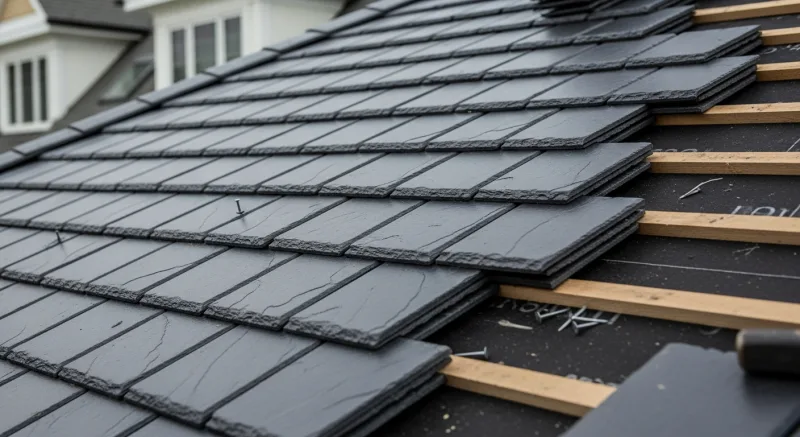
Synthetic slate roofing installation differs from standard shingle installation in several important ways:
Underlayment. Most synthetic slate products require a high-temperature, non-asphalt underlayment (synthetic underlayment rated for high-heat applications) rather than standard 15 or 30 lb felt. This is because synthetic slate products can reach higher surface temperatures than standard shingles on dark-colored installations, and standard felt can degrade at those temperatures over time.
Fastening. Synthetic slate products have specific fastener requirements — typically ring-shank or screw-shank nails of a specified length and diameter driven into a defined fastening zone. Overdriven nails crack the product (many synthetic slates are rigid or semi-rigid polymer). Underdriven nails create a lifting hazard in high winds. The installation manual must be followed exactly for warranty compliance.
Flashing details. Synthetic slate products are thicker than standard shingles, which affects how step flashing integrates at walls and dormers and how ridge and hip caps are installed. Installers unfamiliar with the specific product may apply standard flashing sequences that leave gaps or create water traps because they did not account for the different material profile.
Ventilation. As with any premium shingle product, the ventilation system must meet manufacturer requirements. Under-ventilated attic spaces void most premium shingle warranties and accelerate material degradation. Confirm ventilation is assessed and, if necessary, improved at the time of installation.
Presidential Roof Shingles Cost Expectations
Presidential roof shingles cost is a category that covers the heavy-weight, multi-layered laminated products offered by the major manufacturers under names like GAF Camelot II, CertainTeed Presidential, and Owens Corning Berkshire. Here is a realistic cost framework for the Northern Virginia market (as of 2026):
| Product Category | Installed Cost / Square | Expected Lifespan (NoVA) |
|---|---|---|
| Standard architectural shingles | $350 – $550 | 20–28 years |
| Premium architectural (HDZ, Duration) | $450 – $650 | 25–35 years |
| Presidential / designer shingles | $600 – $900 | 35–50 years |
| Synthetic slate (polymer) | $900 – $1,400 | 50+ years (lifetime warranty) |
| Clay or concrete tile | $1,000 – $1,800+ | 50–100 years (tile); underlayment 20–30 years |
Prices are typical Northern Virginia installed ranges as of 2026. Costs vary based on roof complexity, square footage, story height, and contractor experience with the specific product.
Tile Roof Repair: What Homeowners Should Know
Tile roof repair costs depend significantly on the type of tile (concrete vs. clay), the age of the installation, and whether the issue is limited to broken surface tiles or extends to the underlayment system beneath.
The fragility reality: Both clay and concrete tile crack under foot traffic and from falling debris. A contractor walking on a tile roof without the proper technique — stepping on the high point of each tile rather than the low, overlapping point — will crack tiles they are stepping on. This is the most common cause of damage to tile roofs during inspections, repairs, and satellite dish or solar installations. Any trade that requires roof access on a tile roof should be specifically asked about their tile-walking protocol before they go up.
Matching: Concrete tile weathers and changes color over time. A new tile installed to replace a cracked one will almost certainly not match the surrounding material exactly. Clay tile from older installations may be a discontinued product. Always ask the contractor to show you the replacement tile next to the existing material in daylight before committing to a repair approach.
Tile roof repair costs: Isolated tile replacement in Northern Virginia typically runs $250–$600 per tile for common concrete tiles (including labor and material matching effort) as of 2026. Rare or discontinued clay tile repair can run $400–$1,000 per tile when sourcing is difficult. When multiple tiles are broken across a slope, a section-by-section re-tile including underlayment replacement may be more economical than individual tile repairs.
Underlayment lifespan: The tile itself may last 50–100 years, but the underlayment beneath it typically needs replacement every 20–30 years. When a tile roof is leaking and the tiles appear sound, the underlayment may have failed and the leak is occurring beneath intact tile. This requires temporary tile removal, underlayment replacement in the affected area, and re-installation of the original or matching tiles — a more involved repair than a simple tile replacement.
Premium Roofing Consultations Across Northern Virginia and Maryland
Sterling Roofers works with synthetic slate, presidential shingles, and tile roofing across Northern Virginia and Maryland. If you are planning a premium roof installation or need an inspection and repair scope on an existing premium roof, call (703) 436-4445 or schedule online.
Schedule Premium Roof Consultation