Siding Repair in Alexandria & Fairfax: Wood Siding Fixes, Costs Drivers, and Hiring Tips
Siding Repair in Alexandria & Fairfax: Wood Siding Fixes, Costs Drivers, and Hiring Tips
Key Takeaways
- Wood siding repair must address moisture intrusion first — repainting or caulking over wet or rotted wood will fail quickly
- Alexandria’s historic district homes require specific material approvals for siding changes — verify with the city before contracting
- Virginia DPOR Class A or B license is required for contractors performing exterior renovation work including siding
- Fiber cement siding is the most common wood replacement material — it is paintable, rot-resistant, and low-maintenance
- Repair scope should include inspection of the moisture barrier behind the siding — replacing boards without checking the WRB is incomplete work
Your home’s siding does a lot more than look pretty from the curb. It is the first line of defense against rain, wind, insects, and temperature swings—and when it fails, the problems behind the wall multiply fast. If you are a homeowner in Alexandria or Fairfax searching for siding repair Alexandria VA professionals who actually know what they are doing, this guide is for you. Sterling Roofers serves Sterling, VA and nearby Northern Virginia / DMV areas, and we have seen firsthand how a small siding issue can quietly become a major headache when left unchecked.
We are going to cover what siding repair actually involves, the warning signs you should never ignore, the factors that drive price up or down, and how to pick the right contractor for the job. We will spend extra time on wood siding because it is everywhere in the older neighborhoods of Alexandria and parts of Fairfax—and it demands a slightly different repair approach than vinyl or fiber cement.
Whether you are in Del Ray noticing paint bubbles on your 1930s bungalow, or in Burke watching a warped board slowly peel away from the wall of your colonial, the underlying issues are remarkably similar. The DMV climate—with its humid summers, freeze-thaw winters, and heavy spring rains—pushes every siding material to its limits. Understanding what to look for and how to act on it puts you ahead of the curve and keeps small problems from turning into expensive surprises.
What Siding Repair Actually Involves
Siding repair is not just nailing a new board over the old one and calling it a day. A proper repair starts with diagnosis: figuring out why the siding failed in the first place. Was moisture getting behind the boards because of bad flashing? Did an ice dam push water sideways under the cladding? Did someone install replacement pieces without priming the back side, practically inviting rot? Until you answer the "why," any fix is just a temporary bandage.
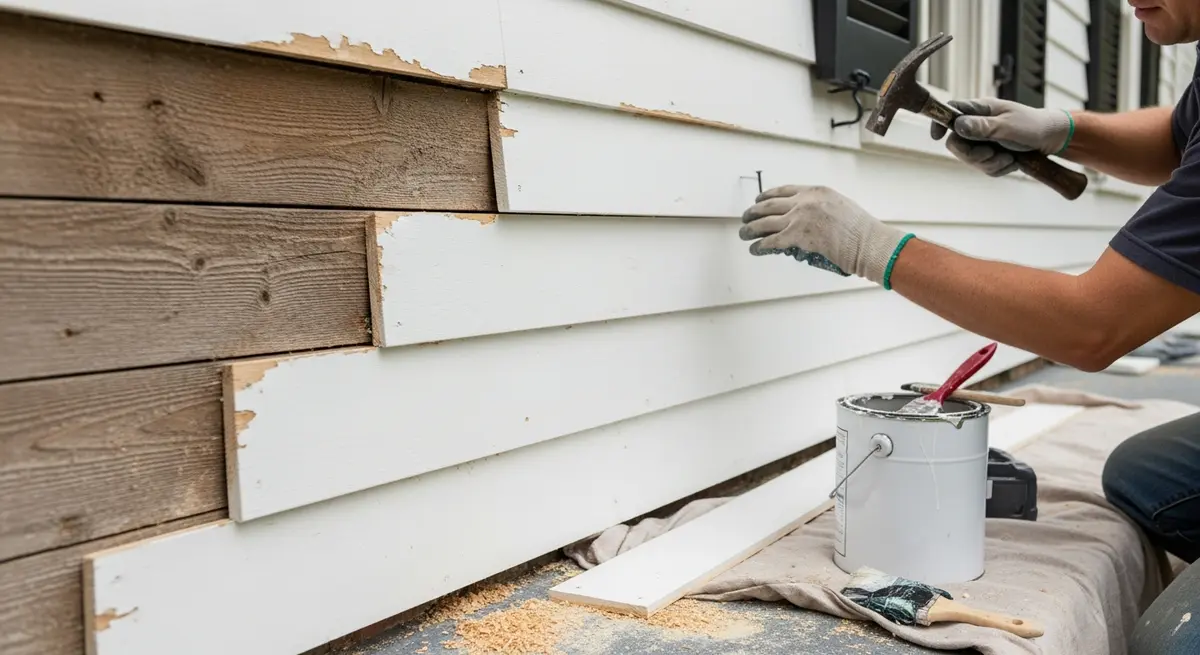
Once the root cause is identified, repair typically follows a clear sequence. The damaged material is carefully removed without disturbing adjacent boards. The sheathing and water-resistive barrier underneath are inspected—and replaced if compromised. New siding is cut, primed on all surfaces, and installed with proper overlap and fastener spacing. Finally, joints are sealed, and the repaired section is painted to match the surrounding wall. Done correctly, a siding repair Alexandria VA homeowner invests in should last as long as the original installation.
The scope can range from swapping a single cracked board (a half-day job) to rebuilding an entire wall section where moisture has been silently eating away at the substrate for years. The difference in cost between those two extremes is significant, which is why catching problems early is worth its weight in gold—or at least in avoided contractor invoices.
It is also worth mentioning that siding repair frequently reveals surprises. Crews open up a wall expecting to replace three boards and discover that the house wrap behind them has deteriorated, or that the original builder skipped flashing entirely at a critical transition. A good contractor budgets for these discoveries and communicates them clearly rather than charging you blindly. If your proposal includes a contingency allowance for hidden conditions, that is actually a sign of professionalism—not an attempt to inflate the bill.
Signs You Should Not Ignore
Siding does not usually fail dramatically. There is no loud crack or sudden collapse—just subtle clues that most homeowners walk past every day without noticing. Training yourself to spot these early warnings can save thousands of dollars and a lot of frustration. The following are the most common signs that your siding needs professional attention sooner rather than later.
Peeling or bubbling paint is one of the earliest signals. When paint lifts away from wood siding, it almost always means moisture is migrating through the board from behind. The wood absorbs water, expands slightly, and breaks the paint bond. If you see bubbling on the lower courses of a wall, pay special attention—water follows gravity, so the damage source is likely higher up, possibly at a window head, a roof-to-wall junction, or a leaking gutter.
Soft spots are another red flag. Press a screwdriver tip against suspect areas; healthy wood resists firmly, while rotted wood yields like a sponge. This test is especially revealing around window and door trim, at butt joints between board ends, and along the bottom course where siding meets the foundation. If the screwdriver sinks in with little effort, the damage has progressed well beyond the surface.
Gaps and separations between boards indicate either swelling from moisture absorption or original installation errors. These gaps let wind-driven rain behind the siding, accelerating the damage cycle. In Alexandria’s historic Old Town neighborhood, where many homes feature wood clapboard siding that is 50 years old or more, gap formation is one of the most common reasons homeowners seek siding repair Alexandria VA contractors.
Insect activity—particularly carpenter ants and termites—often accompanies moisture damage. If you notice sawdust-like frass near the base of a wall or small holes in the siding surface, an insect inspection should accompany any siding repair plan. Fixing the wood without addressing the colony is an expensive exercise in futility.
Mold or mildew staining on the exterior surface is one more warning sign worth watching. While surface mold can sometimes be cleaned away with a mild bleach solution, persistent discoloration—especially on the north-facing walls that get less direct sunlight—often indicates moisture trapped behind the siding. In Fairfax County neighborhoods with mature tree canopies, shaded walls stay damp longer and develop these issues more frequently than sun-exposed elevations. Addressing the moisture pathway is far more important than simply power-washing the surface clean.
What Changes the Price the Most
Siding repair costs in the Alexandria and Fairfax area vary widely, and understanding the main cost drivers helps you evaluate quotes with confidence rather than sticker shock.
The single biggest variable is the extent of hidden damage. Replacing three clapboards is straightforward and affordable. But if removing those boards reveals rotted sheathing, degraded house wrap, or compromised framing, the project scope—and the bill—expands considerably. This is why reputable contractors rarely give firm quotes over the phone; they need to see what is behind the siding before they can price the job accurately.
Material type also influences cost significantly. Vinyl siding is the least expensive to repair because the material is cheap and clips together quickly. Fiber cement (like HardiePlank) costs more because it is heavier, requires special cutting tools, and demands careful handling to avoid cracking. Wood siding sits at the top of the repair cost spectrum because matching the profile, species, and grain of existing boards takes time and craftsmanship, and every piece must be primed on all six sides to prevent future moisture intrusion.
Accessibility plays a role too. First-floor repairs are simpler and faster than work on upper stories that require scaffolding or extension ladders. Homes tucked into tight lots—common in both Alexandria and older Fairfax neighborhoods—sometimes limit equipment placement, which slows the crew down and adds labor hours.
Finally, paint matching can add cost when the existing siding has faded substantially. A custom color match at the paint store is inexpensive, but if the homeowner wants the entire wall face repainted for a seamless look, the painting portion can rival the repair cost itself.
Permit requirements can also affect the bottom line, though many small siding repairs fall below the threshold that triggers a building permit in both Alexandria and Fairfax County. Larger projects that involve structural sheathing replacement or changes to the exterior envelope may require permits and inspections, adding a few hundred dollars and some scheduling time to the project. Your contractor should know the local rules and factor permit costs into the quote rather than surprising you with them later.
One cost factor that catches homeowners off guard is the minimum service charge. Because mobilizing a crew, loading a truck with tools and materials, and driving to a job site costs the same whether the repair takes two hours or two days, many contractors set a minimum project charge—often in the range of $500 to $1,000. If your repair is small, that minimum may feel steep relative to the visible work, but it reflects real overhead and should not be interpreted as price gouging. Bundling several small repairs into one visit is a smart way to get more value from that fixed mobilization cost.
Wood Siding Repair: Matching and Moisture Control
Wood siding holds a special place in Northern Virginia architecture. From the colonial-era homes in Alexandria’s historic district to the 1940s bungalows scattered across Fairfax County, wood cladding gives these homes a character that vinyl simply cannot replicate. But wood is also the most maintenance-intensive siding material, and repairing it well requires a specific skill set that not every contractor possesses.
The first challenge wood siding repair contractors face is matching the existing profile. Wood siding comes in dozens of profiles—bevel, clapboard, tongue-and-groove, board-and-batten, shiplap—and each has subtly different dimensions. A replacement board that is a quarter-inch off in width or a sixteenth-inch different in thickness will telegraph the repair from across the street. Experienced contractors maintain relationships with specialty lumber suppliers who can mill custom profiles when off-the-shelf options fall short.
Species selection matters as well. The original siding on many Alexandria homes is Western red cedar, prized for its natural rot resistance and tight grain. If the same species is unavailable or prohibitively expensive, Eastern white cedar or clear-grade pine can serve as reasonable substitutes—but they need more protective coating to achieve similar longevity. A knowledgeable contractor will discuss species options honestly rather than defaulting to whatever is cheapest at the lumberyard.
Moisture management is the other critical element of a lasting wood siding repair. Every replacement board should be back-primed—that is, primed on the surface that faces the wall—before installation. This step prevents moisture from being absorbed through the back of the board, which is the number one cause of premature paint failure on repairs. The end grain of each cut should also be sealed, because wood absorbs moisture through its cut ends roughly ten times faster than through its face.
Flashing details around windows, doors, and wall transitions deserve special scrutiny during any siding repair Alexandria VA project. If the original flashing was absent or improperly installed, simply replacing the siding boards without correcting the flashing guarantees repeat failure. Good wood siding repair contractors will install self-adhering flashing tape at window heads and kick-out flashing where roof planes terminate at walls—details that are invisible once the siding goes back on but absolutely essential for long-term performance.
Caulking and sealant application rounds out the moisture control strategy. Every butt joint between board ends, every transition between siding and trim, and every penetration for hose bibs or electrical outlets needs a flexible, paintable sealant rated for exterior use. Cheap caulk dries out and cracks within two to three years; quality polyurethane or modified silicone sealants maintain their flexibility for a decade or more. The difference in material cost is a few dollars per tube, but the difference in performance is measured in years of leak-free service. Ask your contractor what sealant brand and type they plan to use—if they do not have a specific answer, that is a sign they may be cutting corners.
How to Choose Siding Contractors in Fairfax VA
Choosing among siding contractors in Fairfax VA follows the same general principles as choosing any exterior contractor, but a few siding-specific considerations are worth highlighting. The wrong contractor can leave you with repairs that look fine on day one but fail within a year or two—so this is one area where a little homework pays big dividends.
Start with licensing and insurance—non-negotiable for any work on your home. Virginia requires contractors performing work over a certain threshold to hold a DPOR-issued license, and any contractor worth hiring carries both general liability and workers compensation coverage. Ask for current certificates and verify them independently; a surprising number of lapsed policies circulate in the market. If a contractor cannot produce a certificate of insurance within 24 hours of your request, move on to the next name on your list.
Next, look for demonstrated siding experience rather than general handyman capability. Siding installation and repair involve unique skills—understanding material expansion rates, proper nailing patterns that allow for thermal movement, correct overlap dimensions, and water management details. A contractor who primarily does roofing or interior remodeling may not have this specialized knowledge. Ask to see photos of completed siding repairs, and pay attention to trim details, paint quality, and how cleanly the new work integrates with the old.
Communication is another reliable indicator. Siding contractors in Fairfax VA who inspect the wall carefully, explain what they found, describe the proposed repair sequence, and provide a written scope of work are the ones you want on your project. Contractors who glance at the wall, quote a number, and promise to start next week should give you pause. The wall behind the siding is the most important part of the repair, and any contractor who does not discuss it probably is not planning to address it.
References matter more for siding work than for many other trades. Ask for contact information from at least two past clients—ideally homeowners in Alexandria or Fairfax—and actually call them. Ask whether the finished repair blended well with the existing siding, whether the crew left the site clean, and whether any callbacks were needed after the initial work. The answers to those three questions will tell you more about a contractor’s quality than any glossy marketing brochure ever could.
Online review platforms like Google Business Profile and the Better Business Bureau can supplement personal references, but keep context in mind. A contractor with 50 reviews averaging 4.7 stars is generally a safer bet than one with five perfect ratings. Volume and consistency matter more than perfection, because every contractor occasionally encounters a client whose expectations simply could not be met. What you want to see is a pattern of professionalism, responsiveness, and quality workmanship across dozens of projects.
Finally, ask about warranties. A workmanship warranty of at least two years should cover labor-related failures. Material warranties depend on the siding manufacturer and product chosen. Together, these warranties protect your investment and signal a contractor who stands behind their work.
Timing matters too. The best seasons for siding repair Alexandria VA projects are spring and fall, when temperatures support proper paint adhesion and sealant curing. Summer work is possible but comes with scheduling competition and heat-related challenges for crews working on sun-exposed walls. Winter repairs can be done in a pinch, but cold temperatures slow curing times for primers and caulks, which may compromise long-term durability.
One last contractor-selection tip: ask how the crew protects your landscaping and hardscaping during the project. Siding repair generates debris—old boards, nails, caulk residue, paint scrapings—and a professional crew will lay drop cloths, use magnetic nail sweepers, and perform a thorough cleanup at the end of each workday. If a contractor cannot articulate their cleanup process, your flower beds and patio may pay the price.
Combine Siding Repair with Roofing and Gutter Checks
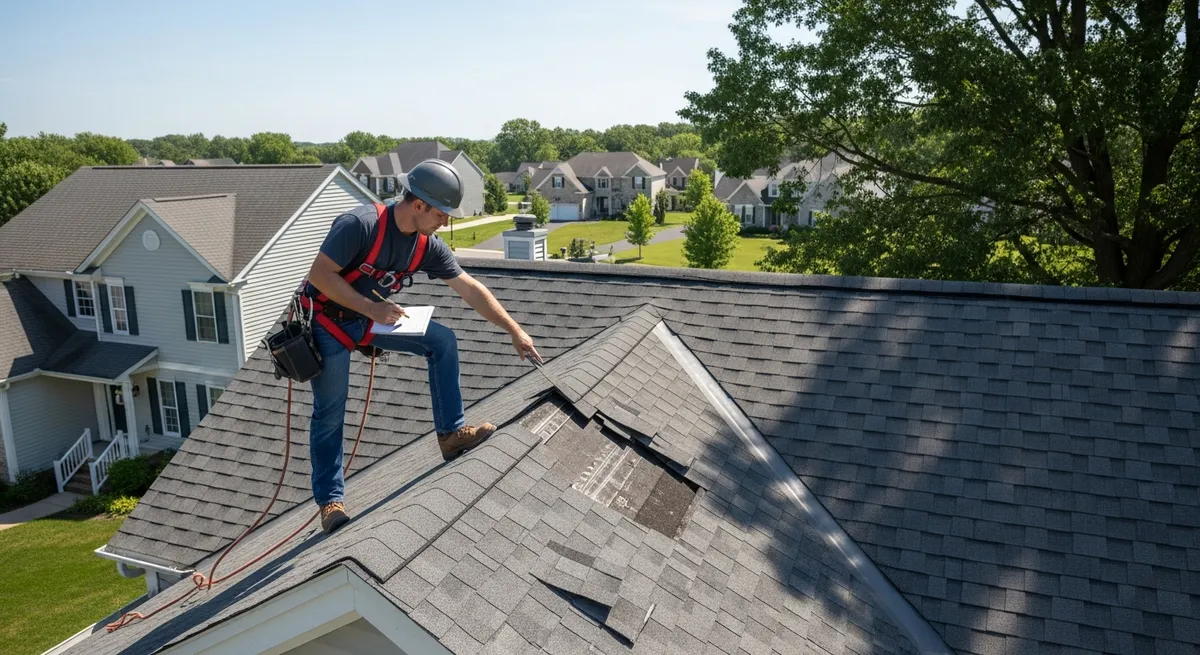
Here is something most homeowners do not think about until a contractor points it out: siding damage, roof problems, and gutter failures are often connected. A clogged gutter overflows against the fascia, saturates the top course of siding, and sends water behind the cladding where it quietly rots sheathing for months. A missing kick-out flashing at a roof-to-wall transition directs hundreds of gallons of runoff directly behind the siding every year. These connections mean that fixing siding in isolation—without inspecting the roof and gutters—sometimes amounts to treating the symptom while the disease continues unchecked.
This is one reason we encourage homeowners to schedule a full exterior evaluation rather than a siding-only appointment. When our team is already on ladders inspecting the siding, it takes minimal additional time to check roof edges, flashing conditions, gutter pitch, and downspout discharge points. If everything looks good, you gain peace of mind at no extra charge. If we spot an issue, you can address it proactively instead of paying for another round of siding repairs two years from now. Check our services page for more on what a comprehensive exterior evaluation includes.
Downspout placement deserves a special mention. In many Alexandria row houses and Fairfax colonials, downspouts discharge directly against the foundation, sending water back toward the siding at ground level. Over time, this constant splash-back saturates the lowest course of siding and the trim board beneath it, creating a chronic rot zone that requires repeated repairs. Extending downspouts at least four feet away from the foundation—or connecting them to underground drain lines—eliminates this cycle and protects both the siding and the foundation simultaneously.
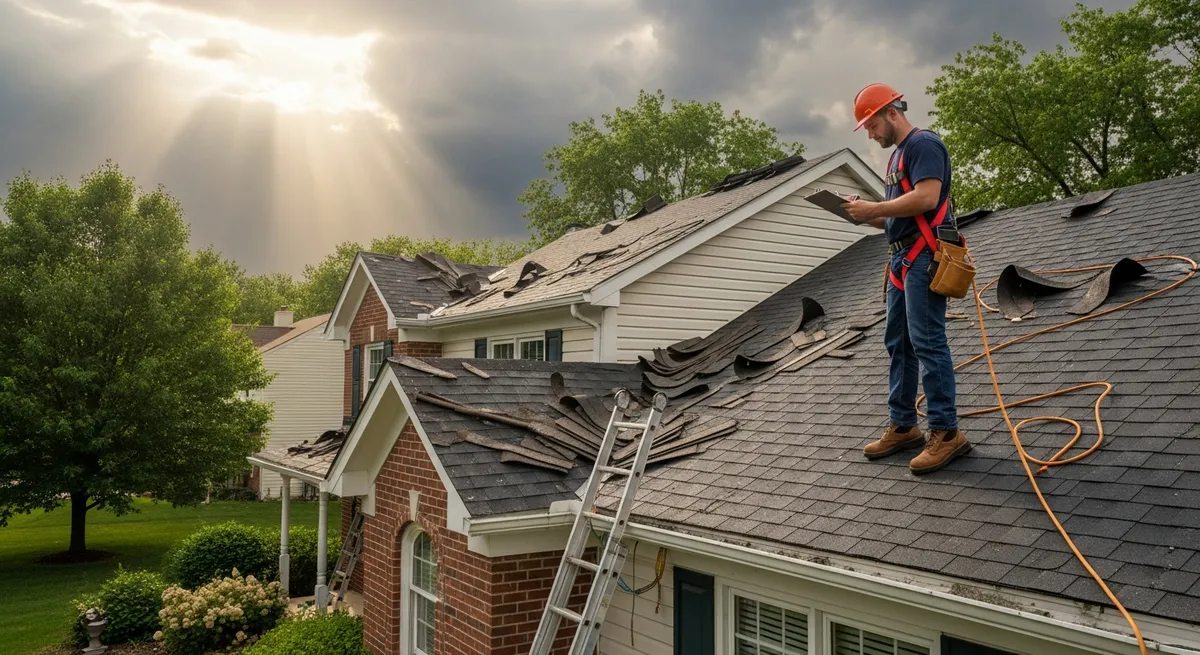
Storm events add another layer of urgency. Wind can loosen siding, lift roof shingles, and dislodge gutter hangers all in a single event. If your home has recently weathered a significant storm, our storm and hail damage guide walks you through the documentation and insurance steps that apply to siding damage just as much as roof damage.
For Alexandria homeowners with historic properties, there is an additional consideration: the Board of Architectural Review (BAR) may have guidelines governing exterior material choices and repair methods in locally designated historic districts. If your home falls within Old Town, Parker-Gray, or another BAR-regulated area, your contractor should be familiar with the approval process. Using non-compliant materials or altering the exterior profile without BAR approval can result in mandatory removal and rework—a costly mistake that is entirely preventable with proper planning.
Insurance coverage is another question that comes up frequently. Standard homeowner policies generally cover siding damage caused by sudden events like storms or falling trees, but they do not cover deterioration from deferred maintenance or gradual moisture intrusion. If a storm event caused your damage, document it thoroughly with photos and file a claim promptly. If the damage developed over time, you will likely be paying out of pocket—but the investment protects your home’s structural integrity and resale value, making it well worth the cost.
In the end, siding repair is one of those projects where doing it right the first time saves you from doing it again in three years. Whether you are dealing with a few rotted boards on a Fairfax colonial or a full wall of deteriorated clapboard on an Alexandria townhome, the fundamentals remain the same: diagnose the root cause, repair the substrate, install quality material, manage moisture, and choose a contractor who treats your home the way they would treat their own. That last part is not always easy to verify from a website, but a face-to-face conversation and a detailed written proposal will tell you everything you need to know.
Schedule an Exterior Evaluation
Sterling Roofers inspects siding, roofing, gutters, and flashing in a single visit so nothing gets missed. Call us at (703) 436-4445 or book online.
Schedule Free Evaluation