Manassas Roof Repair and Roofing Companies: What to Expect and What to Ask
Manassas Roof Repair and Roofing Companies: What to Expect and What to Ask
Key Takeaways
- Manassas and Manassas Park have distinct permit jurisdictions — confirm which applies before beginning any replacement project
- Virginia DPOR Class A or B license is required for all roofing work — verify at the DPOR website before signing a contract
- Prince William County’s summer storm pattern means post-storm inspections in June–August are the most productive timing
- Older Manassas neighborhoods have original roofing systems from the 1980s that are past their expected service life
- Written contracts in Virginia must include materials, warranty terms, start date, and payment schedule — refuse verbal-only proposals
If you own a home in Manassas and you’ve noticed something off with your roof—maybe a water stain spreading across the ceiling, shingles scattered across the yard after a storm, or a persistent drip that only shows up when the rain comes from a certain direction—you’re probably trying to figure out what to do next. Roof repair Manassas homeowners deal with is shaped by the same weather patterns that affect most of Prince William County: hot, humid summers that push attic temperatures past 140 degrees, winter freeze-thaw cycles that pry open flashing seams, and spring thunderstorms that deliver wind gusts strong enough to lift shingles right off the deck. Sterling Roofers serves Northern Virginia and nearby Maryland communities across the DMV, and we’ve spent years helping Manassas homeowners navigate exactly these situations. This guide walks you through what to look for, what questions to ask, and how to find a roofing company in Manassas VA that you can actually trust with your home.
Choosing a roofer isn’t like picking a restaurant for dinner. A bad meal costs you an evening. A bad roof repair can cost you thousands in water damage, mold remediation, and a premature replacement that should have been years away. The stakes are high enough that it pays to understand the process before you start making phone calls. That’s what this article is here for—to give you a clear, honest picture of what Manassas roof repair looks like from start to finish, what drives the cost, and how to tell the difference between a contractor who will take care of your home and one who is just looking for a quick check.
We’re going to cover the most common roofing problems we see in Manassas, help you understand when a repair makes sense versus when a replacement is the smarter investment, explain what a proper estimate should look like, walk through what separates good Manassas roofing companies from mediocre ones, and give you a realistic picture of what to expect on the day the crew shows up. By the time you finish reading, you’ll have the knowledge to make a confident, informed decision about your roof—and that’s exactly where we want you to be.
Manassas Roofing Problems Homeowners See Most
Manassas sits in a part of Virginia where the climate doesn’t give roofs much of a break. The combination of intense summer heat, frequent thunderstorms, and winter ice creates a cycle of expansion and contraction that stresses every component of your roofing system over time. Understanding the most common problems helps you catch issues early, before they turn into expensive emergencies.
Wind damage is one of the most frequent issues we see across Manassas and the broader Prince William County area. Thunderstorms roll through the region regularly from April through September, and those storms often bring wind gusts that exceed 50 miles per hour. That’s more than enough to catch the edge of an aging shingle and peel it back from the deck. Once a shingle lifts, the adhesive seal along its bottom edge breaks permanently. Even if the shingle settles back into place after the wind dies down, it’s no longer bonded to the shingle below it, which means the next storm can tear it off entirely. The exposed area left behind is a direct pathway for water to reach the underlayment and, if the underlayment is compromised, the decking and your home’s interior.
Flashing failures are another common problem, and they’re particularly frustrating because they often cause leaks that are hard to trace. Flashing is the thin metal material installed at every transition point on your roof—where the roof meets a wall, around chimneys, at pipe penetrations, and in valleys where two roof slopes converge. Over time, the sealant that bonds flashing to adjacent surfaces deteriorates. Temperature swings cause the metal to expand and contract at a different rate than the surrounding materials, which gradually opens gaps. Water finds those gaps with remarkable precision, traveling along the underside of the flashing and emerging as a ceiling stain that may be several feet away from the actual entry point. A homeowner sees a drip in the hallway and assumes the problem is directly overhead, but the water may have entered the roof ten feet away near a chimney or sidewall junction.
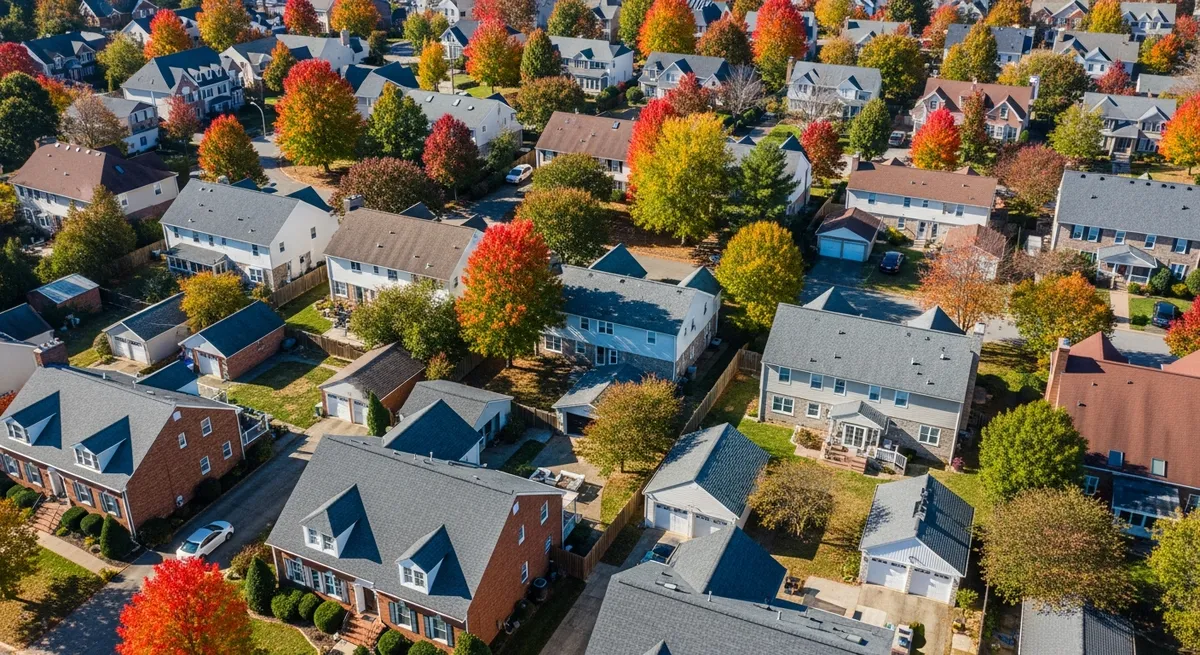
Aging shingles are a widespread issue in Manassas neighborhoods built during the housing booms of the 1980s and 1990s. Many of those homes still have their original roofs or roofs that were replaced 15 to 20 years ago with three-tab shingles that have reached the end of their functional lifespan. The signs are easy to spot once you know what to look for. Granule loss is one of the first indicators—you’ll notice dark, sandy material accumulating in your gutters and at the base of your downspouts. Those granules are the protective coating on the shingle surface, and as they wash away, the underlying asphalt is exposed to direct UV radiation, which accelerates aging dramatically. Curling is another telltale sign. When shingles begin to curl at the edges or cup in the center, they’ve lost the flexibility needed to seal against wind and water, and no amount of patching will restore that integrity.
Poor attic ventilation causes problems that many homeowners don’t connect to their roof at all. When an attic doesn’t have adequate airflow—a balanced system of intake vents at the soffits and exhaust vents at the ridge—heat and moisture build up in the space beneath the roof deck. In summer, that trapped heat radiates back through the shingles and bakes them from both sides, accelerating the aging process significantly. In winter, warm air from the living space rises into the attic and meets the cold underside of the roof deck, creating condensation that soaks into the plywood and promotes mold and rot. We’ve opened up roofs in Manassas that looked fine from the outside only to find decking so soft from moisture damage that you could push a screwdriver through it with barely any pressure. Ventilation problems are silent killers of otherwise solid roofing systems.
Gutter-related damage rounds out the list of problems we encounter most often. Clogged or poorly functioning gutters cause water to back up under the roof edge, soaking the fascia board and potentially wicking moisture underneath the drip edge and into the roof deck. In homes where gutters haven’t been cleaned in several seasons, the weight of accumulated debris can pull the gutter system away from the fascia, creating a gap that allows rainwater to cascade directly down the exterior wall. That water eventually finds its way into the foundation area, but the roof edge takes the first hit. Keeping your gutter system functional is one of the simplest and most effective things you can do to protect your roof between professional inspections.
Ice damming deserves mention here as well, even though Manassas winters are milder than what homeowners experience further north. When snow accumulates on the roof and the attic is inadequately insulated, heat escaping from the living space melts the snow from underneath. The meltwater flows down the roof slope toward the eave, where it encounters the unheated overhang and refreezes. Over several days, this cycle builds a ridge of ice along the roof edge that traps additional meltwater behind it. That standing water has nowhere to go except underneath the shingles and into the roof deck. Homes in Manassas with north-facing slopes and mature tree canopy are particularly susceptible, because those sections retain snow longer and receive less direct sunlight to assist with natural melting.
Signs You Need Repairs vs a Full Replacement
One of the most important questions any homeowner faces is whether the roof needs a targeted repair or a complete replacement. It’s not always an obvious call, and unfortunately some contractors push replacements when repairs would serve you perfectly well, while others keep patching aging roofs that should have been replaced years ago. Understanding the factors that drive this decision helps you evaluate the advice you receive and make the choice that actually makes sense for your situation and your budget.
Age is the single biggest factor. If your roof is less than 12 to 15 years old and the damage is localized—a section of wind-damaged shingles, a failed pipe boot, a small area of deteriorated flashing—repairs are almost always the right move. The remaining roofing material still has significant life left, and replacing the entire system because of an isolated problem would be like buying a new car because you got a flat tire. A skilled roofing contractor Manassas VA homeowner trusts can match the existing shingle color and profile, replace the damaged area, and restore the roof’s integrity without disrupting the sections that are performing well.
On the other end of the spectrum, if your roof is approaching or past the 20-year mark and you’re seeing widespread granule loss, multiple areas of curling or cracking shingles, and leaks appearing in more than one location, a full replacement is usually the more cost-effective path. At that point, the cost of repeated repairs begins to approach the cost of a new roof, and each repair is essentially a bandage on a system that’s failing broadly rather than in one isolated spot. Our roof replacement cost guide for Northern Virginia breaks down the specific numbers so you can see where that crossover point typically falls for homes in this region.
The condition of the roof deck is another critical factor that often gets overlooked in the repair-versus-replace conversation. When a roofer tears off the existing shingles and finds soft, spongy, or visibly rotted plywood underneath, that decking has to be replaced before new material goes on. A few sheets of damaged decking in an otherwise solid roof is a manageable additional cost during a repair. But if the inspection reveals widespread decking damage, it suggests that moisture has been penetrating the roofing system for an extended period, and the overall integrity of the remaining materials is suspect. In those cases, a full replacement with new decking ensures you’re building on a solid foundation rather than layering new materials over compromised structure.
Storm damage introduces its own set of considerations. If a single severe storm caused the damage and the rest of the roof was in good condition beforehand, repairs often make sense even if the damaged area is relatively large. Storm damage on an otherwise healthy roof is an event-driven problem, not a systemic one. On the other hand, if the storm exposed underlying issues that were already developing—granule loss across the entire surface, flashing that was already separating, shingles that were already curling before the wind caught them—the storm was simply the trigger that revealed a roof already approaching the end of its life. In that scenario, a replacement addresses both the storm damage and the underlying aging, which is a much better long-term investment. If you’re dealing with storm-related damage, our team can help you navigate the insurance claim process to make sure you get the coverage you’re entitled to.
One more consideration that’s specific to Manassas and Prince William County: if your home is part of a community with an HOA, check whether there are upcoming neighborhood-wide roofing projects or specific color and material requirements that might affect your decision. Some HOAs negotiate group pricing for roof replacements, which can reduce your per-unit cost significantly. Others have strict guidelines about matching existing aesthetics, which can make partial repairs more complicated if the original shingle line has been discontinued. A quick call to your property management company before committing to a course of action can save you from an expensive surprise down the road.
What a Proper Estimate Should Include
When you request estimates from roofing companies in Manassas VA, the documents you receive will tell you a lot about the contractors who prepared them. A vague, one-line quote that says “Roof repair — $2,500” tells you almost nothing about what you’re paying for and makes it impossible to compare that bid against another company’s proposal. A detailed, itemized estimate, on the other hand, demonstrates that the contractor has actually evaluated your roof’s specific condition and developed a plan tailored to your home rather than pulling a number out of a hat.
Materials should be listed by type, product name, and quantity. If the estimate calls for shingles, it should specify the manufacturer, product line, and color—not just “architectural shingles.” There are enormous quality and price differences between entry-level and premium shingle lines from the same manufacturer, and without that specificity, you have no way of knowing what you’re getting. The same applies to underlayment, flashing, drip edge, pipe boots, ridge vent, and any other components included in the scope of work. Each should be listed individually so you can verify that the materials match the quality level you expect and compare them across multiple bids.
Labor should be broken out as a separate line item from materials. This allows you to see exactly how much you’re paying for the crew’s time and skill, and it helps you understand why one contractor’s price might be higher than another’s. A company that employs experienced, full-time roofing crews will naturally charge more for labor than one that subcontracts to the lowest bidder, but the difference in installation quality more than justifies the cost. When labor is bundled into a single lump sum with materials, you can’t see that distinction, and the cheapest bid might actually represent the lowest quality workmanship.
Tear-off and disposal fees should be clearly stated. Removing the existing roofing material, loading it into a dumpster, and hauling it away is a significant portion of any roofing project’s cost. The estimate should specify whether a dumpster is included, what size it will be, and whether there are any additional charges if more than one load is required. Disposal fees vary by landfill and by the type of material being removed, so this is an area where a clear line item prevents billing surprises at the end of the project.
Permit costs should be listed if your project requires a building permit. In Prince William County, roof replacements typically require a permit, and the cost is the homeowner’s responsibility. A transparent contractor includes this as a line item rather than absorbing it into general overhead, because it shows you exactly what the county charges and confirms that the contractor intends to pull a permit and schedule the required inspections. Any contractor who suggests skipping the permit to save money is putting you at legal and financial risk—unpermitted work can create problems when you sell your home, file an insurance claim, or need warranty service down the line.
The estimate should also include a projected timeline, a payment schedule, warranty terms for both materials and workmanship, and a clear change-order policy. The change-order section is particularly important because it addresses what happens if the crew discovers unexpected damage during the project. A trustworthy roofing company in Manassas VA will require your written approval before any additional work is performed and before any additional charges are incurred. The estimate should spell out that process explicitly so there are no surprises on your final invoice.
How to Choose a Contractor Without Stress
The process of finding reliable roofing contractors Manassas VA homeowners can trust doesn’t have to be stressful if you approach it systematically. Most of the anxiety around hiring a roofer comes from uncertainty—not knowing what to look for, not understanding the pricing, and not being sure whether the person standing in your driveway is genuinely skilled or just a polished salesman. The steps below eliminate that uncertainty and put you firmly in control of the hiring decision.
Verify licensing first. Every roofing contractor operating in Virginia must hold a valid license issued by the Department of Professional and Occupational Regulation. You can verify any contractor’s license status online in about 60 seconds. If a contractor can’t provide their license number or their license shows as expired or inactive, end the conversation immediately. Licensing isn’t just a bureaucratic formality—it confirms that the contractor has met minimum competency requirements and is subject to state oversight and disciplinary action if they fail to meet their obligations to you as a homeowner.
Insurance verification is equally important and non-negotiable. A roofing contractor should carry both general liability insurance and workers’ compensation coverage. General liability protects your property if the crew damages something during the project—a ladder through a window, equipment dropped on a vehicle, or debris that damages landscaping. Workers’ compensation protects you from personal liability if a crew member is injured on your property. Without workers’ comp coverage, an injured worker could potentially file a claim against your homeowner’s insurance policy. Ask for a certificate of insurance and verify that it’s current by calling the insurance carrier directly. Any contractor who hesitates to provide this documentation is not a contractor you want working on your home.
Get at least three written estimates from different companies. This isn’t just about finding the lowest price—it’s about understanding the range of approaches different contractors recommend and seeing how their proposed solutions, material choices, and pricing compare. When you have three detailed estimates side by side, patterns emerge quickly. If two contractors recommend replacing a section of flashing and the third says the entire roof needs to come off, that discrepancy deserves further investigation. If one bid is 40 percent lower than the other two, that’s not a bargain—it’s a warning sign that something important is being left out of the scope or that the contractor is cutting corners on materials or labor quality.
Check references and reviews, but look beyond the star rating. Read the actual text of reviews on Google, Yelp, and the Better Business Bureau. Pay attention to how the company responds to negative reviews, because that tells you how they handle problems when things don’t go perfectly. A company that responds defensively or dismissively to criticism is a company that will be difficult to work with if something goes wrong on your project. A company that acknowledges issues and explains how they resolved them demonstrates accountability and a genuine commitment to customer satisfaction that extends beyond the initial sale.
Pay attention to the consultation experience itself. A quality contractor will conduct a thorough on-site inspection—climbing on the roof when safely possible, examining the attic space for ventilation issues and moisture damage, checking gutters and downspouts, and documenting findings with photos. They’ll explain what they found in plain language, present a clear recommendation with supporting evidence, and answer your questions without rushing you or applying sales pressure. If a contractor shows up, walks your property for five minutes, and hands you a quote on a pre-printed form, they haven’t done enough evaluation to provide an accurate scope of work. The initial consultation is your best preview of how the contractor will manage the actual project, so trust what it tells you about their professionalism and thoroughness.
At Sterling Roofers, we approach every consultation the same way: thorough inspection, honest assessment, detailed estimate, and zero pressure. We want our Manassas clients to feel confident in their decision because it was based on good information—not because we rushed them into signing before they had time to think. Our full range of roofing services covers everything from minor repairs to complete replacements, and we serve homeowners throughout the Northern Virginia region including Manassas, Woodbridge, Gainesville, and all of Prince William County.
Typical Timelines and What to Expect on Job Day
Once you’ve selected a contractor and signed the agreement, the next question most homeowners ask is “when does the work happen and what does the day actually look like?” Having a clear picture of the process removes the last layer of uncertainty and helps you prepare your home and your schedule for the project so everything goes smoothly.
For most standard roof repairs in Manassas, the work can be completed in a single day. The crew typically arrives between 7:00 and 8:00 in the morning, and the first hour is dedicated to setup. Tarps are laid over landscaping, walkways, and any outdoor furniture to protect your property from falling debris. Ladders are positioned and secured, safety equipment is deployed, and materials are staged in an accessible location—usually the driveway or a flat area near the house. If a dumpster is needed for the tear-off debris, it will have been delivered the previous day and positioned as close to the work area as possible to minimize the handling distance for old materials.
The actual repair work follows a predictable sequence. If shingles are being replaced, the damaged section is removed first, exposing the underlayment and decking beneath. The crew inspects the exposed area carefully for any hidden damage—soft decking, moisture stains, or deteriorated underlayment—and addresses those issues before installing new material. New underlayment is applied if needed, followed by new shingles that are matched as closely as possible to the existing roof in color and profile. Flashing repairs follow a similar pattern: the old flashing is carefully removed, the transition area is cleaned and prepared, and new flashing is installed with proper overlap and sealing techniques. Every nail is placed within the manufacturer’s specified zone, and every seal is checked before the crew moves to the next section of the repair.
Communication during the project is critically important and is one of the things that separates professional contractors from average ones. Your project manager or crew lead should check in with you when the old material comes off to share what they found underneath. If the decking is solid and the underlayment is intact, that’s great news and the project proceeds as planned. If there’s unexpected damage, this is when the change-order conversation happens. A responsible contractor will show you photos of the issue, explain what needs to be done to address it properly, provide a cost for the additional work, and get your written approval before proceeding. This mid-project checkpoint is one of the most important moments in any roofing job, because it’s the point where transparency either builds trust or destroys it.
Cleanup is the final phase and it’s not optional—it’s a direct reflection of the crew’s professionalism and attention to detail. A quality crew uses magnetic nail sweepers across the entire yard, driveway, and sidewalk to collect every stray fastener. All debris, packaging, and old materials are loaded into the dumpster or hauled away. Gutters are swept clean of granules and fragments that accumulated during the work. Tarps are removed and landscaping is returned to its original condition. When the crew leaves, your property should look like they were never there—except for the new material on your roof and the peace of mind that comes with knowing the work was done right.
For larger projects like full replacements, the timeline extends to two to four days depending on roof size, complexity, pitch, and weather conditions. Multi-day projects follow the same basic workflow but at a larger scale, with the crew methodically working section by section across the entire roof surface. Each day ends with a temporary weatherproofing of any exposed sections, so your home remains protected overnight even if the project isn’t complete. Your contractor should communicate the daily plan each morning and provide an update each evening so you always know where the project stands.
Weather is the one variable that’s beyond anyone’s control, and it’s particularly relevant in Manassas where afternoon thunderstorms are common during the warmer months. Roofing work cannot be performed safely in rain, and shingles installed on a wet surface won’t seal properly because the adhesive strips need dry conditions and heat to activate. A reputable contractor builds weather contingency into the project timeline and communicates proactively if delays are anticipated. During Manassas’s spring and summer storm season, having a backup plan for rain delays is simply part of professional project management. A contractor who promises an immovable start date during peak storm season is either naive about regional weather patterns or not being honest with you, and neither quality inspires confidence.
After the project is complete, you should receive a final walkthrough with the project manager or crew lead. They’ll review the completed work with you from ground level, point out key details like new flashing installations and ridge vent alignment, and answer any remaining questions you have about the work. You’ll also receive copies of your warranty documentation—both the manufacturer warranty for the materials and the contractor’s workmanship warranty covering the installation. File these documents somewhere safe and accessible, because they’re your protection for years to come. If a building permit was pulled for the project, the final inspection by Prince William County typically happens within a few days of completion, and your contractor should coordinate that inspection and provide you with the approval documentation once it passes.
Choosing the right contractor and understanding the full process transforms a roof repair from a source of stress and anxiety into a straightforward home improvement project. The information in this guide gives you the foundation to evaluate your options clearly, ask the right questions at every stage, and hire a team that treats your home with the care and professionalism it deserves. Whether you’re dealing with storm damage, aging shingles, a persistent leak that’s been bothering you for months, or just want an honest professional opinion about your roof’s current condition, the right next step is always the same: get an expert evaluation from a contractor you trust, and get the findings in writing so you can make your decision with confidence.
Schedule a Manassas Roof Evaluation
Schedule a Manassas roof evaluation with Sterling Roofers and get a clear next step in writing. Call us today at (703) 436-4445 or schedule your free consultation online.
Schedule Free Consultation