Roof or Siding First? Planning Exterior Work, Costs, and Material Compatibility
Roof or Siding First? Planning Exterior Work, Costs, and Material Compatibility
Key Takeaways
- Standard rule: roof first, then siding — water flows downward, so the roof must be watertight before finishing walls below it
- If the roof is actively leaking, fix it before installing new siding — new siding over a leaking roof will experience water infiltration from above
- Vinyl siding installed cost in Northern Virginia runs $5–$10 per sq ft; fiber cement runs $8–$14 per sq ft (as of 2026)
- Bundling roof and siding work with one contractor can save 8–15% vs. running two separate projects
- Metal siding with shingle roof is compatible but requires flashing details that account for the greater thermal expansion of metal
When a Northern Virginia homeowner is planning exterior work — new roof and siding, or one after the other — the sequencing question is one of the most practical ones to get right before signing any contract. Roof or siding first? The answer matters for moisture management, flashing integrity, and how each project affects the other. Sterling Roofers serves Northern Virginia and nearby Maryland communities across the DMV and handles both scopes, so we understand the sequencing logic from both sides of the eave.
Why the Order Matters
Roofing and siding are physically connected at three critical areas: the eave (bottom edge of the roof), the gable rake (sloped side edge at the end of the roof), and any dormer or roof-to-wall junction on the building. At each of these points, the roofing system and the siding system must be installed in the correct sequence to create a continuous, watertight transition.
Eave edge: The drip edge metal and starter course of shingles sit above the top of the fascia board, which sits above the top course of siding. The roofing system is on top; the siding is below. If siding is installed first and then the roofing crew removes and replaces the drip edge, there is a risk of disturbing the top siding course. The reverse — roof first, siding after — avoids this entirely.
Gable rake: At the gable end, the rake board and rake drip edge sit at the intersection of the roof and gable wall siding. The correct sequence is: roofing and drip edge first, gable trim applied to the fascia board, then siding installed to integrate with the trim. Siding installed before the rake is complete may not align correctly with the final trim profile.
Moisture logic: Siding or roof first as a moisture question has a clear answer. Water flows downward. A leaking roof will send water down behind wall siding. Installing new siding on a house with a leaking roof means the siding will immediately begin experiencing water infiltration from above — potentially compromising a brand new installation within its first year.
Roof or Siding First: Simple Decision Rules
Here is how to decide:
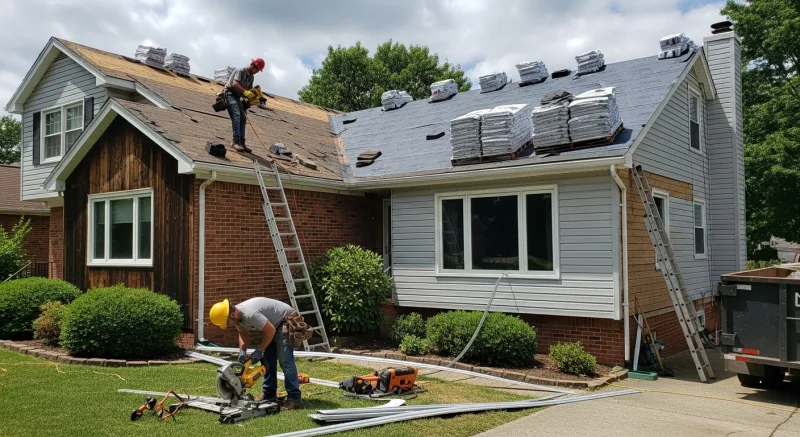
- If the roof is actively leaking or at end of life: Replace the roof first. No other exterior work should proceed until the roof is watertight. A leaking roof makes all work below it temporary.
- If the siding is failing at the roofline: Coordinate both. If step flashing, fascia, or siding at the eave is deteriorated and the roof is also due, doing both at the same time with a coordinated scope is the cleanest solution.
- If the roof is sound but siding only needs replacement: Siding can proceed without roofing. The critical step is to inspect and confirm that roof-to-wall flashing is intact before starting, and to ensure the new siding installation does not disturb or compromise existing flashings.
- If both are at end of life and the budget allows: Do both together with one contractor. This is typically the most cost-effective option and produces the best result at the intersection details.
Home Siding Cost: What Drives the Number
Home siding cost and siding for houses cost are search terms that bring homeowners to this question every year, and the range is wide enough to be confusing without context. Here are the main drivers in the Northern Virginia market (as of 2026):
Material type: This is the single largest cost driver.
| Material | Installed Cost / Sq Ft | Notes |
|---|---|---|
| Vinyl (standard) | $5 – $8 | Most common in NoVA; wide color range |
| Vinyl (insulated/premium) | $8 – $12 | Adds thermal performance; better rigidity |
| Fiber cement (HardiePlank) | $8 – $14 | Durable, paintable; labor-intensive install |
| Metal panel siding | $12 – $22+ | Long-lasting; requires specific trim/flashing |
| Engineered wood (LP SmartSide) | $9 – $16 | Wood appearance; factory-primed |
Prices are typical Northern Virginia installed ranges as of 2026. Actual cost depends on wall area, story height, trim complexity, and whether old siding requires removal.
Wall area: A 2,000 sq ft home has roughly 1,400–1,800 sq ft of siding area (walls minus windows, doors, and openings). A 2,500 sq ft two-story home may have 2,000–2,400 sq ft of siding. The larger the area, the more material and labor — but larger projects also benefit from economies of scale in material purchasing.
Removal of existing siding: Tearing off old vinyl adds $0.50–$1.50 per sq ft to the project cost. Some contractors install over existing siding (over-cladding) to save removal cost, but this approach can trap moisture and typically voids the warranty on the new siding.
Trim complexity: Homes with many windows, complicated gable peaks, bay windows, and multiple transitions cost more because trim work is labor-intensive and the cut-piece count increases significantly.
Metal Siding With Shingle Roof: What to Know
Metal siding with shingle roof is a combination that works well functionally and is increasingly common in Northern Virginia as homeowners choose metal panel products for their longevity. But the combination requires specific attention at the intersection:
Thermal expansion: Metal siding expands and contracts significantly with temperature changes — more so than asphalt shingles. A 10-foot panel of aluminum siding can change in length by 1/8 to 3/16 inch between summer and winter in the Northern Virginia climate. Flashing and trim details at roof-to-wall junctions must allow for this movement; rigid connections that bind against the panel will cause buckling, paint cracking, or seal failure.
Flashing material compatibility: When pairing metal siding with asphalt shingles, use galvanized steel or aluminum flashing at junction points — both are compatible with standard asphalt shingle chemistry. Avoid direct contact between dissimilar metals (for example, copper flashing against aluminum siding panels), as galvanic corrosion can occur at the contact point over time.
Water management: Metal panels that terminate at a horizontal trim piece above the roof slope need a sill pan or drip trim that directs water away from the wall and onto the roof surface, then off the eave. This detail is not intuitive for contractors who have only installed vinyl; it requires understanding how metal panel drainage works differently from lapped vinyl at the same intersection.
Coordinated Roof and Siding Planning in Northern Virginia
Sterling Roofers handles roof and siding together so the sequencing and intersection details are right the first time. Written scope, material recommendations, and clear pricing. Call (703) 436-4445 or send photos for a faster quote.
Ask About Exterior Planning