Maryland Door and Window Repair: When to Fix, When to Replace, and How It Ties to Exteriors
Maryland Door and Window Repair: When to Fix, When to Replace, and How It Ties to Exteriors
Key Takeaways
- Maryland door repair makes sense when the frame is sound and the issue is isolated hardware, weatherstrip, or seal failure; replacement wins when frame rot exceeds 2 inches or repair exceeds 40–50% of replacement cost
- Maryland window repair covers glass unit replacement ($150–$400), sash replacement ($250–$600), or full replacement ($500–$1,500+) depending on the problem
- Door replacement Maryland installed cost ranges: steel entry door $800–$2,000; fiberglass $1,200–$3,500; wood $1,500–$5,000+
- Window and door head flashing integrates directly with house wrap and siding — failing flashing is a hidden water entry point that siding-only repair often misses
- Coordinate door and window work with any planned siding or exterior project to ensure continuous water management from roof to foundation
Maryland door repair and window repair are among the most common exterior service calls for homeowners in the Silver Spring, Bethesda, Rockville, and broader Maryland DMV corridor — and the decision between repairing and replacing is not always obvious. Sterling Roofers serves Northern Virginia and nearby Maryland communities across the DMV, and our exterior work regularly includes door and window flashing as part of siding and roofing scopes. This guide explains how to evaluate what your doors and windows actually need, what realistic costs look like, and how these systems connect to the broader exterior envelope that includes your roof and siding.
Maryland Door Repair: What Fails and Why
Doors in Maryland homes are exposed to a significant range of seasonal conditions — humid summers, cold winters, occasional ice storms, and the thermal cycling that goes with moving between extremes. The most common Maryland door repair issues fall into a few clear categories:
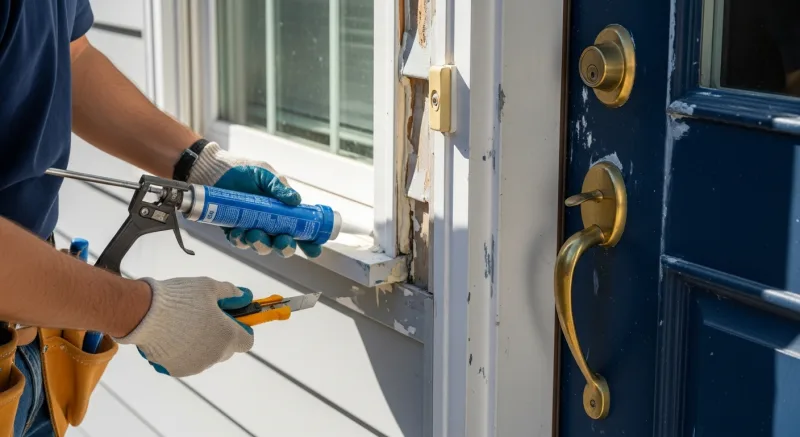
Weatherstripping failure. Compression weatherstripping around the door perimeter (the foam, rubber, or pile seal that contacts the door slab when closed) compresses permanently over time and loses its sealing ability. A door with failed weatherstripping drafts in winter, allows moisture infiltration, and reduces energy efficiency. Weatherstripping replacement is typically $80–$200 per door including materials and labor — one of the most cost-effective Maryland door repairs available.
Threshold failure. The threshold at the bottom of a door is the first component to experience standing water infiltration after heavy rain. Aluminum adjustable thresholds lose their seal over time, and wooden sill pans beneath can absorb water and rot. A threshold replacement typically runs $120–$300; sill pan replacement (if rot is present) adds $200–$500 to the scope.
Frame rot. Wood door frames in older Maryland homes (pre-1990 construction is the highest-risk category) are exposed to moisture at the bottom corners and sill area. When paint maintenance has lapsed, water penetrates the wood and rot begins. Surface rot affecting only the paint layer and 1–2mm of wood can be addressed with wood hardener, epoxy filler, and repainting. Structural rot that extends more than 1–2 inches into the frame member requires partial or full frame replacement.
Hinge and hardware wear. Sagging doors — where the door drops at the latch side and rubs against the strike area — are usually a hinge issue. Loose hinge screws can often be corrected with longer screws or wooden dowel inserts in stripped holes. Bent hinges and worn hinge mortises require hinge replacement. These repairs run $80–$250 per door depending on hinge type and access complexity.
When replacement is the better call: If frame rot extends more than 2 inches into structural members, if the door has been re-planed so many times the slab is undersized, or if the total repair cost exceeds 40–50% of a new comparable door installed, door replacement maryland is the more sensible investment. You get fresh material warranties, updated energy performance, and a clean water management system at the frame-to-siding interface.
Maryland Window Repair: Fix vs. Replace Decision Guide
Maryland window repair covers a wide range of conditions, and the fix-or-replace decision depends on which component has failed:
Failed insulating glass unit (foggy glass). Modern windows use double or triple-pane insulating glass units (IGUs) with inert gas fill between the panes. When the edge seal fails, the gas escapes, moisture enters, and condensation forms between the panes — the foggy appearance. The glass unit itself has failed, but if the frame and sash are sound, the IGU can be replaced without replacing the entire window. Cost: $150–$400 per window (depending on size and glass type) as of 2026 in the Maryland market.
Hardware failure (locks, balances, operators). Single-hung and double-hung windows use spring-loaded or spiral balances that allow the sash to stay open at any position. When balances fail, the sash falls closed. Balance replacement costs $80–$200 per window. Casement window operators (the crank mechanism) run $100–$250 per window. These are cost-effective repairs that extend window life significantly.
Rotted wood frame or sill. Wood-framed windows in Maryland homes manufactured before the 1990s used untreated wood that deteriorates when paint maintenance lapses. Sill rot is the most common failure point — the sill is the horizontal bottom member that collects water. Minor sill rot ($150–$350 repair) can be treated with epoxy; extensive rot affecting the frame, jambs, and rough opening framing requires full window replacement and potentially structural repair of the surrounding framing.
Full window replacement decision: Replace the entire window when: the frame is structurally compromised by rot, the glass unit failure is combined with warped or binding sash channels, the window style has been discontinued and parts are unavailable, or the energy performance of the current window is significantly below current standards. Full window replacement in Maryland runs $500–$1,500+ per opening (installed) depending on size, window type, and product.
Door Replacement Maryland: What Drives the Cost
Door replacement Maryland installed cost depends primarily on door material and configuration:
| Door Type | Installed Cost Range | Notes |
|---|---|---|
| Steel entry door (standard) | $800 – $2,000 | Most common replacement; energy-efficient core |
| Fiberglass entry door | $1,200 – $3,500 | Wood-look options; does not rust or rot |
| Wood entry door (solid) | $1,500 – $5,000+ | Custom aesthetic; requires maintenance |
| Patio/sliding door replacement | $1,200 – $4,000 | Glass area, track system, and frame all factor in |
| Frame replacement (add-on) | $400 – $900 | Needed when rot or racking is present |
Prices are typical Maryland DMV market installed ranges as of 2026. Actual cost depends on door size, configuration (sidelights, transom), hardware grade, and site-specific conditions including frame condition and any structural modifications needed.
How Door and Window Repair Ties to Exterior Systems
Doors and windows are not isolated from the rest of the exterior envelope — they are openings in it, and their water management depends on correctly integrated flashing that connects to the house wrap and, ultimately, to the siding and roofline above.
Head flashing: Above every window and door is a horizontal flashing that catches water running down the wall surface and directs it over the top of the frame and onto the cladding below. When head flashing fails — through corrosion, missing end dams, or improper installation — water enters the wall above the window or door and migrates into the frame, the rough opening framing, and potentially the interior wall cavity. This leak source is invisible from inside the house until significant damage has accumulated.
Sill pan flashing: Below doors and windows, a sloped sill pan directs any water that gets past the seal out through the drainage plane rather than into the rough opening. Failed sill pans are a primary cause of frame rot in wood-framed openings and of black mold staining at the base of windows and doors in finished interior spaces.
Integration with siding: When siding is replaced, all window and door flashings are directly accessible and should be inspected and replaced as part of the siding scope. A siding project that leaves original head flashings in place — especially 20–30 year old aluminum flashings — leaves the most common hidden water entry points unaddressed. The incremental cost of replacing flashings during a siding project is minimal compared to the cost of diagnosing and correcting a window-frame water infiltration problem later.
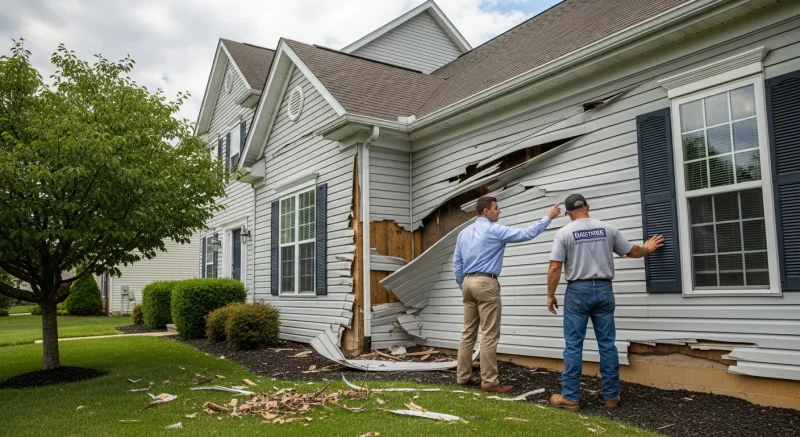
Storm damage scenarios: High winds and hail that damage siding often also affect caulk seals at window and door perimeters, aluminum head caps above windows, and the sill areas of doors. When a storm damage claim is filed for siding, the window and door perimeter conditions should be inspected and included in the scope documentation — not treated as a separate claim or overlooked entirely.
Maryland Exterior Inspections Across the DMV
Sterling Roofers serves Maryland homeowners in Silver Spring, Bethesda, Rockville, Gaithersburg, and the broader DMV corridor. If you need a door, window, siding, or roofing inspection — or a coordinated exterior scope that covers all of it — call (703) 436-4445 or schedule online. Share photos for a faster quote.
Schedule Maryland Exterior Inspection