Loudoun County Roof Repair and Ashburn Roofing Company Guide
Loudoun County Roof Repair and Ashburn Roofing Company Guide
Key Takeaways
- Loudoun County’s rapid growth means many homes built since 2000 are now approaching first major repair or replacement cycles
- Ashburn and South Riding homes with HOA requirements must confirm approved materials and colors before signing a contract
- Virginia DPOR Class A or B license is required for all roofing contractors — unlicensed crews work illegally in Virginia
- Permit requirements for replacements in Loudoun County apply county-wide — your contractor is responsible for pulling it
- Flashing at dormers and skylights is the most commonly overlooked item in Loudoun County replacement bids
If you own a home in Loudoun County and you have noticed a water stain on your ceiling, shingles scattered across your yard after a storm, or a slow drip in your attic that you have been hoping would stop on its own, you are not alone. Loudoun county roof repair is one of the most common searches among homeowners in this part of Northern Virginia, and for good reason. The county’s combination of rapid residential growth, demanding weather patterns, and aging housing stock in established neighborhoods creates roofing challenges that require professional attention sooner rather than later. Sterling Roofers serves Northern Virginia and nearby Maryland communities across the DMV, and we put this guide together to give Loudoun County homeowners a clear, honest look at what to prioritize, what to watch for, and how to find the right contractor for the job.
Loudoun County spans a vast stretch of Northern Virginia, from the suburban density of Ashburn and Sterling near the Dulles corridor to the rolling countryside of Purcellville and the historic charm of Leesburg. Each area presents its own roofing conditions. Homes in Ashburn’s planned communities are often governed by strict HOA architectural guidelines that dictate shingle color and material. Properties in western Loudoun face greater exposure to wind coming through the Blue Ridge gaps. Older homes in Leesburg and surrounding areas may have original roofing systems that are approaching or past their expected lifespan. Understanding how your specific location and home type affect your roofing needs is the first step toward making smart decisions about repairs, maintenance, and eventual replacement.
This guide is designed for the homeowner who wants to understand their options before picking up the phone. We cover why Loudoun County roofs take more punishment than homeowners often realize, how to prioritize repairs when multiple issues are competing for your attention, when siding damage becomes a roof problem, and how to evaluate an ashburn roofing company or any contractor serving the broader county. By the end, you will be equipped to have an informed conversation with any contractor and to make decisions that protect both your home and your budget.
Why Loudoun County Roofs Take a Beating
Loudoun County sits in a geographic position that exposes its roofs to a particularly wide range of weather stressors. The county stretches from the flat, developed eastern corridor near Dulles International Airport to the foothills of the Blue Ridge Mountains in the west, and that topographic variety means weather systems can behave differently depending on exactly where your home is located. What remains constant across the county is that roofs here take more punishment than many homeowners expect, and understanding why is essential to catching problems before they become emergencies.
Summer heat in Loudoun County is relentless. Attic temperatures in homes without adequate ventilation routinely exceed 140 degrees during July and August, and that extreme heat bakes asphalt shingles from below while ultraviolet radiation degrades them from above. The result is accelerated granule loss, dried-out adhesive strips that no longer hold shingle tabs in place, and an overall shortening of the roof’s useful life. Homes with dark-colored shingles absorb even more heat, compounding the problem. Proper attic ventilation—a balanced system of soffit intake and ridge exhaust—is the single most effective way to mitigate heat-related roof damage, yet a surprising number of Loudoun County homes have ventilation systems that are inadequate, blocked, or improperly designed.
Winter brings a different set of challenges. Loudoun County experiences multiple freeze-thaw cycles each winter, and those cycles are particularly destructive to roofing materials. Water that seeps into hairline cracks in shingles or flashing during a warm afternoon freezes overnight, expanding the crack and creating a slightly larger pathway for the next cycle. Over the course of a winter with dozens of freeze-thaw events, a crack that started as a cosmetic blemish can become a genuine water entry point. Ice dams are another winter concern, especially on homes where the attic floor is poorly insulated or where recessed lighting, HVAC ductwork, or bathroom exhaust fans create warm spots that melt snow unevenly across the roof surface. Roof repair loudoun county va homeowners deal with most frequently during spring often traces back to ice dam damage that occurred months earlier.
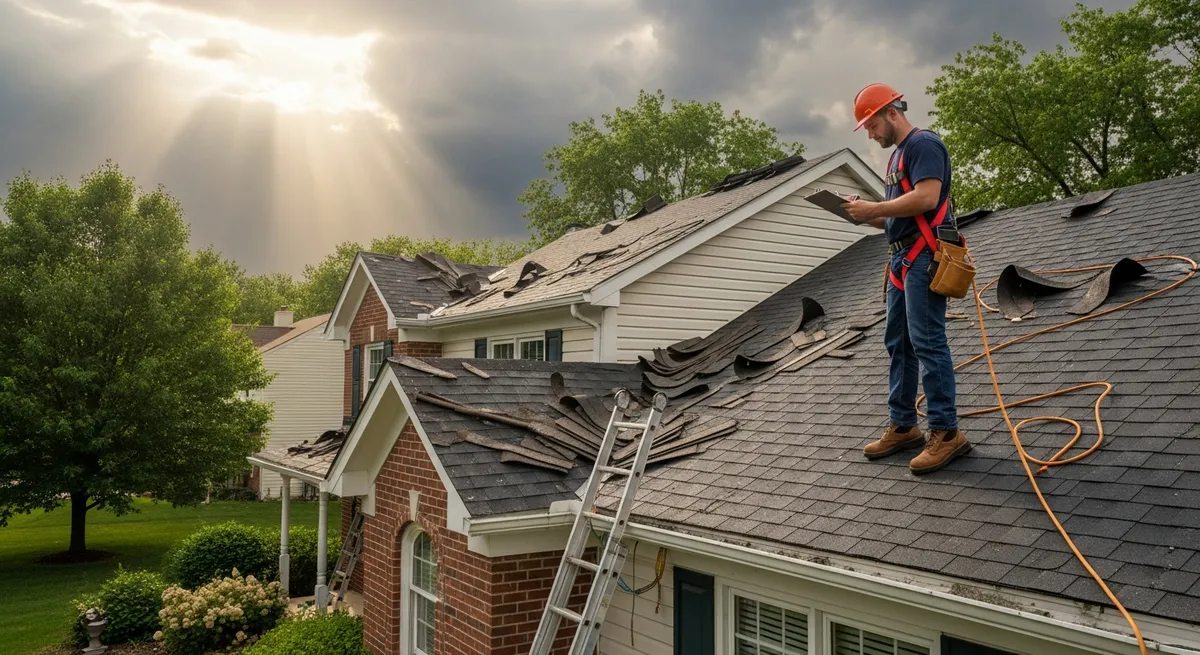
Severe storms are the most dramatic threat to Loudoun County roofs, but they are far from the only one. The county sits in a corridor that regularly receives thunderstorms with wind gusts exceeding 60 miles per hour, and those gusts can lift, crack, or completely remove shingles from roofs that appeared perfectly sound the day before. Hailstorms, while less frequent than in the Midwest, do occur in Northern Virginia and can cause widespread damage that is not always visible from the ground. The dimpled, bruised appearance of hail-damaged shingles often goes unnoticed until the compromised areas begin leaking weeks or months after the storm. Our storm and hail damage repair guide explains how to identify and document storm damage for insurance purposes.
The mature tree canopy found throughout much of Loudoun County adds another layer of complexity. Trees provide beautiful shade and increase property values, but they also deposit leaves, seeds, and branches on roofs and in gutters. Accumulated debris holds moisture against the roof surface, accelerates shingle deterioration, and clogs gutter systems that are essential for directing water away from the structure. Overhanging branches scrape against shingles during wind events, stripping granules and creating abrasion damage. Fallen branches cause direct impact damage that ranges from a few cracked shingles to punctured decking. Managing the relationship between your trees and your roof—through strategic trimming and regular debris removal—is a critical part of roof maintenance that many homeowners overlook.
Humidity is the silent enemy of Loudoun County roofs. The region’s high humidity promotes the growth of moss, algae, and lichen on shingle surfaces, particularly on north-facing slopes and in areas shaded by trees or adjacent structures. Algae causes the dark streaking that many homeowners mistake for dirt, while moss develops a thick, spongy layer that lifts shingle edges and traps moisture against the roof surface. Left unchecked, biological growth accelerates shingle deterioration and can reduce the lifespan of an otherwise healthy roof by several years. Algae-resistant shingle formulations, zinc or copper ridge strips, and periodic professional cleaning are all effective strategies for managing biological growth in this climate.
The age and construction quality of the housing stock across Loudoun County also play a role. The eastern part of the county experienced massive residential development during the late 1990s and 2000s, and many of those homes are now approaching the 20 to 25-year mark where original roofing systems begin to reach the end of their service life. Some of those homes were built during a period of rapid construction where speed was prioritized over craftsmanship, and shortcuts in ventilation, flashing, and underlayment installation are now surfacing as problems that require professional attention. Older homes in Leesburg, Hamilton, and the western corridor may have been re-roofed once or twice already, and the quality of those previous installations affects the current condition of the entire roofing system.
Roof Repair Priorities: What to Fix First
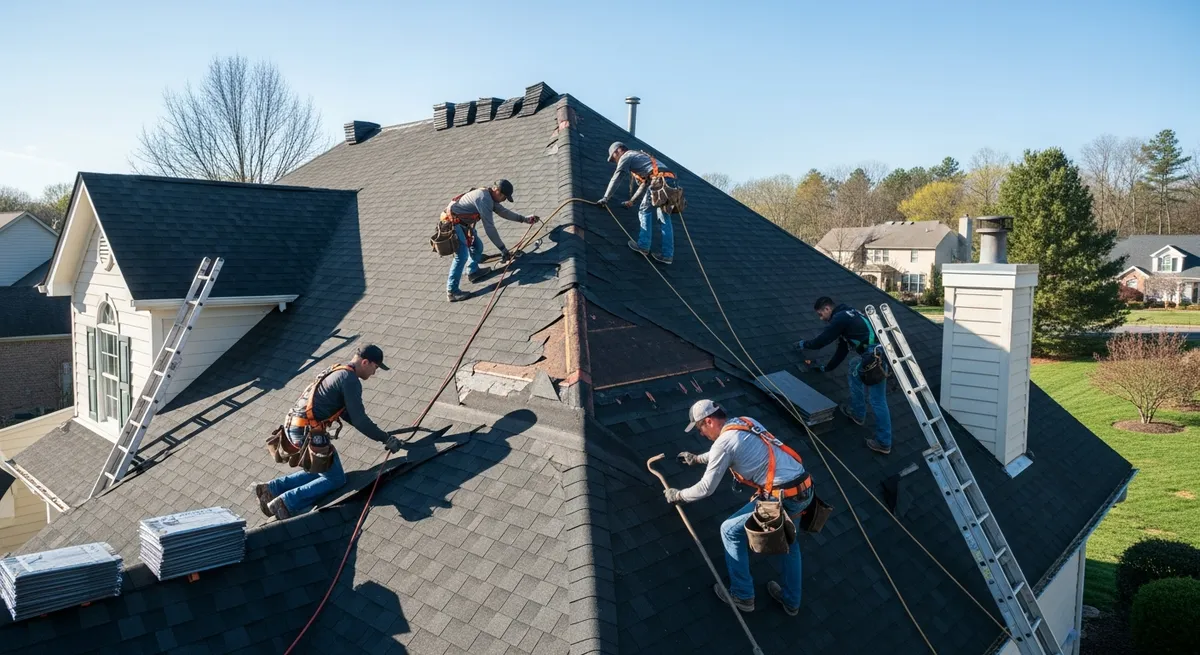
When a roof inspection reveals multiple issues—which is common on homes that have not been professionally evaluated in several years—homeowners naturally want to know what to fix first. Not all roof problems carry the same urgency, and understanding how to prioritize repairs helps you allocate your budget effectively and protect your home from the issues that pose the greatest immediate risk.
Active leaks are always the top priority. Any point where water is currently entering the structure demands immediate attention, regardless of how small the drip appears. Water travels unpredictable paths once it gets beneath the roofing surface, running along rafters, pooling on top of ceiling drywall, and saturating insulation before it ever becomes visible as a stain or drip inside the home. The damage caused by even a minor, slow leak compounds over time—wet insulation loses its thermal value, damp wood invites mold growth, and saturated drywall eventually fails. Addressing active leaks first prevents the cascade of secondary damage that turns a $500 repair into a $5,000 remediation project. Loudoun county roof repair professionals know that stopping active water intrusion is the foundation of every effective repair plan.
Compromised flashing ranks second in the priority order because it represents a high-risk pathway for future leaks even when water has not yet penetrated the interior. Flashing that has separated from a chimney, lifted away from a wall transition, or cracked at a vent pipe penetration is essentially an open invitation for the next rainstorm to enter your home. Resealing or replacing failed flashing is relatively straightforward and inexpensive when addressed proactively, but the water damage that results from ignoring it can be extensive and costly. Step flashing at wall transitions, counter-flashing at chimneys, kick-out flashing at the bottom of roof-to-wall junctions, and pipe boots at plumbing vent penetrations should all be inspected and repaired as a high-priority item.
Missing or damaged shingles come next because they expose the underlayment or decking to direct weather exposure. While the underlayment provides a secondary layer of protection, it is not designed to serve as the primary weather barrier for extended periods. UV radiation degrades most underlayment materials within weeks of direct exposure, and wind-driven rain can overwhelm even a quality synthetic underlayment at seams and fastener points. Replacing missing shingles promptly maintains the complete weatherproof envelope that your roof is designed to provide, and it prevents the kind of cascading damage where one vulnerable area leads to the failure of adjacent components.
Gutter and drainage issues occupy the fourth tier of repair priorities. While clogged or damaged gutters do not cause immediate interior leaks the way a failed flashing joint does, they create conditions that lead to serious problems over time. Water that overflows a clogged gutter saturates the fascia board and can wick beneath the drip edge, causing rot along the roof edge. Standing water in gutters adds weight that can pull the gutter away from the fascia, damaging both components. And water that is not properly channeled away from the foundation can cause basement moisture problems that are even more expensive to resolve than the roof issues that caused them. A functioning gutter system is an integral part of your roof’s performance, and keeping it clear and properly aligned is a maintenance task that pays dividends in avoided repairs. Our gutter installation and maintenance guide covers best practices for keeping your drainage system in top condition.
Ventilation deficiencies are the final priority tier, not because they are unimportant but because their effects are cumulative rather than immediate. A roof with inadequate ventilation will not leak tomorrow, but it will age faster, perform worse in extreme temperatures, and develop moisture-related problems in the attic that eventually affect the entire roofing system. Addressing ventilation during a repair project is often the most cost-effective time to do it, because the crew is already on the roof and adding soffit baffles, clearing blocked intake vents, or installing additional ridge vent is relatively straightforward when the other work is already in progress.
A responsible contractor will present repair priorities in a logical order and explain the reasoning behind each recommendation. They should never pressure you to address every issue simultaneously if your budget does not allow it, but they should be transparent about the risks of deferring specific items. The goal is a plan that addresses the most critical vulnerabilities first while creating a roadmap for completing lower-priority work over time. That approach protects your home, respects your budget, and builds a foundation for a long-term maintenance relationship that keeps your roof in top condition year after year.
When Siding Repair Matters to Roof Performance
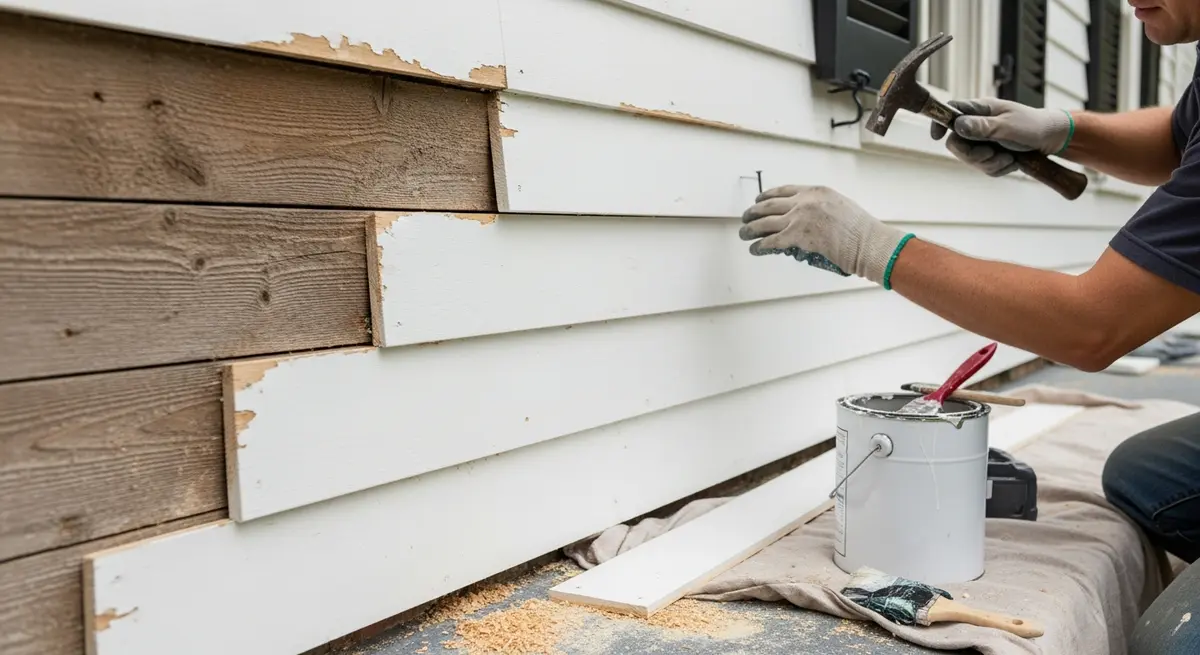
Most homeowners think of their roof and their siding as completely independent systems, but the reality is that the two are physically and functionally connected at every point where the roof meets a wall. When siding is damaged, deteriorated, or improperly installed at these transition zones, the consequences often show up as roof problems—leaks along wall lines, rot at the roof edge, and moisture intrusion that mimics a roofing failure but actually originates in the siding. Understanding this connection is especially important for Loudoun County homeowners, where the prevalence of vinyl, fiber cement, and wood siding means that siding repair ashburn va and the surrounding area should sometimes be considered alongside roof repair rather than as a separate project.
The most critical connection point between siding and roofing is the roof-to-wall junction where a lower roof slope terminates against an upper wall surface. This transition requires a combination of step flashing woven into the shingle courses and a properly integrated siding layer that directs water away from the wall rather than behind the flashing. When siding is cracked, warped, or pulling away from the wall at this junction, water enters behind the cladding and can travel downward along the wall sheathing, eventually reaching the top of the lower roof where it saturates the decking, the fascia, and the soffit. From the inside of the home, this damage appears to be a roof leak, but no amount of roof repair will stop the water until the siding issue is resolved.
Kick-out flashing is the small but critical component that redirects water from the roof surface away from the wall at the bottom of roof-to-wall junctions. When kick-out flashing is missing—which is shockingly common, even on relatively new construction—water cascading down the roof slope runs directly behind the siding at the bottom of the junction, causing hidden rot that can go undetected for years. By the time the damage becomes visible as peeling paint, soft spots in the wall, or interior water stains, the underlying wood framing may be severely compromised. Installing kick-out flashing is an inexpensive addition during any roof repair or replacement project, and it prevents one of the most common and most destructive forms of water damage in residential construction.
Soffit and fascia conditions directly affect roof-edge performance. The fascia board is the vertical surface at the edge of the roof where gutters are typically mounted, and the soffit is the horizontal underside of the roof overhang. When fascia rots due to prolonged moisture exposure—often caused by overflowing gutters or improperly flashed drip edge—the gutter loses its secure attachment and begins to sag or pull away. That sagging creates gaps where water bypasses the gutter entirely and runs down the wall or behind the siding. Soffit damage is equally problematic because soffit vents are a critical component of the attic ventilation system. Blocked or damaged soffit vents disrupt airflow, contributing to the heat and moisture buildup that accelerates roof aging from the inside. Our siding repair guide provides detailed information on identifying and addressing these types of siding-related issues.
Wood siding and wood trim around dormers, gable ends, and roofline transitions require particular attention in Loudoun County’s humid climate. Wood absorbs moisture readily, and when paint or sealant fails, the exposed wood swells, contracts, and eventually rots. Rotted wood trim at the roofline creates gaps that allow water and pests to enter the attic space, and rotted dormer cheeks can direct water behind the roof flashing rather than away from it. Fiber cement and engineered wood siding products are more resistant to moisture damage than natural wood, but they still require proper installation and maintenance at roofline transitions to function as intended.
When planning a roof repair or replacement project, ask your contractor to inspect the siding conditions at every roof-to-wall transition, along the fascia and soffit lines, and around any dormers or architectural features where the two systems intersect. Addressing siding issues during a roofing project is significantly more efficient than scheduling separate projects, because the crew already has access to the affected areas and can integrate siding repairs into the overall workflow. A loudoun roofing company that understands the full building envelope—not just the shingles on top—will deliver a result that performs better and lasts longer than one that treats the roof in isolation.
How to Pick an Ashburn Roofing Company
Choosing a roofing contractor in Ashburn or anywhere in Loudoun County can feel overwhelming, especially when you are dealing with a leak or storm damage and feel pressure to make a quick decision. The good news is that a few clear, repeatable steps will help you identify a trustworthy contractor with confidence, whether you need a minor repair or a complete roof replacement. These same steps apply whether you are searching for an ashburn roofing company specifically or for roofing companies loudoun county wide.
Start with licensing and insurance. Every roofing contractor working in Virginia is required to hold a valid contractor license issued by the Department of Professional and Occupational Regulation. The license class must be appropriate for the dollar value of the project—a Class C license covers projects up to $10,000, a Class B covers up to $120,000, and a Class A has no limit. You can verify any contractor’s license online through the DPOR website. Insurance is equally important: the contractor must carry general liability insurance to protect your property if something goes wrong during the project, and workers compensation insurance to cover any injuries sustained by crew members on your property. Without workers compensation coverage, you could be held liable for medical costs if a worker is hurt while working on your roof. Request certificates of insurance and verify them with the issuing companies before signing any contract.
Local experience matters enormously in Loudoun County because the county’s building codes, HOA regulations, and climate conditions are specific enough that generic roofing knowledge does not fully apply. A contractor who has been working in Loudoun County for years understands the county’s permitting process, knows what inspectors look for during final walkthroughs, and has experience navigating the architectural review requirements of Ashburn’s many HOA-governed communities. They understand the specific weather challenges the area faces and can recommend materials and installation techniques tailored to local conditions. A contractor from two hours away may be licensed and insured, but they are unlikely to bring the same depth of local knowledge that a community-based company offers.
The estimate is your best tool for evaluating a contractor’s transparency and professionalism. A proper estimate should itemize materials by specific product name and quantity, separate labor costs from material costs, list tear-off and disposal fees, include permit costs as a line item, specify warranty terms for both materials and workmanship, and provide a projected timeline for the project. If a contractor gives you a single lump-sum number with no breakdown, you have no way to compare their proposal to another contractor’s on an equal basis and no way to verify that quality materials are being proposed. A detailed estimate also protects you from disputes after the project is complete, because the document serves as a clear record of what was agreed upon.
References and reviews are the closest thing to a guarantee that you will find in the contracting world. Ask any prospective contractor for references from projects completed in Loudoun County within the past two years, and take the time to call those references. Ask about the quality of the finished product, the professionalism of the crew, whether the project stayed on schedule and within budget, and whether any issues arose after completion. Online reviews on Google, the Better Business Bureau, and home services platforms provide additional perspective, but focus on the pattern of reviews over time rather than any single rating. A contractor with consistent positive reviews spanning several years has demonstrated a track record of reliable performance that a newer company with a handful of five-star reviews simply cannot match.
Beware of storm chasers—out-of-area contractors who appear in Loudoun County neighborhoods immediately after severe weather events, knock on doors, and offer to handle insurance claims in exchange for the roofing work. While some of these companies are legitimate, many are transient operations with no long-term presence in the area. They may use high-pressure sales tactics, offer deals that seem too good to be true, or disappear once the check clears, leaving you with no recourse if warranty issues arise. The safest approach is to work with a contractor who was established in the community before the storm hit and who will still be here years after the work is complete. A local loudoun county roof repair contractor has a reputation to protect and a community to serve, which creates natural accountability that out-of-area operators simply do not have.
Payment terms are a reliable indicator of a contractor’s financial stability and integrity. The standard arrangement is a deposit of 10 to 30 percent upon signing the contract, with the balance due upon completion and your satisfaction with the work. Any contractor who demands full payment before starting the project, insists on cash-only transactions, or pressures you to pay before you have inspected the finished work is raising serious red flags. Pay by check or credit card to maintain a documented payment trail, and never pay the final balance until you have completed a walkthrough with the project manager and confirmed that the work meets the agreed-upon specifications.
Communication throughout the process should be clear, consistent, and proactive. The right contractor responds to your initial inquiry within the same business day, schedules the inspection promptly, delivers the estimate within the timeframe they promise, and keeps you informed about scheduling, weather delays, and any findings during the project. If a contractor is difficult to reach during the sales process, that pattern will only worsen once the project is underway and your leverage as a potential customer is gone. Choose a contractor whose communication style puts you at ease and whose responsiveness demonstrates respect for your time and your investment. Visit our about us page to learn about Sterling Roofers’ approach to customer communication and project management across Loudoun County and the broader Northern Virginia region.
Roof repair ashburn va homeowners seek and Loudoun County residents in general deserve a contractor who treats every project with the same level of care, whether the job is a $400 flashing repair or a $20,000 full replacement. The right contractor sees every project as an opportunity to demonstrate their commitment to quality and to build a relationship that extends beyond the single transaction. When you find that kind of contractor, hold onto them—a trusted roofer is one of the most valuable professional relationships a homeowner can have.
At Sterling Roofers, we have built our reputation on these principles. We serve homeowners across Ashburn, Sterling, Leesburg, Herndon, Reston, and the entire Loudoun County area with detailed inspections, transparent estimates, and workmanship we stand behind for years. Our team understands the specific challenges that Loudoun County roofs face, from the HOA requirements in Ashburn’s planned communities to the weather exposure on western Loudoun properties. We handle everything from minor repairs and gutter maintenance to complete roof replacements and storm damage insurance claims. And we do it all with the goal of earning your trust through performance rather than promises.
Your roof protects your family, your belongings, and one of the largest financial investments you will ever make. It deserves a contractor who takes that responsibility seriously and who approaches every project with the expertise, transparency, and accountability that the job demands. Whether you need a quick repair to stop a leak before the next storm or a comprehensive replacement to reset the clock on your home’s most critical protective system, we are here to help you make the right decision with confidence. Explore our roofing insurance page if your project involves a claim, or visit our roof financing page to learn about payment options that make larger projects more manageable.
Schedule Your Loudoun County Roof Inspection
Schedule an Ashburn or Loudoun County inspection with Sterling Roofers for a clear, photo-backed plan. Call us today at (703) 436-4445 or schedule your free consultation online.
Schedule Free Consultation