Leesburg VA Roofing Contractors: Repairs, Replacement Planning, and What to Ask
Leesburg VA Roofing Contractors: Repairs, Replacement Planning, and What to Ask
Key Takeaways
- Leesburg and western Loudoun County see more severe storm exposure than eastern suburbs — inspect after every major weather event
- Virginia DPOR Class A or B license is the minimum credential for any roofing contractor working in Leesburg
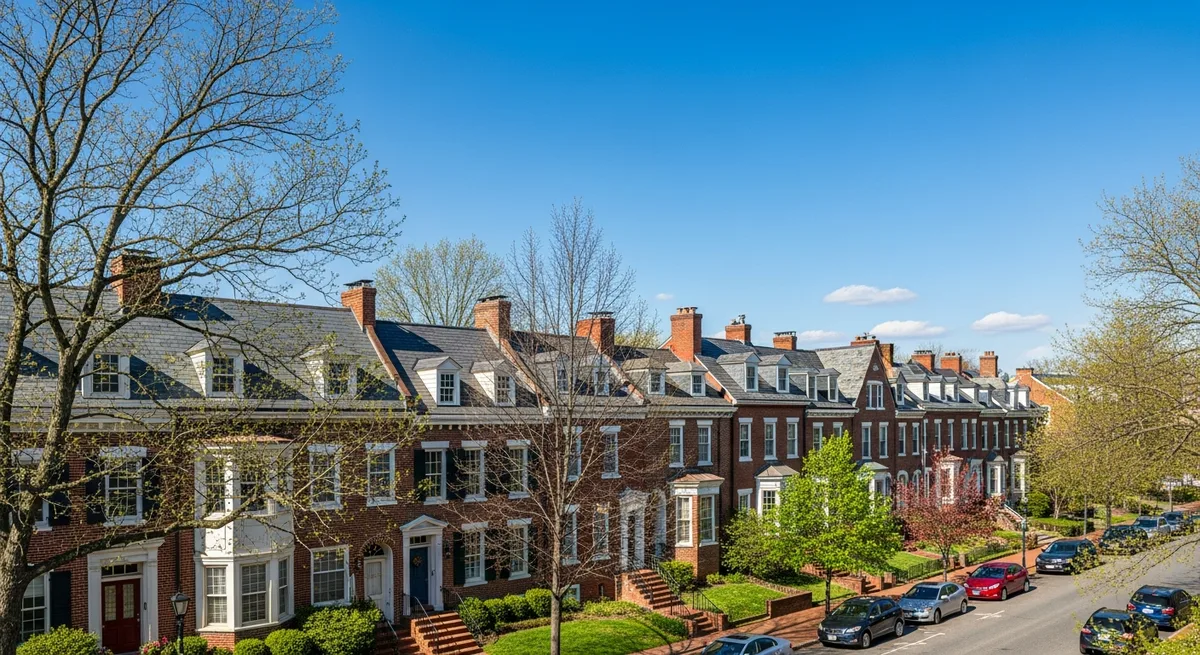
- Historical district properties in downtown Leesburg may require specific material approvals before replacement
- Get at least three itemized written quotes — verbal estimates are not contractually binding in Virginia
- Loudoun County building permits are required for full replacements — a contractor who skips this step creates homeowner liability
Whether you are dealing with storm damage, an aging roof that has started showing its years, or simply planning ahead for a major home investment, finding the right Leesburg VA roofing contractors is one of the most important decisions you will make as a homeowner. The roofing contractor you choose determines not only how well the work is performed but also how long the results last, how smoothly the project runs, and how protected you are if something goes wrong down the road. Sterling Roofers serves Northern Virginia and nearby Maryland communities across the DMV, and through years of experience working on homes throughout Loudoun County and the broader region, we understand the specific challenges Leesburg homeowners face and what it takes to address them properly.
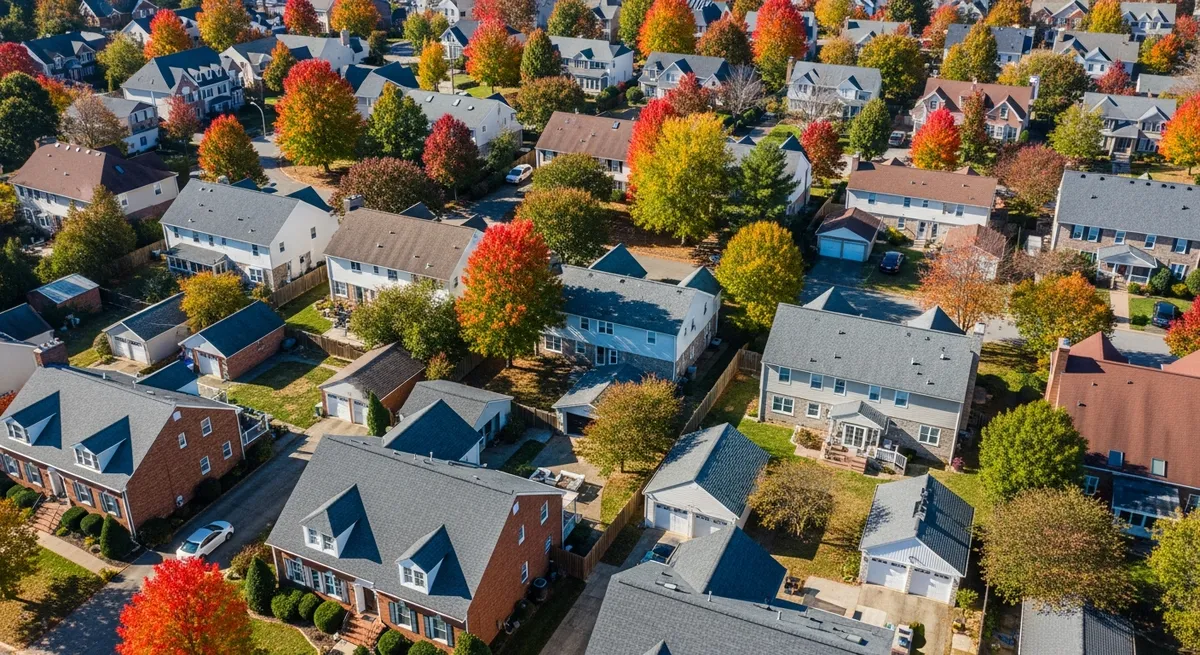
Leesburg occupies a unique position in Northern Virginia. As the county seat of Loudoun County, it blends a historic downtown core with rapidly expanding suburban neighborhoods on its eastern and southern edges. That mix creates a diverse roofing landscape—from older homes in the historic district with slate, cedar shake, and early asphalt roofing systems to newer construction in developments like Lansdowne, Potomac Station, and Leesburg Gateway where modern architectural shingles are the standard. Each type of home presents different roofing needs, different maintenance patterns, and different cost considerations, but the process of finding a trustworthy contractor remains fundamentally the same regardless of your roof’s age or material.
This guide is designed to give Leesburg homeowners a comprehensive understanding of the entire roofing process, from recognizing common problems and understanding the repair-versus-replacement decision to evaluating estimates, choosing a contractor, and knowing what to expect when the work begins. By the time you finish reading, you should feel confident in your ability to have an informed conversation with any roofing companies in Leesburg VA and make a decision that protects your home, your family, and your financial investment for years to come.
Leesburg Roofing Problems Homeowners See Most
Leesburg’s climate puts roofing materials through a demanding cycle of extremes throughout the year. Summers bring sustained heat and humidity that promote algae growth and accelerate shingle aging from the top down. Winters deliver freeze-thaw cycles that test every seal, fastener, and transition point on the roof. Spring and fall bring severe thunderstorms with wind gusts capable of lifting shingle tabs and displacing flashing. Understanding the most common problems helps you recognize warning signs early and seek roof repair Leesburg VA services before a minor issue becomes a major expense.
Shingle aging and granule loss are the most widespread roofing issues in Leesburg, particularly on homes built during the rapid growth period of the late 1990s and early 2000s. Many of these homes were built with builder-grade three-tab shingles that carried a 20- to 25-year rated lifespan. Those roofs are now at or past the end of their expected service life, and the signs are visible: granules accumulating in gutters and at downspout discharge points, bare asphalt patches visible on the shingle surface, and curling or cracking along shingle edges. Once granule loss reaches a certain threshold, the exposed asphalt layer deteriorates rapidly under UV exposure, and the shingles lose their ability to shed water effectively. At this stage, the roof is not necessarily leaking, but it is operating on borrowed time and a single storm event can push it past the tipping point.
Wind damage is the second most common issue and tends to strike suddenly during summer thunderstorms and severe weather events. Leesburg’s location in the Loudoun Valley, with relatively open terrain to the west and north, means that wind events can be intense and sustained. Shingle tabs that have weakened with age or were inadequately nailed during the original installation are most vulnerable. Wind does not always rip shingles off cleanly—more often, it lifts the tab just enough to break the adhesive bond, leaving the shingle in place but permanently compromised. That tab will flex with every subsequent breeze, gradually cracking and eventually tearing free or allowing water beneath the shingle layer. Professional inspection after any significant wind event is the only reliable way to identify this type of damage, because it is often invisible from ground level.
Flashing deterioration is a chronic issue on Leesburg homes, particularly around chimneys, dormer windows, and wall-to-roof transitions. The metal flashing and sealant at these junctions are designed to redirect water away from vulnerable seams, but they have a finite lifespan. Sealant dries out and cracks over time, especially on south- and west-facing exposures where UV and thermal cycling are most intense. Metal flashing can corrode, especially galvanized steel that has been exposed to persistent moisture. Chimney flashing is the most frequent failure point because the differential expansion rates of masonry and metal create constant stress on the waterproof bond. When flashing fails, water enters the roof structure at the most vulnerable intersection, often causing damage to framing, insulation, and interior finishes before the leak is noticed by the homeowner.
Ventilation problems are common on Leesburg homes, particularly those where past renovation work altered the attic space without maintaining proper airflow. A balanced ventilation system draws fresh air in through soffit vents at the eaves and exhausts warm, moist air through ridge vents or other exhaust points at the top of the roof. When soffit vents are blocked by insulation, when ridge vents are inadequately sized, or when the attic space is compartmentalized by structural elements that disrupt airflow, the resulting heat and moisture buildup damages the roof from the inside out. In summer, trapped heat bakes the shingles from below and can push attic temperatures above 150 degrees. In winter, moisture condenses on the cold underside of the roof deck, promoting mold growth and weakening the plywood sheathing. Both conditions shorten the life of the roof system and can void manufacturer warranties.
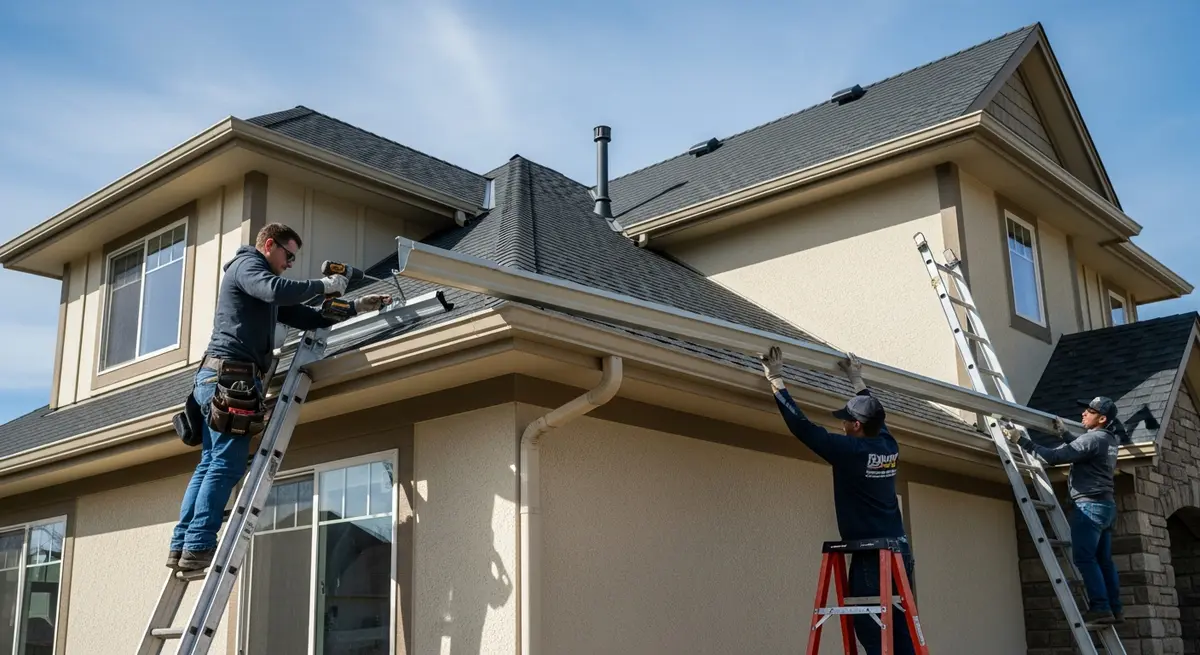
Gutter system failures contribute to roof damage more often than most homeowners realize. Leesburg’s mature tree canopy—particularly in established neighborhoods like Old Town, Catoctin Circle, and the areas near Ida Lee Park—produces heavy leaf fall that clogs gutters and downspouts several times each season. When gutters overflow, water cascades over the gutter edge and saturates the fascia board, the soffit material, and the edge of the roof deck. Over time, this repeated saturation leads to wood rot, paint failure, and structural weakening that creates entry points for water and pests. Maintaining clean, functional gutters is one of the most effective and least expensive ways to protect your roof investment. Our gutter installation guide explains how your gutter system integrates with your roof and what to consider when it needs upgrading or replacement.
Moss and algae growth are aesthetic concerns that also have structural implications. The humid climate in the Leesburg area, combined with shaded roof sections created by mature trees, provides ideal conditions for moss, algae, and lichen to colonize the shingle surface. Algae appears as dark streaks or discoloration and is primarily a cosmetic issue, though it can accelerate granule loss over time. Moss is more problematic because its root structure lifts shingle edges, allowing water to penetrate beneath the shingle layer. Left unchecked, moss growth can create systematic water intrusion across large sections of the roof. Regular cleaning and the installation of zinc or copper ridge strips can control both organisms and protect the long-term performance of your shingles.
Signs You Need Repairs vs a Full Replacement
The repair-versus-replacement decision is one of the most consequential choices a Leesburg homeowner faces, and it deserves careful analysis rather than a snap judgment driven by anxiety or a contractor’s sales pitch. A trustworthy Leesburg VA roofing contractors professional will evaluate the complete picture before recommending one path over the other, and understanding the key factors yourself ensures that you can evaluate their recommendation with confidence.
Roof age is an important starting point but should never be the sole deciding factor. Asphalt shingle roofs in the Leesburg area typically last 20 to 30 years, with higher-end architectural shingles trending toward the upper end and basic three-tab products toward the lower end. If your roof is under 15 years old and the damage is localized to a specific area—a section of wind-lifted shingles, a failed pipe boot, deteriorated flashing around a chimney—targeted Leesburg VA roof repair is almost always the most cost-effective solution. The rest of the roof still has years of useful life ahead, and the cost of a focused repair is a small fraction of a full replacement. If the roof is over 20 years old and showing widespread signs of aging across all slopes, the calculus shifts because continued spot repairs become a cycle of diminishing returns that postpones the inevitable without eliminating the underlying problem.
The pattern and distribution of damage tell you as much as the severity. A roof with damage concentrated on a single slope—typically the south- or west-facing exposure that receives the most weather punishment—may benefit from a partial re-roof of just the affected slope rather than a full replacement. This approach is more cost-effective than replacing the entire roof when three out of four slopes are still in good condition. However, it requires careful transition detailing where new and old roofing materials meet, and not every contractor offers this option. On the other hand, damage that is scattered across the entire roof surface, with multiple types of failures occurring simultaneously, generally points toward full replacement as the more practical and financially sound solution.
Decking condition is the hidden variable that frequently determines the final recommendation. The plywood or OSB sheathing beneath your shingles can only be fully assessed once the existing roofing is removed, but warning signs are sometimes visible during inspection—sagging between rafters when viewed from the attic, soft or spongy areas when walking the roof surface, and water stains or mold visible on the underside of the sheathing from the attic space. If the decking shows signs of widespread deterioration, a repair that leaves compromised sheathing in place beneath new shingles is a short-term fix that creates long-term problems. In those situations, roof replacement Leesburg VA homeowners pursue as a full project provides the opportunity to inspect and replace all damaged decking panels, ensuring a sound structural foundation for the new roofing system.
Your long-term plans for the property matter too. If you intend to sell within the next few years, a new roof is one of the most impactful improvements you can make in terms of both curb appeal and buyer confidence during the inspection and negotiation process. A recently replaced roof eliminates one of the biggest concerns buyers have and can positively influence both the sale price and the speed of the transaction. If you plan to stay in the home for many more years, the decision becomes more about long-term cost optimization—is it cheaper over the next 10 to 15 years to continue repairing, or to invest now in a replacement that resets the clock on every component? Our Northern Virginia roof replacement cost guide provides the detailed pricing benchmarks you need to run that comparison for your specific situation.
Energy efficiency adds another dimension to the analysis. An aging roof with thinning shingles, deteriorated underlayment, and compromised ventilation allows heat transfer that drives up both cooling and heating costs. A new roof installed with modern synthetic underlayment, balanced ridge-and-soffit ventilation, and energy-efficient shingle options can produce measurable reductions in monthly energy expenses. These savings accumulate year after year and can offset a meaningful portion of the replacement cost over the life of the roof. While energy savings alone rarely justify a replacement, they are a significant secondary benefit that makes the investment more attractive when combined with other indicators pointing in the same direction.
What a Proper Estimate Should Include
The roofing estimate is the foundation of the entire contractor relationship. A detailed, transparent estimate protects you from surprise costs, enables fair comparison between competing proposals, and establishes clear expectations for the scope, materials, timeline, and cost of the work. Understanding what a proper estimate should contain empowers you to evaluate roofing companies Leesburg VA contractors fairly and choose the one that offers the best combination of quality, transparency, and value.
Materials should be itemized with specificity. Visit our materials page to explore the roofing products we recommend and install across Leesburg and Loudoun County. The estimate should list the shingle manufacturer, product line, color, and number of squares being installed. It should specify the type of underlayment—synthetic or felt—and indicate whether it covers the full roof deck or only the code-required areas at eaves and in valleys. Flashing types and quantities, drip edge specifications, pipe boot counts, ridge vent length, and any specialty materials like ice-and-water shield or starter strip should each have their own line. This level of detail allows you to confirm that the proposed materials meet your expectations and to compare apples to apples when evaluating multiple estimates.
Labor should appear as a separate line item. The distinction between material cost and labor cost is important because labor quality is the most significant variable in roofing outcomes. The same shingle installed by a meticulous, well-trained crew and a rushed, undertrained one will perform very differently over its lifespan. Separating labor from materials also prevents the practice of inflating material prices to obscure labor markup, which makes fair comparison between estimates much harder for the homeowner. If a contractor resists breaking out labor separately, that resistance itself is informative about their approach to transparency.
Tear-off and disposal should be listed as distinct costs if your project involves removing existing roofing material. The cost of stripping old shingles, hauling the debris to a dumpster, and disposing of it at an approved facility is a substantial component of any replacement project, typically running $1,500 to $3,500 or more depending on roof size and the number of existing layers. Burying this cost in general overhead makes it invisible and prevents you from evaluating whether the charge is reasonable. A transparent contractor lists it clearly and can explain how the cost was calculated.
Permit fees should be itemized when applicable. In Loudoun County, building permits are required for roof replacements and certain structural repairs. The contractor should handle the permit application and inspection process as part of their standard service, and the associated fees should be visible in the estimate. A contractor who suggests skipping the permit to reduce costs is a contractor to avoid—permits ensure that the work meets code, and the inspection provides independent verification that the installation was performed correctly.
Warranty terms must be documented in the estimate document, not promised verbally and then forgotten. The estimate should state the duration of the workmanship warranty, any conditions required to maintain its validity, whether the warranty is transferable if you sell the home, and the process for filing a claim. It should also reference the manufacturer warranty and indicate whether the contractor holds certification status that qualifies the project for enhanced coverage with non-prorated terms and labor inclusion. These details represent the long-term value of your roofing investment and should be crystal clear before you sign anything.
A change-order policy should be included that explains the procedure when additional work is needed during the project. This policy should require your written approval before any charges beyond the original estimate are incurred and should explain how the additional costs are calculated. The most common trigger for change orders in roofing is damaged decking discovered during tear-off, which cannot be fully assessed until the old materials are removed. Having a clear, documented policy in place before the work begins eliminates the most frequent source of billing disputes and ensures that every dollar you spend is authorized and expected.
Payment terms should specify the deposit amount, the balance due date, and the accepted payment methods. A deposit of 10 to 30 percent upon contract signing with the balance due upon completion is standard and reasonable. Full payment before the project starts, cash-only requirements, or pressure to pay before the work is inspected and approved are all warning signs that should prompt you to seek a different contractor. Documented payments by check or credit card protect both parties and create the trail needed to resolve any future disagreements. If you need help managing the cost of a larger project, explore our roof financing options to see what payment plans may be available for your Leesburg roofing project.
How to Choose a Contractor Without Stress
Selecting a roofing contractor is a process that rewards preparation and penalizes haste. When you know what credentials to verify, what questions to ask, and what red flags to avoid, the decision becomes a straightforward evaluation of facts rather than a stressful guessing game. The contractors worth hiring make the process easy; the ones to avoid make it confusing.
Virginia contractor licensing through DPOR is the non-negotiable first checkpoint. Every roofing contractor operating in Virginia must hold a valid license, and you can verify any contractor’s status online in minutes. A valid license confirms minimum competency standards, financial responsibility requirements, and regulatory oversight that gives you recourse if something goes wrong. An unlicensed contractor operating in Virginia is operating illegally, and hiring one exposes you to risk in every dimension—no regulatory complaint process, no guaranteed insurance coverage, and no assurance that the work meets building code requirements.
Insurance verification is equally critical and should never be assumed. Request certificates of insurance for both general liability and workers’ compensation, and take the additional step of calling the insurance carrier to confirm that the policies are current and active. General liability protects your property if the contractor causes damage during the project. Workers’ compensation protects you from personal liability if a worker is injured on your property. A contractor who cannot produce current insurance documentation on request is not worth considering regardless of any other factors in their favor.
Local references from recent Leesburg-area projects provide the most reliable evidence of contractor quality. Ask for three to five references and actually follow through on contacting them. Ask specific, probing questions: Was the work completed on time and within the estimated budget? How did the contractor communicate throughout the project? Was the final cleanup thorough? Have there been any issues since the work was completed, and if so, how did the contractor respond? These conversations paint a picture of the real-world experience you can expect and carry far more weight than online reviews, where the context and authenticity of individual ratings are difficult to verify.
The estimate visit is your most valuable evaluation opportunity. A quality Leesburg VA roofing contractors professional arrives on time, conducts a thorough physical inspection of the roof surface, documents findings with photographs, and explains everything in clear, non-technical language. They answer your questions patiently and completely, without rushing you or creating artificial urgency to push you toward an immediate commitment. They provide a detailed written estimate within a few days of the visit, followed up with a conversation to review it together and address any questions. If a contractor is dismissive, impatient, vague in their explanations, or pressures you to sign on the spot before you have had time to think and compare, move on without hesitation.
The three-estimate approach is wise, but the comparison must be substantive. Look beyond the bottom-line number and evaluate each estimate for material quality, labor transparency, warranty terms, included services, and the professionalism of the contractor who presented it. Two estimates within 10 to 15 percent of each other with comparable scope generally indicate fair market pricing. A bid that undercuts the others by 30 percent or more should prompt questions rather than excitement—the savings have to come from somewhere, and the most common sources are cheaper materials, less experienced labor, reduced warranty coverage, and skipped permits. Those short-term savings invariably become long-term costs in the form of premature failure, denied warranty claims, and the eventual expense of correcting substandard work.
Manufacturer certification is a meaningful differentiator among roofing companies in Leesburg VA. Major shingle manufacturers like GAF, CertainTeed, and Owens Corning offer certification programs that recognize contractors who meet rigorous training, quality, and business standards. Certified contractors gain access to enhanced warranty programs that standard installers cannot offer, including non-prorated coverage and labor inclusion that can save homeowners thousands of dollars if a warranty issue arises. Certification does not replace the need for independent due diligence, but it does add a layer of third-party validation that provides additional confidence in the contractor’s competence and professionalism.
Typical Timelines and What to Expect on Job Day
Understanding the typical timeline for your roofing project and knowing what to expect when the crew arrives takes most of the stress out of the experience. A well-managed project follows a predictable sequence, and familiarity with that sequence allows you to prepare your property, plan your schedule, and assess whether the work is proceeding as it should at every stage.
For targeted roof repair Leesburg VA homeowners commonly need, timelines are relatively short. Minor repairs like replacing a section of shingles, resealing flashing, or swapping out a pipe boot typically take two to six hours and can be completed in a single visit. More extensive repairs involving multiple areas, selective decking replacement, or valley rework may take one to two full days. The contractor should provide a specific timeline as part of the estimate and communicate clearly about any factors that might affect the schedule, including material lead times and weather contingencies.
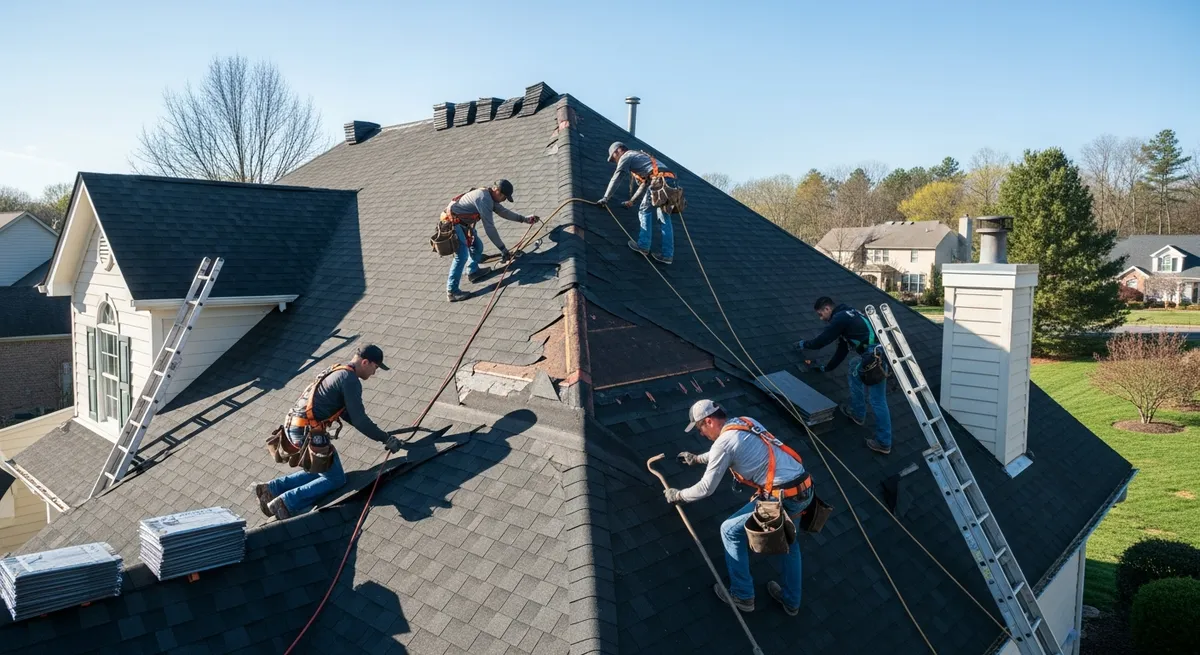
A full roof replacement Leesburg VA project on a typical single-family home takes two to four days from start to finish. The first day is typically the most intensive, involving material delivery and staging, complete tear-off of the existing roofing, and detailed inspection of the exposed decking for any damage that was hidden beneath the old materials. Any deteriorated or water-damaged decking panels are replaced before the new underlayment is installed. Subsequent days focus on the systematic installation of drip edge, flashing at every penetration and transition, shingles across all slopes, ridge vent, and finishing details. The final day includes a comprehensive cleanup and a walkthrough with the homeowner.
On the morning the work begins, the crew will typically arrive between 7:00 and 8:00 AM. They start by positioning equipment, setting up a dumpster for debris, and laying down protective tarps over your driveway, landscaping, and any exterior features near the work zone. Move your vehicles well away from the house before the crew arrives—falling debris during tear-off can damage vehicles, and clearing the area also gives the crew better access for material staging. If you have outdoor furniture, grills, planters, or decorative items near the house, move those as well or discuss their protection with the project manager before work begins.
Expect noise throughout the workday. Tear-off involves prying up old materials with flat bars, and installation uses pneumatic nail guns, cutting tools, and the general commotion of a productive crew working on a sloped surface. If you work from home, plan for disruption during phone calls and video meetings, particularly in the morning hours when tear-off is underway. Pets should be kept indoors or at an alternate location, as the noise and activity can cause anxiety. The installation phase that follows tear-off is noticeably quieter, but noise will be present throughout the project.
Communication from the project manager should be proactive and ongoing. You should receive a briefing at the start of each workday, immediate notification of any discoveries or changes during the work, and a recap at the end of each day. If additional work is needed—decking replacement, additional flashing, or any other scope change—you should be informed immediately and given the chance to review and approve the additional cost before the work proceeds. This communication protocol is not optional; it is a fundamental standard of professional project management that every homeowner deserves and that every quality contractor provides as a matter of course.
Cleanup at the end of the project should be thorough and complete. The crew removes all debris from the roof, gutters, yard, driveway, and any other area affected by the work. Magnetic nail sweepers are run across all surfaces where loose nails could have fallen. Protective tarps are removed, staging areas are cleared, and the dumpster is hauled away. Walk the entire property with the project manager during the final inspection, checking the roofline for clean edges, verifying that flashing and trim details are neat and properly sealed, and confirming that the property is free of debris in every area. The state of your property after the project tells you everything you need to know about the crew’s standards and their respect for your home.
After the project, collect and store all documentation: workmanship and manufacturer warranty certificates, building permit and inspection records, photographs of the completed work, and the contractor’s contact information for future warranty service. These documents are your proof of proper installation and your access point for any warranty claims that may arise in the future. Keep them in a location where you can find them easily, even if you do not need them for many years. If your project involved an insurance claim, retain copies of all claim-related documents alongside your roofing records.
Choosing the right Leesburg VA roofing contractors for your project is a decision that pays dividends for decades. When you find a contractor who communicates with clarity, provides a transparent and detailed estimate, holds proper licensing and insurance, demonstrates quality workmanship in every visible and hidden detail, and stands behind their work with meaningful warranty coverage, you have found a partner worth investing in—not just for this project, but for the ongoing care and maintenance of your roof over its entire lifespan. Your roof is the single most important protective system on your home, and it deserves a contractor who takes that responsibility as seriously as you do. If you are ready to take the next step, we invite you to reach out for a straightforward inspection and a written recommendation you can trust. Visit our services page to learn about everything we offer, check our service areas to confirm coverage in your neighborhood, or explore our Loudoun County roof repair guide for additional information specific to the region.
Schedule a Leesburg Roof Inspection
Schedule a Leesburg roof inspection with Sterling Roofers and get a clear repair-or-replace recommendation. Call us today at (703) 436-4445 or book your free consultation online.
Schedule Free Consultation