Siding Replacement Coverage: Homeowners Insurance vs Home Warranty (What’s Different)
Siding Replacement Coverage: Homeowners Insurance vs Home Warranty (What’s Different)
Key Takeaways
- Homeowners insurance covers siding replacement for sudden covered perils (hail, wind, fire, falling debris) — not gradual wear or aging
- Home warranties typically do NOT cover siding — they are designed for mechanical systems, not exterior components
- A matching clause in your policy may require the insurer to replace additional undamaged siding if the original material can no longer be matched
- Coordinated siding and roofing restoration coverage claims are stronger when both are documented together from the same storm event
- Document damage before the adjuster visits — time-stamped photos and a written contractor report carry significant weight
Homeowners across Northern Virginia and Maryland regularly call us after a storm asking the same question: does homeowners insurance cover siding replacement? The short answer is yes — when the damage was caused by a covered peril. But the details of what is covered, how much you receive, and whether your home warranty plays any role are worth understanding before you file or schedule repairs. Sterling Roofers serves Northern Virginia and nearby Maryland communities across the DMV and handles siding and roofing restoration coverage claims regularly. Here is what you need to know.
Insurance vs. Home Warranty: The Core Difference
The confusion between homeowners insurance and home warranty coverage is common because both are paid on a regular basis and both involve the home. But they cover very different things:
Homeowners insurance is designed to protect against sudden, unexpected loss from specific events — storms, fire, falling trees, vandalism. It covers your home’s structure (walls, roof, siding, windows) when one of those events causes damage. The premium is based on the value of your home and the risk profile of your area.
A home warranty is a service contract that covers the cost of repairing or replacing mechanical systems and appliances when they fail from normal wear — your furnace, water heater, refrigerator, electrical panel. It does not cover the physical structure of the home. Does home warranty cover siding? No. Siding is exterior cladding, not a mechanical system, and is excluded from virtually all standard home warranty plans.
Do home warranties cover siding in most plans? They do not. If you are hoping a home warranty will handle storm-damaged siding, you will need to redirect that claim to your homeowners insurance company instead.
When Siding Replacement Might Be Covered
Is siding covered by homeowners insurance? The answer is yes under the following conditions:
- Hail damage. Hail impacts on vinyl, aluminum, or fiber cement siding leave visible dents, cracks, and puncture marks. When hail also damaged your roof and gutters in the same event, the combined claim is stronger because you have corroborating evidence of a storm that affected multiple exterior components at the same time.
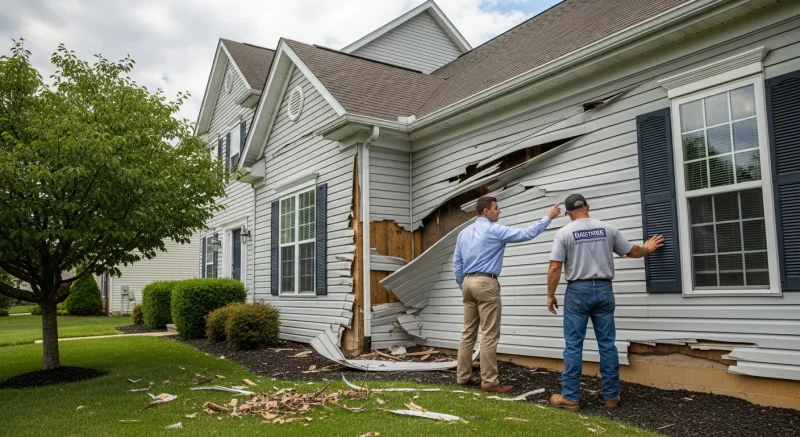
- Wind damage. High winds can blow off sections of siding, particularly at corners, around windows, and at eave edges. Wind-lifted siding panels that allow water infiltration are documented as sudden damage, not gradual wear.
- Falling debris. A tree limb or branch that punctures or destroys siding panels is typically covered as falling object damage. Document the event date and photograph the debris alongside the damage before removal.
- Fire. Fire damage to siding is covered under the dwelling protection portion of your policy.
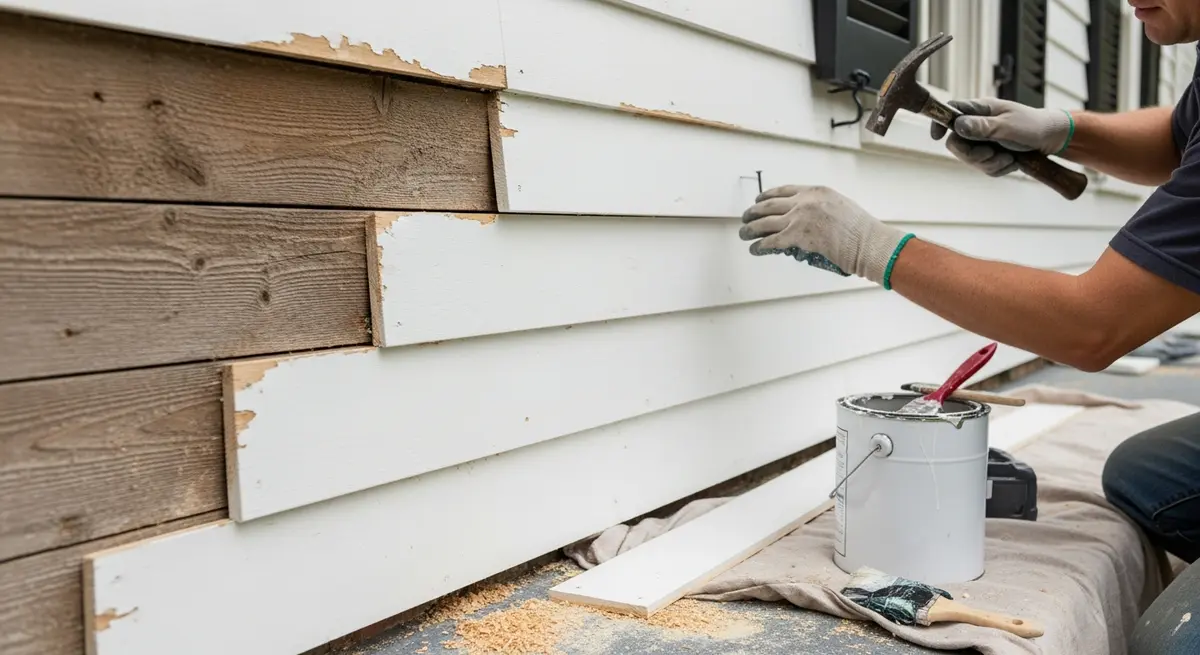
Will insurance cover siding replacement for gradual caulk failure, chalking vinyl, or sections that warped from sun exposure over years? No. Those are maintenance and aging issues that fall outside covered perils.
Common Exclusions and Gray Areas
Even when a storm clearly caused damage, certain situations create gray areas that adjusters may use to limit the claim:
Pre-existing damage. If sections of siding were already cracked, loose, or deteriorated before the storm, the adjuster may attribute those areas to maintenance rather than storm damage. Document the overall siding condition before storm season so you have a baseline if a claim becomes necessary.
Gradual water infiltration. If water got behind siding over a period of years and caused rot or mold damage, that is typically not covered even if a recent storm is cited as the cause. The claim must specifically identify damage from a discrete storm event, not cumulative moisture from an installation or maintenance failure.
Matching limitations. This is where many siding claims become contentious. If only one side of a house was damaged by hail, and the siding on that side no longer matches the undamaged sides (because the original material has been discontinued), some policies include a matching clause requiring the insurer to cover the additional sections for a uniform appearance. Some policies have this clause; many do not. Review your policy specifically for matching language before filing a partial siding claim.
Installation defects. If the siding was installed incorrectly — inadequate nailing, no house wrap, improper flashing around windows — and water damage results from the installation failure, that is not covered by insurance. It may be a warranty or workmanship claim against the original contractor.
Siding and Roofing Restoration Coverage: Why Coordinated Claims Work Better
When a significant storm damages both the roof and the siding, filing a coordinated claim that documents both components together creates a stronger, more cohesive picture of the event’s impact. This is what siding and roofing restoration coverage looks like in practice:
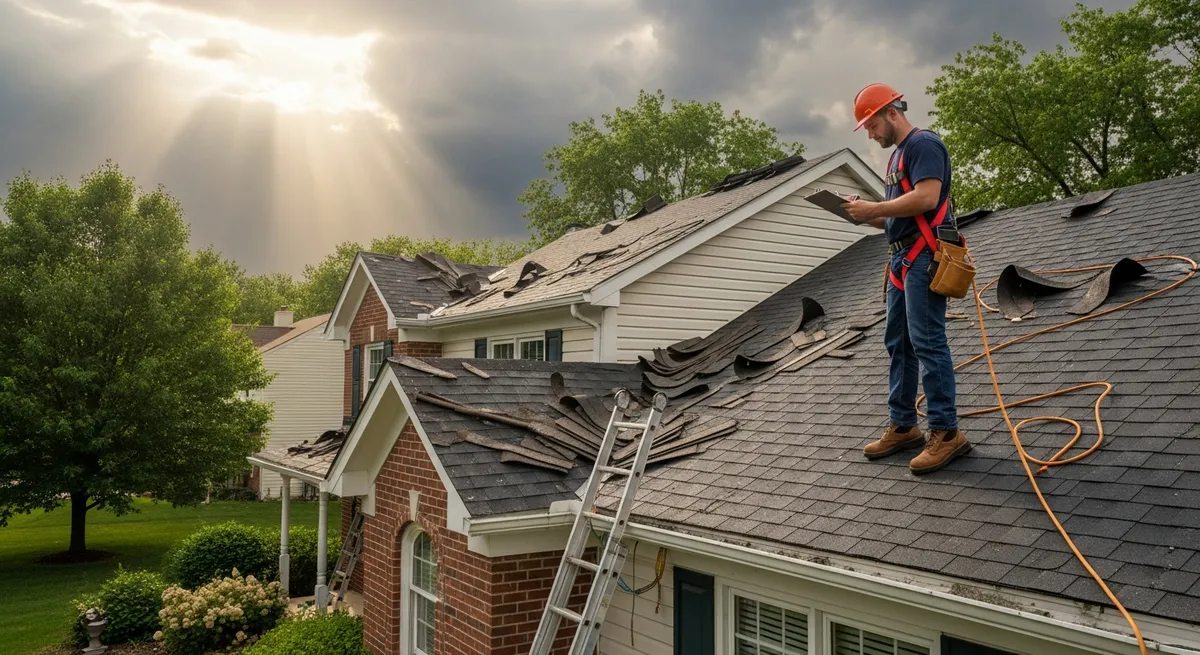
A Northern Virginia contractor performs a comprehensive exterior inspection after the storm and documents: hail damage on roofing shingles, corresponding hail dents on gutters and aluminum window trim, hail impact marks on vinyl siding panels, and wind damage on specific sections where panels have lifted. All of these findings share a common cause — the same storm event — and the coordinated documentation makes it much harder for an adjuster to attribute any one component to pre-existing wear.
Coordinated roof-and-siding claims also make logistical sense. Scaffolding, tarping, and crew mobilization overlap. Having a single contractor who can scope and execute both components avoids the scheduling and coordination complexity of managing two separate claims and two separate contractors.
What to Document Before Getting Quotes
Strong documentation is the foundation of a successful siding replacement insurance claim. Here is what to gather:
- Storm date and event details. Document the date, time, and type of event. Check your local weather service records for hail size and wind speed in your specific zip code — this corroborates your claim timeline.
- Photographs of siding damage. Take close-up photos of impact marks, cracks, dents, and lifted panels. Photograph each affected wall from a distance for context and close up for detail. Time-stamp all photos.
- Corroborating exterior damage. Dents on aluminum window trim, downspouts, AC unit fins, and mailbox are objective evidence that hail actually struck your property at a measurable size. Document these alongside the siding damage.
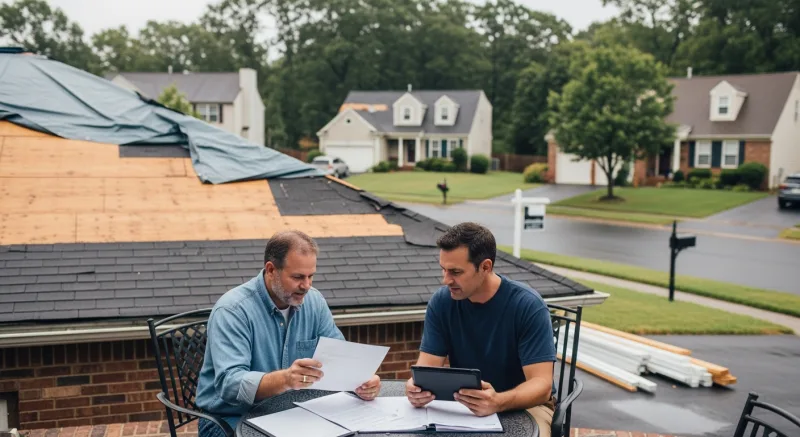
- A written contractor inspection report. A licensed contractor’s written findings should be in hand before the adjuster visits. This gives you an independent record of all damage, dated and photographed, that you bring into the adjuster meeting.
Siding and Exterior Inspections Across Northern Virginia and Maryland
Sterling Roofers inspects siding, roofing, and roof edges together so your claim covers the full scope of storm damage. Written reports, photo documentation, and insurance support. Call (703) 436-4445 or schedule your exterior inspection online.
Schedule Exterior Inspection