Do Insurance Companies Cover Roof Replacement? What’s Typical and What to Ask
Do Insurance Companies Cover Roof Replacement? What’s Typical and What to Ask
Key Takeaways
- Insurance covers roof replacement for sudden covered perils (hail, wind, falling debris) — not wear, aging, or maintenance failures
- ACV policies pay replacement cost minus depreciation; on a 15-year-old roof that can mean the insurer covers only 40–50% of the total
- RCV policies cover full replacement cost minus deductible, with depreciation released after the work is completed
- A written inspection report from a licensed roofer — completed before the adjuster visits — significantly improves claim outcomes
- Insurance companies can require you to replace your roof as a condition of continued coverage if the roof is aged or hazardous
The question “do insurance companies cover roof replacement?” comes up after almost every significant storm in Northern Virginia and Maryland — and the honest answer is: sometimes, under specific conditions, and how much they cover depends heavily on your policy type. Sterling Roofers serves Northern Virginia and nearby Maryland communities across the DMV, and our estimators walk homeowners through this process regularly. This guide explains how coverage decisions actually work, what you need to document, and what questions to ask so you are not blindsided by a settlement that falls short of what you expected.
How Coverage Decisions Actually Work
Homeowners insurance is designed to cover sudden, unexpected damage caused by a covered peril — not the gradual effects of time and weather. The two categories that determine whether a roof replacement claim succeeds or fails are:
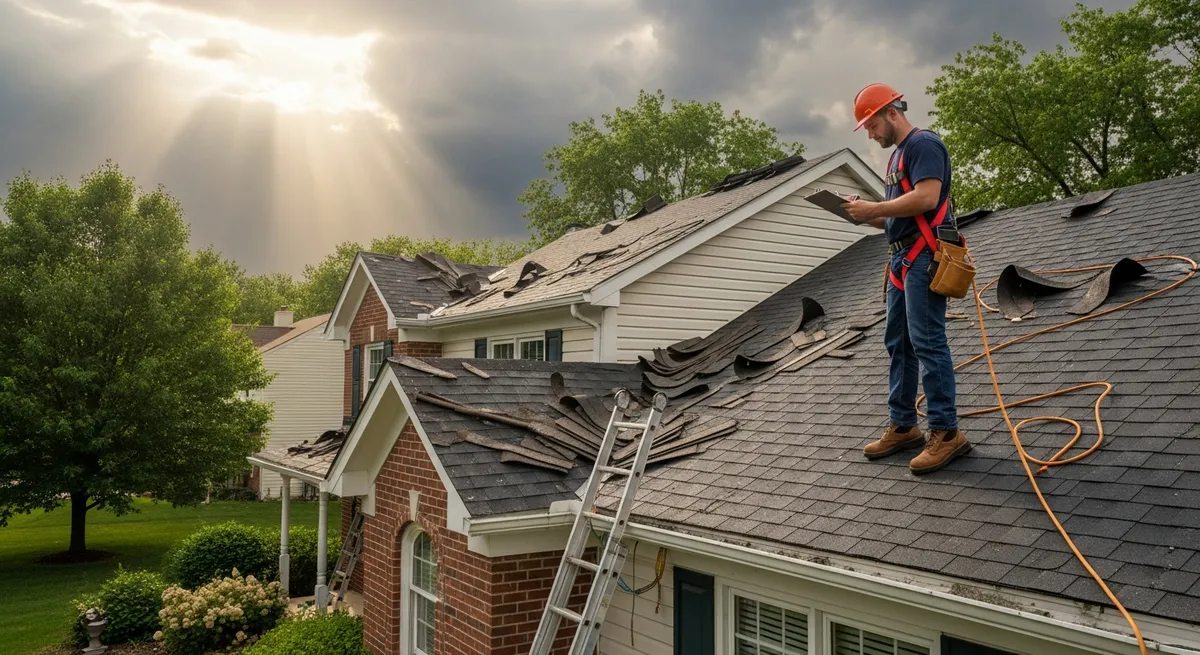
Covered perils: Most standard homeowners policies list specific events that trigger coverage. For roofs, the most common covered perils are hail, windstorm, fire, falling objects (tree limbs), and ice damming in some regions. When your roof is damaged by one of these events, you have the basis for a legitimate claim. The insurer will send an adjuster to assess the scope and determine a settlement amount.
Wear, aging, and maintenance: Damage from normal aging, granule loss from shingle age, slow leaks that developed over years, or a roof that simply reached the end of its useful life are not covered perils. The insurer’s adjuster is trained to distinguish storm-caused damage from pre-existing deterioration, and any pre-existing conditions noted during the inspection can be used to reduce or deny the claim.
The critical distinction in a real claim is that most storm-damaged roofs also have some pre-existing wear. The adjuster’s job is to document both and separate them. Your job is to have independent documentation — from a licensed roofing contractor — that clearly identifies the storm-caused damage and distinguishes it from whatever condition existed before.
ACV vs. RCV Policies: The Number That Changes Everything
When you ask “do insurance companies cover roof replacement,” the policy type determines how much of the replacement cost you actually receive. This is the part most homeowners don’t fully understand until after the claim is settled.
ACV — Actual Cash Value: Your insurer calculates what your roof is worth today, accounting for its age and condition. A standard asphalt shingle roof is typically depreciated over a 20–25 year period. A roof that is 15 years old on a 20-year depreciation schedule may have only 25% of its replacement value remaining in an ACV policy. On a $20,000 replacement, that means the insurer pays roughly $5,000 minus your deductible. You are responsible for the remaining $15,000 or more.
RCV — Replacement Cost Value: An RCV policy covers the full cost of replacing your roof with materials of like kind and quality, minus your deductible. The insurer typically pays ACV first, then releases the “recoverable depreciation” (the holdback) after you complete the work and submit proof. On a $20,000 replacement with a $2,500 deductible, an RCV policy nets you $17,500 after the depreciation is recovered — a dramatically different outcome than ACV on the same roof.
Before filing, confirm which type of policy you have. This changes how you plan the financial side of the project significantly.
When Replacement Is More Likely Than Repair
Insurance adjusters look at two factors when determining whether a claim supports repair or replacement: the scope of the storm damage and the overall condition of the roof. Replacement becomes the outcome when:
- Widespread hail impact. When hail has struck a significant percentage of shingles across multiple slopes, repair is not a practical solution. Insurance code requirements in many jurisdictions prohibit patching when the scope of damage affects more than a defined threshold — typically 25–30% of a slope.
- Multiple slopes with wind damage. Missing shingles across more than one slope, especially combined with ridge cap loss, usually results in a replacement recommendation rather than a patchwork repair.
- Matching requirements. Many policies include a “matching” clause that requires the insurer to replace sections of undamaged roofing when the damaged material can no longer be matched — an older discontinued shingle, for example. This clause can push a partial claim to a full replacement.
- Code upgrade requirements. If your jurisdiction requires code-compliant upgrades during replacement — such as additional layers of underlayment, ice and water shield at eaves, or updated flashing — these are often covered under an “ordinance or law” rider on RCV policies.
When in doubt, a licensed contractor’s written recommendation for replacement versus repair carries weight in the claims process. Make sure the written report is specific about why repair is not adequate.
What to Document Before You Call Your Insurer
The quality of your documentation is directly tied to the quality of your claim outcome. Here is what to gather before you make the call:
- Date and nature of the storm event. Note the exact date, type of event (hail, wind, both), and any local news coverage. Weather service records confirming hail size and wind speed in your zip code are valuable supplementary documentation.
- Photographs taken immediately after. Photograph missing shingles, granules in gutters, dents on soft metals (gutters, AC unit, pipe boots), any interior water staining, and the general roof condition from the ground. Time-stamped photos on the storm date establish the before/after boundary.
- A written contractor inspection report. Schedule a professional inspection and get findings in writing before the insurance adjuster visits. This gives you independent documentation from a licensed contractor that is not influenced by the insurer’s interest in minimizing the claim.
- Receipts for emergency protection. If you hired someone to place a tarp or make emergency repairs to prevent further damage, keep all receipts. These costs are often reimbursable as part of the claim.
Can an Insurance Company Make You Replace Your Roof?
Yes. Can an insurance company make you replace your roof? In short, yes — and this catches many homeowners off guard. Insurers periodically conduct exterior inspection programs, especially in markets with high storm activity like the Northern Virginia and Maryland corridor. If an inspector finds that your roof is beyond a certain age threshold or in a condition that creates heightened risk, the insurer may:
- Issue a notice requiring replacement within 30–90 days as a condition of continued coverage
- Reduce coverage or add an exclusion for roof-related claims if you do not comply
- Non-renew your policy at the end of the term if the roof condition is not corrected
This situation is separate from a storm damage claim. It is the insurer managing underwriting risk rather than paying a claim. If you receive such a notice, get a licensed roofing contractor to inspect and document the actual condition. Sometimes the insurer’s assessment overstates the problem, and a written contractor report with photographs can support a successful appeal. In other cases, the roof genuinely needs replacement, and acting promptly protects your coverage continuity.
How to Avoid Common Mistakes in the Claims Process
Most insurance claim problems for roof replacements come from a handful of avoidable errors:
Waiting too long to file. Most policies require storm damage claims to be filed within one year of the event, though some have shorter windows. File promptly, even if you are still gathering documentation. You can supplement the claim with additional information later; you cannot extend the deadline.
Making permanent repairs before documentation is complete. Do not replace the roof before the adjuster has inspected the damage. Emergency tarping to prevent further water intrusion is appropriate and usually reimbursable. Replacing the roof removes the evidence.
Overpromising to contractors. Some contractors who specialize in insurance work will tell you they can get the insurer to cover everything, including your deductible. Deductible waivers are insurance fraud in Virginia. Work with contractors who give you an honest scope based on what the inspection found — not what would be convenient for the contract.
Not having your contractor present at the adjuster inspection. Having your contractor present when the adjuster walks the roof is one of the highest-value steps you can take. They can point out damage the adjuster might miss and explain the technical significance of specific findings in real time.
Is roof repair covered by home insurance when the damage is from a storm? Yes — but the quality of your documentation and the expertise of the contractor you work with makes a measurable difference in what you actually receive.
Storm Damage Inspections Across Northern Virginia and Maryland
Sterling Roofers provides written inspection reports, photo documentation, and insurance support for homeowners in Fairfax, Loudoun, Prince William, Arlington, and Maryland. If you suspect storm damage, schedule an inspection before the adjuster visits. Call (703) 436-4445 or book online.
Schedule Your Inspection