Best Roof Insulation: What Works, What to Avoid, and Comfort Improvements
Best Roof Insulation: What Works, What to Avoid, and Comfort Improvements
Key Takeaways
- Northern Virginia falls in Climate Zone 4 — the DOE recommends R-38 to R-60 for attic floors in this zone
- Blown-in cellulose or fiberglass is the most cost-effective best roof insulation at $1.50–$3.00 per sq ft installed
- Blocking soffit ventilation is the most common and damaging insulation mistake — always install baffles first
- Air sealing before insulating doubles the performance improvement compared to insulation alone
- Proper attic insulation reduces ice dam risk and directly lowers roof maintenance costs over time
The best roof insulation question is one of the most practical home performance questions a Northern Virginia homeowner can ask — and the answer has direct implications for both energy bills and long-term roof maintenance costs. A poorly insulated attic drives up heating and cooling costs, contributes to ice damming in winter, and accelerates shingle aging by trapping heat under the roof surface. Sterling Roofers serves Northern Virginia and nearby Maryland communities across the DMV, and attic inspection is part of our standard roof inspection process because we see firsthand how insulation and ventilation affect roof life.
Why Roof and Attic Insulation Matters
The relationship between attic insulation and roof performance is more direct than many homeowners realize:
Energy efficiency: In a typical Northern Virginia home, 25–40% of heating and cooling energy is lost through the ceiling and roof assembly. Inadequate insulation means the HVAC system runs longer and harder to maintain comfortable temperatures — especially through Virginia’s humid, hot summers and cold winters.
Ice dam prevention: Ice dams form when heat from an under-insulated attic melts snow on the roof surface. The meltwater runs down the slope and refreezes at the cold eave, building into a dam that forces water under shingles and into the structure. Proper attic insulation, combined with adequate ventilation, keeps the roof surface temperature uniform and significantly reduces ice dam risk.
Shingle life: Excessive attic heat — common in under-insulated attics in summer — accelerates granule loss and thermal cycling damage to asphalt shingles. The underside of a poorly ventilated, under-insulated attic can reach 150°F or higher on a hot Virginia summer day. Keeping that temperature lower extends the life of the roofing material above.
Moisture control: A properly insulated and ventilated attic keeps the underside of the roof deck dry. When insulation traps moisture vapor against the decking, rot and mold can develop in a matter of seasons in the humid Northern Virginia climate.
Best Insulation for Roof: Options in Plain English
Here are the three most common insulation types used in Northern Virginia attics, with an honest assessment of when each makes the most sense:
| Type | R-Value / Inch | Installed Cost / Sq Ft | Best For |
|---|---|---|---|
| Blown-in fiberglass | R-2.2 – R-2.7 | $1.50 – $2.50 | Vented attics, topping off existing insulation |
| Blown-in cellulose | R-3.2 – R-3.8 | $1.50 – $2.75 | Vented attics, air sealing combined install |
| Open-cell spray foam | R-3.5 – R-3.8 | $2.50 – $4.00 | Conditioned attic, crawl spaces |
| Closed-cell spray foam | R-6.0 – R-6.5 | $4.00 – $7.00 | Unvented roof assemblies, maximum R-value in tight spaces |
Prices are typical Northern Virginia installed ranges as of 2026. Costs vary based on attic square footage, accessibility, air sealing scope, and whether existing insulation requires removal.
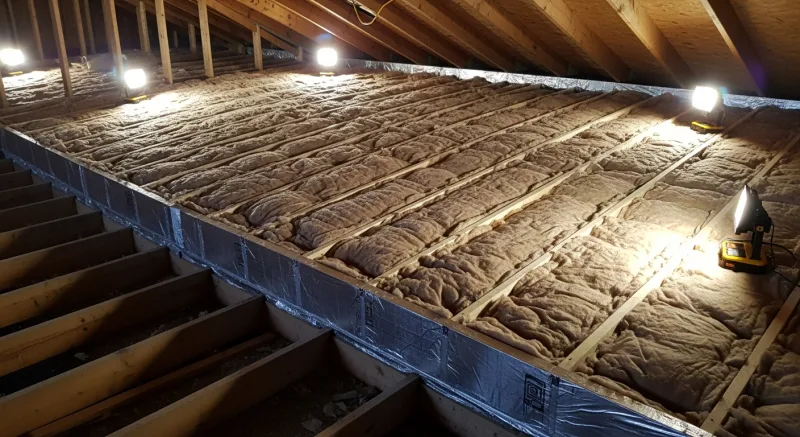
Blown-in fiberglass: The most common choice for adding insulation to an existing vented attic. It is fast to install, compatible with existing insulation types, and cost-effective. The limitation is its relatively low R-value per inch, meaning you need more depth to hit target R-values. To reach R-49 with blown fiberglass, you need approximately 18–22 inches of depth.
Blown-in cellulose: Made from recycled paper treated with boric acid for fire and pest resistance. Cellulose has a higher R-value per inch than fiberglass and is better at filling irregular gaps around joists and framing. It settles slightly over time (typically 15–20% in the first few years), which contractors account for by installing to a higher initial depth. Cellulose also has better air-sealing properties when combined with a damp-spray application.
Spray foam: The highest-performance option, but also the most expensive and most application-specific. Closed-cell spray foam applied to the underside of roof decking in an unvented attic assembly creates an air barrier, vapor retarder, and insulation layer in a single material. This converts the attic space into conditioned square footage and eliminates the need for ventilation. It is the right choice for homes where mechanical systems are located in the attic (so they run in conditioned space), for cathedral ceilings, and for applications where maximum R-value in minimum thickness is needed. For standard vented attics with mechanical systems outside the attic space, blown-in cellulose or fiberglass is typically the better value.
Common Mistakes to Avoid
These are the mistakes we see most often when inspecting attics across Northern Virginia:
Blocking soffit ventilation. This is the most damaging and most common mistake in DIY and low-quality insulation installations. When insulation is blown or placed up against the soffit vent area without first installing baffles (ventilation chutes) in each rafter bay, the soffit vents are blocked. This creates a closed attic that traps heat and moisture. Baffles should extend from the soffit area to the attic floor, creating a clear airway for outside air to travel from soffit to ridge. This step must be done before any blown insulation is installed.
Skipping air sealing. Insulation slows heat transfer but does not stop air movement. Gaps around electrical boxes, recessed lights, plumbing chases, and wall top plates allow warm, humid air from the living space to enter the attic directly — creating condensation on cold surfaces in winter and significantly reducing the effective R-value of the insulation above. Air sealing those gaps before insulating is the highest-value step in any attic improvement project.
Covering or compressing existing insulation with batts. Adding faced fiberglass batts on top of existing insulation — a common DIY approach — traps moisture between layers and compresses the existing material, reducing its R-value. Blown-in insulation on top of existing blown-in is the correct approach. If batts are used, they should be unfaced.
Inadequate depth. Installing 4 inches of blown-in fiberglass over an existing attic floor and calling it done is not adequate insulation in the Northern Virginia climate. To meet the recommended R-38 minimum for Climate Zone 4, blown-in fiberglass should be installed to approximately 14–16 inches of depth on the attic floor. Confirm depth with a ruler after installation.
How Insulation Ties to Roof Maintenance Costs
Proper attic insulation is one of the most cost-effective things you can do to reduce long-term roof maintenance costs — here is the connection:
- Ice dam prevention reduces repair costs. Ice dam damage — torn shingles, damaged gutters, interior water staining — is a recurring repair cost for Northern Virginia homeowners with under-insulated attics. Addressing insulation and ventilation eliminates most ice dam issues and the repair costs associated with them.
- Lower deck temperatures extend shingle life. An attic that routinely reaches 140–160°F in summer shortens the effective life of the shingles above it. A well-insulated, well-ventilated attic keeps deck temperatures 20–40°F lower, which translates to meaningfully longer shingle life and a delayed replacement schedule.
- Moisture control prevents rot. An attic that manages moisture correctly avoids the decking rot that can turn a routine roof replacement into a much more expensive project when significant areas of decking need replacement.
Attic and Roof Inspections Across Northern Virginia and Maryland
Sterling Roofers includes attic inspection as part of our standard roof inspection process — because insulation and ventilation directly affect how long your roof lasts. Book an inspection to get a clear picture of both. Call (703) 436-4445.
Book Attic & Roof Inspection