Arlington Roof Repair and Contractors: What to Fix First and Who to Hire
Arlington Roof Repair and Contractors: What to Fix First and Who to Hire
Key Takeaways
- Arlington’s urban density and tree canopy mean debris buildup in valleys and gutters is a leading cause of roof leaks
- Flashing failures around chimneys and dormers are more common in Arlington’s older brick homes than shingle failures
- Emergency tarping or temporary sealant should be applied within 24–48 hours of storm damage to prevent interior damage
- Virginia DPOR Class A or B license is required — verify credentials before signing any contract
- Repairs under 30% of the roof area are typically worth completing; beyond that, replacement math usually wins
When something goes wrong with your roof in Arlington, the last thing you want is confusion about what needs fixing, how much it will cost, and which contractor actually deserves your trust. Arlington roof repair is one of the most searched phrases among homeowners in this area for good reason—the combination of aging housing stock, unpredictable Mid-Atlantic weather, and a crowded contractor market makes navigating a roof problem feel more stressful than it needs to be. Sterling Roofers serves Northern Virginia and nearby Maryland communities across the DMV, and we have spent years helping Arlington homeowners cut through the noise and make smart decisions about their roofs.
This guide is designed to walk you through the entire process, from spotting the first signs of trouble to shaking hands with a contractor you feel genuinely good about hiring. We will cover the roofing problems that show up most often on Arlington homes, explain the difference between a repair that makes financial sense and a situation where replacement is the better path, break down what a proper estimate should look like so you never feel blindsided by a bill, and share practical advice for choosing a roofing contractor Arlington homeowners can rely on year after year. Whether your roof is leaking right now or you simply noticed a few shingles out of place after a storm, the information here will help you take the right next step with confidence.
Arlington sits in a fascinating position when it comes to roofing. The county is densely developed with a mix of mid-century colonials, split-levels, townhomes, and newer construction, each bringing its own roofing challenges. Many of the older homes in neighborhoods like Lyon Village, Ashton Heights, and Cherrydale still have their original or second-generation roofs, and those roofs are reaching the end of their useful lives at a pace that catches homeowners off guard. Meanwhile, the newer townhome developments along the Rosslyn-Ballston corridor and in Columbia Pike deal with different issues—shared walls, complex roof geometries, and HOA restrictions that complicate even straightforward repairs. Understanding the specific roofing landscape of Arlington is the first step toward making informed decisions about your own home.
The Mid-Atlantic climate adds another layer of complexity. Arlington experiences everything from intense summer heat that bakes shingles and accelerates aging, to winter freeze-thaw cycles that work their way into every crack and seam, to spring storms that can rip shingles off a roof that looked perfectly fine the week before. Humidity promotes moss and algae growth, particularly on north-facing slopes shaded by Arlington’s mature tree canopy. Each of these factors influences the type of roof repair Arlington homeowners might need and the urgency with which it should be addressed. A problem handled promptly is almost always less expensive and less disruptive than one that is allowed to worsen over months of inaction.
Arlington Roofing Problems Homeowners See Most
If you live in Arlington long enough, you will encounter at least a few of these common roofing issues. The most frequent complaint we hear from homeowners is water staining on interior ceilings or walls, which is the visible symptom of a leak somewhere above. The challenge with roof leaks is that the point where water enters the living space is rarely directly below the point where it enters the roof. Water can travel along rafters, sheathing, and even electrical wiring before finally dripping through a ceiling, which means the actual source of the problem may be several feet—or even an entire room—away from the stain. This is why diagnosing a roof leak accurately requires a trained eye and, in many cases, an attic inspection to trace the water path back to its origin.
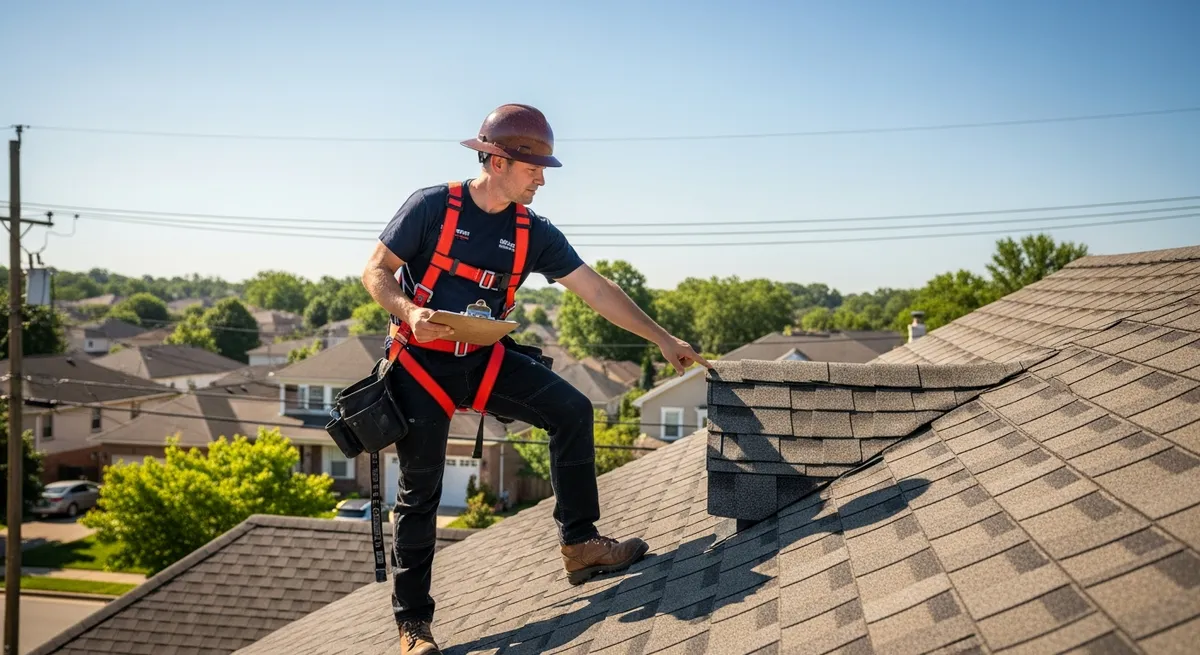
Flashing failures rank among the most common causes of roof leaks in Arlington, particularly around chimneys, dormers, and the wall-to-roof transitions that are so common on colonial-style homes. Flashing is the metal material—typically aluminum or galvanized steel—that seals the joints where different surfaces meet on your roof. Over time, flashing can corrode, separate from the surfaces it is meant to protect, or lose its sealant bond due to thermal expansion and contraction. When flashing fails, water finds a direct path into the roof structure, and the damage it causes can be extensive before any visible signs appear inside the home. Experienced arlington roofing contractors know to check every flashing point during an inspection because these are the areas most likely to fail first.
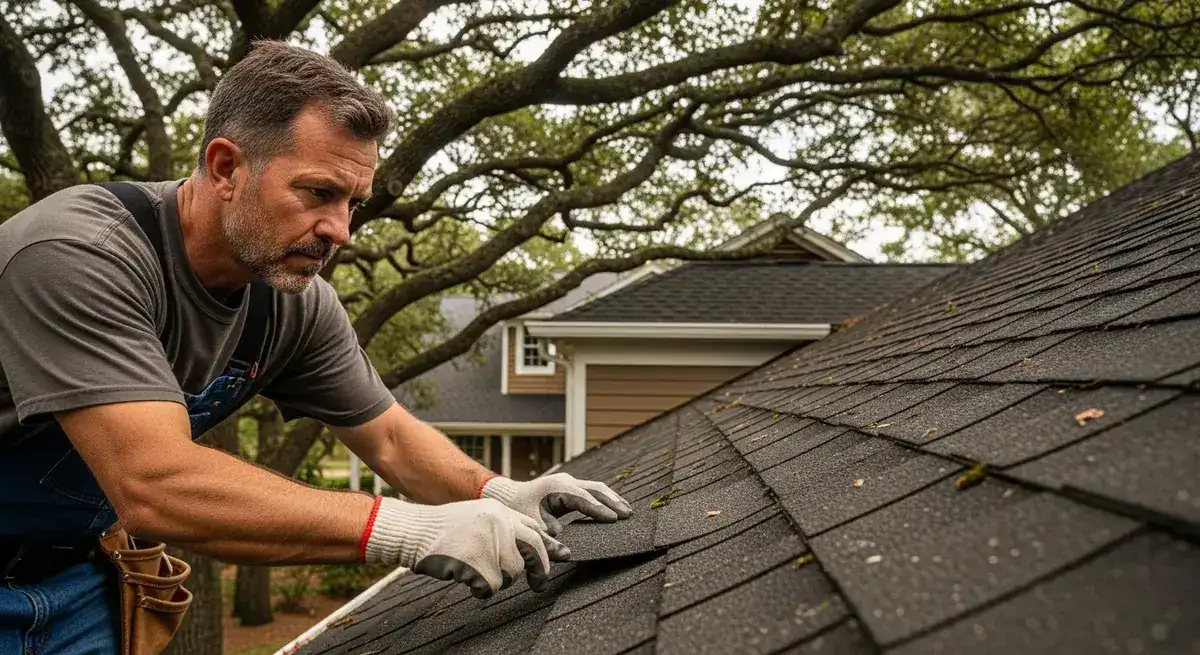
Missing, cracked, or curling shingles are another issue that Arlington homeowners encounter regularly. Asphalt shingles have a finite lifespan, and the combination of UV exposure, thermal cycling, and wind stress gradually degrades them from the day they are installed. Curling occurs when the shingle edges lose their flexibility and begin to lift away from the roof surface, creating entry points for wind-driven rain. Cracking happens when the asphalt base dries out and becomes brittle, a process accelerated by poor attic ventilation that traps heat beneath the shingles. Missing shingles are usually the result of wind events, and while a single missing shingle might seem minor, the exposed underlayment or decking beneath it is vulnerable to water intrusion and UV damage that can quickly escalate the repair scope.
Gutter-related problems frequently masquerade as roof issues in Arlington. When gutters are clogged with leaves and debris from the county’s abundant hardwood trees, water backs up under the roof edge and can seep beneath the drip edge and into the fascia board. Over time, this moisture rots the fascia and soffit, creating structural damage that extends well beyond a simple gutter cleaning. Ice dams, which form when snow melts on the upper roof and refreezes at the colder eaves, are another gutter-adjacent problem that can force water beneath shingles and into the attic. Proper gutter maintenance and adequate attic insulation are the most effective defenses against both of these issues.
Ventilation deficiencies are less visible but equally damaging over time. Many older Arlington homes were built before modern ventilation standards were established, and their attics lack the balanced intake-and-exhaust airflow that modern roofing systems require. Without proper ventilation, summer heat builds up in the attic and bakes the underside of the shingles, shortening their lifespan by years. In winter, warm moist air from the living space rises into the attic and condenses on the cold underside of the roof deck, promoting mold growth and wood rot. A thorough roof inspection should always include an assessment of attic ventilation, because installing a new roof over a poorly ventilated attic is essentially putting a fresh surface on a system that is designed to fail prematurely. For more on Arlington-specific roof issues, read our detailed Arlington roof repair resource.
Pipe boot failures represent yet another common entry point for water on Arlington roofs. Every plumbing vent that exits through the roof surface is surrounded by a rubber or neoprene boot that seals the gap between the pipe and the surrounding shingles. These boots degrade over time due to UV exposure and temperature extremes, eventually cracking and allowing water to seep down around the pipe and into the attic below. Because pipe boots are inexpensive components that can be replaced individually, this is one of the most cost-effective repairs a homeowner can make—provided the issue is caught before the water damage spreads to the surrounding decking and insulation.
Signs You Need Repairs vs a Full Replacement
One of the most important decisions an Arlington homeowner faces is whether to repair an existing roof or replace it entirely. The financial stakes are significant—a targeted repair might cost a few hundred to a few thousand dollars, while a full replacement on a typical Arlington home can range from $9,000 to $22,000 or more depending on size, pitch, and material selection. Making the wrong call in either direction is costly: unnecessary replacement wastes money, while repeated repairs on a roof that has reached the end of its useful life become a money pit that never truly solves the problem.
Age is the most straightforward indicator. Standard architectural asphalt shingles carry a manufacturer warranty of 25 to 30 years, but actual performance in the Arlington climate typically falls in the 20 to 25 year range. If your roof is less than 15 years old and the damage is localized—a few missing shingles from a wind event, a single flashing failure, a pipe boot that has cracked—repair is almost always the right answer. The rest of the roof still has substantial life remaining, and a well-executed repair restores the system to full function without the cost and disruption of a tear-off.
When a roof is between 15 and 20 years old, the decision becomes more nuanced. At this stage, the shingles are past their performance peak but may still have several years of serviceable life remaining. If you are facing a single isolated issue, repair makes sense. But if you are seeing signs of wear across the entire surface—widespread granule loss visible in your gutters, multiple areas of curling or cracking, moss or algae colonization across large sections—the cumulative cost of addressing these issues individually may approach or exceed the cost of replacement. A responsible roofing contractor Arlington homeowner trusts will present both options with honest cost projections so you can make the decision that fits your budget and your timeline.
Beyond the 20-year mark, the calculus shifts decisively toward replacement in most cases. A roof at this age has absorbed two decades of UV radiation, thermal cycling, storm damage, and biological growth, and even if it is not actively leaking today, the margin of safety has narrowed to the point where any significant weather event could overwhelm its remaining defenses. Investing in repairs on a roof this old is like putting new tires on a car with a failing transmission—you are addressing a symptom while ignoring the underlying reality that the entire system is approaching the end of its life. Our Northern Virginia roof replacement cost guide provides detailed pricing information to help you plan.
There is one important exception to the age-based framework: storm damage. If a relatively young roof suffers significant damage from hail, wind, or a fallen tree, the appropriate response depends on the nature and extent of the damage rather than the age of the roof. A ten-year-old roof with hail damage across the entire surface is a legitimate candidate for a full insurance-funded replacement, while a twenty-year-old roof with wind damage to a single slope might be better served by a targeted repair. Storm damage claims have their own logic, and an experienced contractor who understands the insurance claims process can help you navigate it effectively. Check out our storm and hail damage guide for more insight into what to do after severe weather impacts your home.
Another factor many homeowners overlook is the condition of the roof decking beneath the shingles. Even if the shingles themselves appear to be in reasonable condition, the plywood or OSB decking can deteriorate due to prolonged moisture exposure, inadequate ventilation, or previous water intrusions that were never fully addressed. Soft or spongy spots on the roof surface, sagging areas visible from the ground, and mold or dark staining visible in the attic are all indicators that the decking may need replacement. When decking damage is widespread, a full roof replacement that includes decking repair is almost always more cost-effective than attempting to patch multiple sections individually.
What a Proper Estimate Should Include
A written estimate is your most important tool for comparing contractors and protecting yourself from billing surprises. Yet many homeowners accept estimates that are vague, incomplete, or deliberately ambiguous, leaving them vulnerable to change orders and unexpected charges once the project is underway. Understanding what a thorough estimate looks like empowers you to hold every contractor to the same standard and makes apples-to-apples comparisons possible.
The estimate should begin with a clear description of the scope of work. For a repair, this means identifying the specific problem areas, describing the repair approach for each one, and listing the materials that will be used. For a replacement, it should specify the tear-off process, the type and quantity of underlayment, the shingle product line and color, the linear footage of drip edge and flashing, the number of pipe boots and vents being replaced, and the type and quantity of ridge vent. Every component should be listed separately so you can see exactly what you are paying for.
Labor costs should be broken out from material costs. This separation is important because it allows you to verify that the material specifications match what was discussed during the inspection and to compare labor rates between contractors. Some companies inflate material costs and suppress labor costs to make their estimates look more material-intensive than they actually are, while others do the opposite. When both numbers are visible, these accounting games become transparent and you can evaluate each proposal based on substance rather than presentation.
Permit fees, disposal fees, and any code-required upgrades should be listed as separate line items. Arlington County requires building permits for roof replacements and for structural repairs, and the cost of those permits should not be a surprise on your final bill. Similarly, disposal of old roofing materials is a significant expense—a typical Arlington roof generates three to five tons of debris—and responsible disposal at a licensed facility is not free. If your project requires code-mandated upgrades such as additional ice-and-water shield or improved ventilation, those costs should be spelled out in advance rather than presented as a change order after the tear-off reveals the need.
The estimate should also include the projected timeline, payment schedule, warranty terms, and a clear change-order policy. How long will the project take? When are payments due? What happens if rotted decking or other hidden damage is discovered during the tear-off? A professional contractor working in the Arlington market will answer all of these questions in the estimate document itself, not verbally over a handshake. Written terms protect both parties and establish clear expectations before a single nail is driven.
Finally, watch for what is not included. An estimate that says “replace roof” followed by a single dollar figure is not an estimate—it is a guess dressed up as a promise. Without itemized details, you have no way to know what materials are being used, what is included in the price, or what might generate additional charges once the project begins. If a contractor cannot or will not provide a detailed breakdown, move on to one who will. The effort you invest in comparing thorough estimates will pay for itself many times over in the quality and value of the finished project.
How to Choose a Contractor Without Stress
Choosing a roofing contractor in Arlington can feel like a high-pressure decision, and that pressure is exactly what some contractors exploit. Door-to-door salespeople who appear after a storm, contractors who offer “today-only” pricing, and companies that demand a large deposit before you have even received a written estimate are all using urgency as a sales tactic rather than earning your trust through competence and transparency. The good news is that a few straightforward steps can eliminate the stress and help you identify roofing contractors Arlington VA homeowners genuinely recommend.
Start with licensing and insurance verification. Every roofing contractor working in Virginia must hold a valid contractor license registered with the Virginia Department of Professional and Occupational Regulation, commonly known as DPOR. You can verify any contractor’s license status on the DPOR website in minutes. In addition to the license, verify that the contractor carries both general liability insurance and workers compensation coverage. General liability protects your property if the crew causes damage during the project, while workers compensation protects you from financial liability if a worker is injured on your roof. Ask for certificates of insurance and verify them directly with the issuing insurer—not just by looking at a piece of paper the contractor hands you.
Local experience matters enormously. A contractor who has worked extensively in Arlington understands the specific building code requirements, the permit and inspection process, the HOA dynamics in various neighborhoods, and the climate-driven challenges that affect roofing performance in this area. Ask how many projects the contractor has completed in Arlington over the past two years, and request references from those specific projects. A company with deep local roots will provide references confidently because their reputation in the community is their most valuable asset.
Reviews and reputation are valuable data points, but they require careful interpretation. Look for patterns across multiple review platforms rather than fixating on individual ratings. A contractor with hundreds of reviews averaging four and a half stars over several years is demonstrating consistency, which is far more meaningful than a handful of perfect scores posted within a single month. Pay attention to how the company responds to negative reviews—a professional, solution-oriented response to a complaint tells you more about a company’s character than any number of five-star reviews. Visit our service areas page to learn more about our coverage throughout Northern Virginia.
The consultation itself reveals a lot about a contractor’s professionalism. A quality roofing contractor Arlington homeowner can depend on will schedule an on-site inspection rather than quoting over the phone, arrive on time, spend 30 to 60 minutes thoroughly examining your roof and attic, explain their findings in language you can understand, and provide a written estimate within a few days. They will answer your questions patiently, present repair and replacement options honestly, and never pressure you to make a decision on the spot. The way a contractor treats you during the sales phase is almost always a reliable preview of how they will treat you during the project itself.
Get at least three estimates from different contractors. This is not about finding the cheapest price—it is about establishing a realistic range and identifying outliers. If two contractors propose similar scopes of work at similar prices and a third comes in 40 percent lower, the low bid is almost certainly cutting corners somewhere. Conversely, a bid that is dramatically higher than the others should come with a clear explanation of what additional value justifies the premium. Three estimates give you the context to evaluate each proposal on its merits rather than making a decision in a vacuum.
Communication style during the bidding process is another reliable indicator of what to expect once the project begins. Does the contractor return calls and emails promptly? Do they explain technical concepts in plain language without being condescending? Do they listen to your concerns and answer your specific questions rather than delivering a rehearsed sales pitch? The contractor who communicates well before signing the contract is almost always the contractor who communicates well during and after the project. Conversely, a contractor who is difficult to reach, dismissive of your questions, or evasive about details during the sales phase is unlikely to improve once they have your deposit.
Typical Timelines and What to Expect on Job Day
Understanding the timeline of a roofing project helps you plan around the disruption and set realistic expectations for every phase from contract signing to final cleanup. The scheduling lag—the time between signing a contract and the actual start of work—depends on the season, the contractor’s workload, and material availability. During peak roofing season from late spring through early fall, wait times of two to four weeks are common for non-emergency projects. During the slower winter months, you may be able to start within a week or two. Emergency repairs for active leaks are typically addressed within 24 to 48 hours with temporary measures, followed by a permanent repair scheduled as soon as conditions allow.
A straightforward repair—replacing a section of shingles, resealing flashing, or swapping out a damaged pipe boot—typically takes a few hours to a full day depending on the scope. The crew arrives in the morning, sets up safety equipment, completes the repair, cleans up debris, and is off your property by late afternoon. For most repairs, you do not need to be home during the work, although being available by phone in case the crew discovers additional issues is helpful.
A full roof replacement on a typical Arlington single-family home takes one to three days depending on the roof’s size, complexity, and the weather. Day one usually involves tearing off the existing roofing material, inspecting and repairing the decking as needed, and installing the underlayment. Day two focuses on shingle installation, flashing, and ridge vent. If the roof is large or has complex features like multiple dormers, skylights, or intersecting roof planes, a third day may be needed for finishing details and cleanup. A quality contractor will communicate the expected timeline in advance and provide daily updates on progress.
On job day itself, expect the crew to arrive early—typically between seven and eight in the morning. They will position a dump trailer or container for debris, protect your landscaping and driveway with tarps and plywood, and begin the tear-off. The tear-off phase is the noisiest and most disruptive part of the project. Shingles and underlayment are stripped from the roof using specialized tools and dropped into the container below. If you have pets that are sensitive to noise, consider making arrangements for them to spend the day elsewhere. Parking your vehicles away from the work zone is also a smart precaution to avoid any accidental damage from falling debris.
Once the old material is removed, the crew inspects every square foot of the decking for rot, damage, or inadequate nailing patterns. Any compromised sections are cut out and replaced with new plywood before the underlayment goes on. This is one of the most important phases of the project because the decking is the structural foundation that everything else attaches to. A contractor who rushes through this step or fails to replace damaged decking is building a new roof on a flawed foundation. When your contractor shares photos of the decking condition with you and explains any repairs that are needed, that transparency is a sign of professionalism and integrity.
Cleanup is the final phase, and it should be thorough. A professional crew uses magnetic nail sweepers to collect stray fasteners from the yard, driveway, and sidewalks. They inspect the gutters for debris and ensure that every piece of old material, packaging, and scrap has been removed from your property. The condition of your property after the project is a direct reflection of the crew’s standards. If they leave your home cleaner than they found it, you can be confident that the work above your head was executed with the same level of care.
After the project is complete, your contractor should schedule a final walkthrough with you to review the finished work, point out key features of the installation, explain any maintenance recommendations, and hand over warranty documentation. This walkthrough is your opportunity to ask questions, verify that the scope of work matches the original estimate, and ensure that you are completely satisfied before making the final payment. A contractor who skips this step or rushes through it is missing a critical component of the professional roofing experience. Learn more about our full range of roofing services to understand everything we offer homeowners across Arlington and Northern Virginia.
Weather delays are a reality of roofing work in the Mid-Atlantic, and understanding how your contractor handles them is part of setting realistic expectations. Roofing work cannot proceed safely during rain, and most contractors will not install shingles in temperatures below 40 degrees because the adhesive strips require warmth to bond properly. A professional contractor will monitor weather forecasts closely, communicate any schedule adjustments promptly, and ensure that any partially completed work is tarped and waterproofed overnight to protect your home from moisture damage. The willingness to pause work for weather rather than pushing through unfavorable conditions is a sign of a contractor who prioritizes the quality of the finished product over the convenience of their own schedule.
Schedule an Arlington Roof Inspection
Schedule an Arlington roof inspection with Sterling Roofers and get a clear repair-or-replace recommendation. Call us today at (703) 436-4445 or schedule your free consultation online.
Schedule Free Consultation