Alexandria Roof Repair Guide: Leaks, Pricing, and When Replacement Makes Sense
Alexandria Roof Repair Guide: Leaks, Pricing, and When Replacement Makes Sense
Key Takeaways
- Leak location determines repair cost — chimney flashing, valleys, and pipe boots are the most common failure points in Alexandria homes
- Most Alexandria roofs built before 1990 lack ice-and-water shield at the eaves, making them prone to winter leak damage
- Repair makes sense for isolated damage under 30% of the roof area — beyond that, replacement is usually more cost-effective
- Always get a written scope that identifies materials, labor, and warranty terms before any work begins
- A Class A or B Virginia DPOR license is required — verify before signing any contract
If you own a home in Alexandria, your roof is working harder than you probably realize. Between the humid summers, the freeze-thaw cycles of winter, and the storms that roll through the Potomac River corridor every spring, your roofing system absorbs more punishment per year than most homeowners ever think about—until something goes wrong. Alexandria roof repair is one of those topics that only becomes urgent when a water stain appears on your ceiling or a section of shingles ends up in your yard after a storm, but understanding it before you need it puts you in a much stronger position to act quickly, spend wisely, and avoid the costly mistakes that catch unprepared homeowners off guard. Sterling Roofers serves Northern Virginia and nearby Maryland communities across the DMV, and we have helped hundreds of Alexandria homeowners protect their homes with the right repair at the right time.
This guide covers everything you need to know about maintaining, repairing, and when necessary replacing your Alexandria roof. We will walk through the most common problems that affect homes in this area, explain how to tell the difference between a situation that calls for a targeted repair and one that warrants a full replacement, break down the components of a proper estimate so you can compare contractors fairly, and share the qualities that separate a trustworthy roofing professional from one who is more interested in your wallet than your wellbeing. Whether you are dealing with an active leak right now or simply planning ahead for the maintenance your roof will eventually need, this guide will give you the knowledge to make confident decisions.
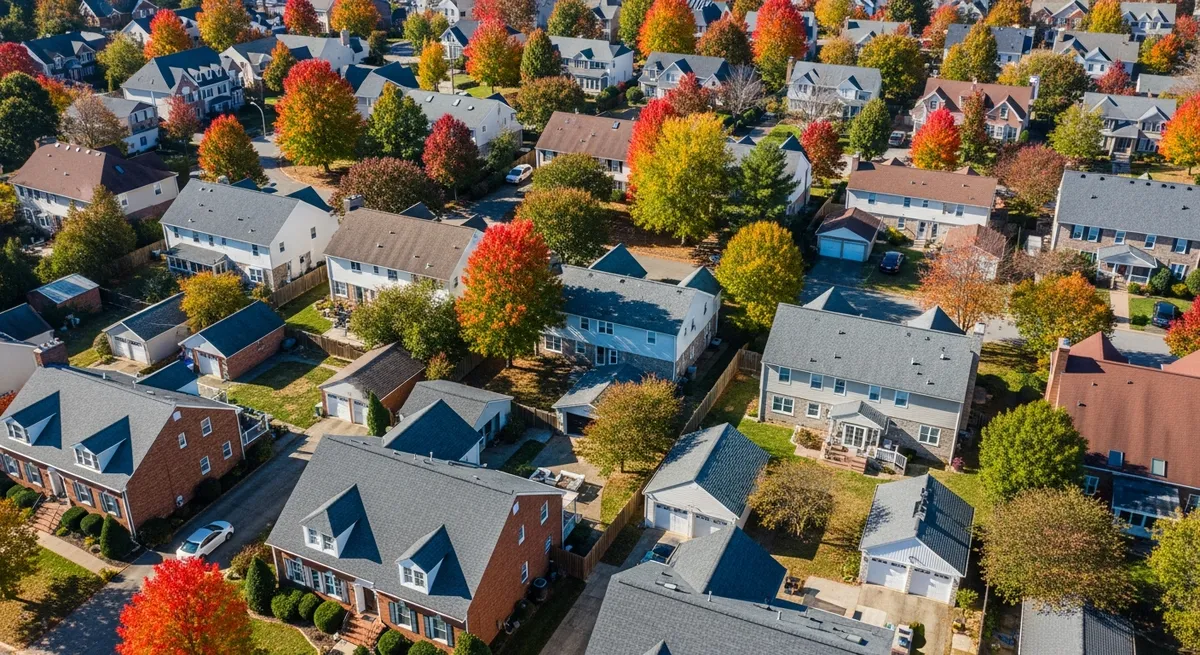
Alexandria’s housing stock is remarkably diverse, ranging from the historic brick townhomes of Old Town to the mid-century ramblers and colonials of the West End to the newer construction in areas like Kingstowne and Cameron Station. Each of these home styles presents different roofing challenges. The steep slate roofs common in Old Town require specialized repair techniques and materials that most general roofing contractors are not equipped to handle. The low-slope sections found on many mid-century homes are prone to ponding water and membrane failures. And even the relatively modern roofs on newer construction can develop problems if the original installation cut corners on flashing, ventilation, or underlayment quality. Understanding how your specific home fits into Alexandria’s roofing landscape is the first step toward making informed repair decisions.
The climate in Alexandria creates a particularly demanding environment for roofing materials. Summer temperatures regularly push attic spaces past 140 degrees, accelerating the aging of shingles from the underside. Winter brings freeze-thaw cycles that expand water in tiny cracks and work seals apart over time. The Potomac River corridor adds moisture and humidity that promote algae and moss growth, particularly on shaded north-facing slopes. And the severe thunderstorms and occasional tropical remnants that move through the region can deliver wind gusts, hail, and heavy rain that test every component of your roofing system simultaneously. A roof repair Alexandria homeowner addresses promptly after a storm can prevent thousands of dollars in secondary water damage to insulation, drywall, and personal belongings.
Alexandria Roofing Problems Homeowners See Most
Roof leaks are the single most common complaint among Alexandria homeowners, and they are also among the most misunderstood. The misconception that a ceiling stain means the leak is directly above it leads many homeowners on a frustrating search for the source that often ends with a misdiagnosis. In reality, water entering through a compromised section of flashing or a cracked pipe boot can travel along rafters, sheathing, and even wiring runs for several feet before finally dripping through the ceiling into the living space below. Tracing the leak back to its actual entry point requires experience, patience, and usually an attic inspection during or immediately after a rainstorm when the water trail is visible.
Flashing deterioration is one of the primary drivers of roof repairs Alexandria homeowners face year after year. The metal strips and shaped pieces that seal joints around chimneys, dormers, skylights, walls, and other penetrations are critical waterproofing components, but they are also among the most vulnerable. Thermal expansion and contraction loosen fasteners and break sealant bonds over time, and once a flashing joint opens even slightly, water finds its way through with every rainfall. Step flashing at wall transitions is especially prone to failure on Alexandria’s colonial-style homes, where multiple roof-to-wall junctions create numerous potential entry points. Resealing or replacing failed flashing is one of the most cost-effective repairs available, but only if the work is done correctly with proper materials and techniques.
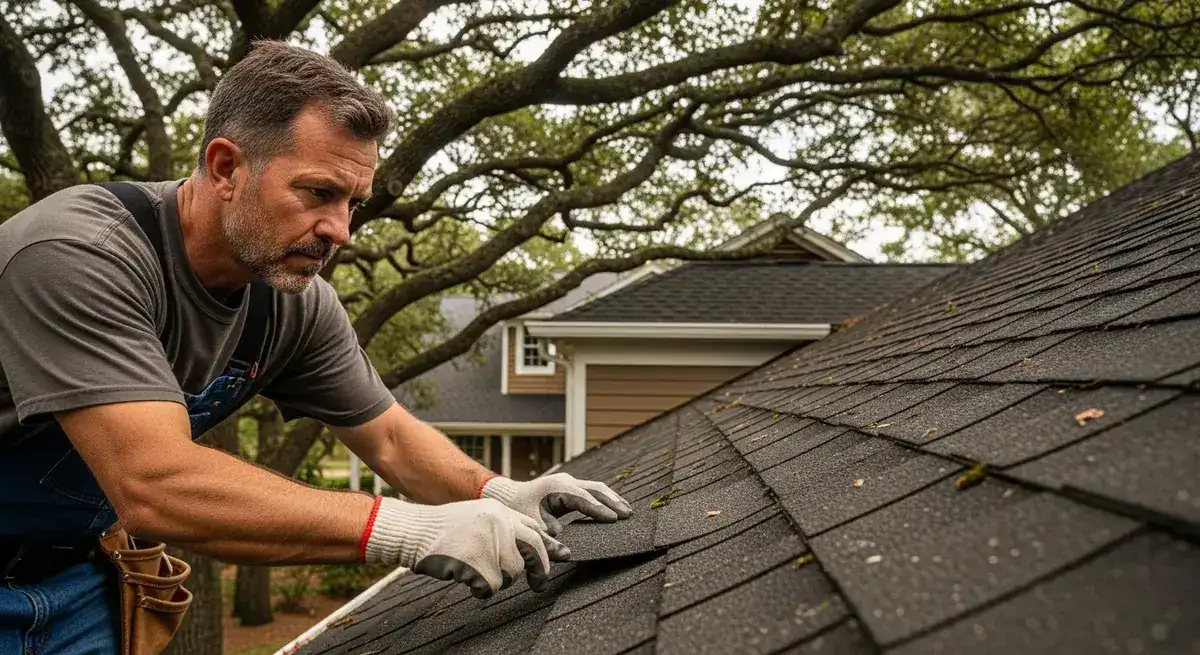
Shingle damage manifests in several forms across Alexandria’s roofing landscape. Wind-lifted shingles that have lost their adhesive seal are common after spring and summer storms, and they create openings for water to reach the underlayment below. Granule loss—visible as bare patches on the shingle surface and accumulations of grit in your gutters—reduces the shingle’s ability to resist UV radiation and moisture, accelerating the aging process. Cracking and splitting occur as the asphalt base dries out and becomes brittle, a process that poor attic ventilation can accelerate dramatically. Each of these conditions can be addressed with targeted repairs when caught early, but if left unchecked they spread across the roof surface and eventually make replacement the only practical option.
Gutters and drainage issues contribute to roofing problems more than many homeowners realize. Alexandria’s mature tree canopy, beautiful as it is, drops an enormous volume of leaves, seeds, and twigs into gutters throughout the year. When gutters clog, water backs up under the roof edge, seeps behind the drip edge and fascia, and begins rotting the wood structure at the perimeter of the roof. In winter, clogged gutters contribute to ice dam formation—ridges of ice that form at the eaves and force melted snow back under the shingles, causing leaks that can damage insulation and ceiling finishes. Regular gutter cleaning and proper drainage are not just gutter maintenance tasks—they are essential components of a comprehensive roofing maintenance strategy. For more on how siding and exterior work ties into overall home protection, read our guide on siding repair in Alexandria and Fairfax.
Ventilation problems represent a silent threat that many Alexandria homeowners never recognize until the damage is done. An attic without adequate airflow traps heat and moisture in ways that compromise every component of the roofing system. Excessive heat from below accelerates shingle deterioration, while trapped moisture promotes mold growth on the underside of the roof deck and can rot the plywood sheathing from within. The signs of ventilation failure are often subtle—higher-than-expected energy bills, frost on attic surfaces in winter, wavy or buckled shingle patterns visible from the ground—but the consequences are serious. Any roof repair or replacement project should include a thorough evaluation of attic ventilation and recommendations for improvement if the current system falls short of modern standards.
Pipe boot failures are another frequent issue on Alexandria roofs. The rubber or neoprene collars that seal around plumbing vent pipes deteriorate under constant UV exposure and temperature extremes, eventually cracking and allowing water to seep down around the pipe into the attic below. Because these boots are small and located in areas that are not easily visible from the ground, many homeowners do not discover the failure until water staining appears on an interior ceiling. The good news is that pipe boot replacement is one of the most affordable roof repairs available, typically costing a fraction of what a flashing repair runs, and it immediately eliminates a common leak source.
Signs You Need Repairs vs a Full Replacement
The repair-versus-replace question is one of the most consequential financial decisions an Alexandria homeowner faces when dealing with roof problems. A well-timed repair can extend your roof’s functional life by years at a fraction of the cost of replacement, while an ill-timed repair on a roof that has already reached the end of its useful life is money thrown at a problem that will only continue to grow. Understanding where your roof stands on this spectrum requires considering several factors together rather than relying on any single indicator.
The age of your roof provides the foundational context for the decision. Standard architectural asphalt shingles are warrantied for 25 to 30 years but typically deliver 20 to 25 years of reliable performance in the Alexandria climate. If your roof is under 15 years old and the issue is localized—a section of wind-damaged shingles, a single flashing failure, a cracked pipe boot—repair is the clear choice. The surrounding material has years of life remaining, and a quality repair restores the system to full function without the expense and disruption of tearing everything off and starting over.
Between 15 and 20 years, the analysis becomes more complex. At this stage, you need to evaluate not just the specific problem in front of you but the overall condition of the entire roof. Are you seeing wear patterns across multiple slopes? Is granule loss noticeable in the gutters after every rain? Have you already invested in two or three repairs over the past few years? If the answer to these questions is yes, the roof is telling you that its remaining service life is limited, and each additional repair represents diminishing returns. A smart approach at this stage is to get a comprehensive inspection that evaluates the entire system—shingles, flashing, ventilation, decking condition—and produces a realistic estimate of both the cost of continued repairs and the cost of replacement, so you can compare the two paths side by side.
Past the 20-year mark, replacement is usually the financially sound choice unless the roof has been exceptionally well maintained and shows no signs of systemic wear. A roof at this age has endured two decades of thermal cycling, UV degradation, wind stress, and biological growth, and its ability to withstand a significant weather event without failure has diminished substantially. Continuing to patch individual problems on a roof this old is like treating symptoms while ignoring the disease—each repair buys time but does not change the underlying trajectory. Visit our roof replacement cost guide for detailed pricing that applies specifically to the Northern Virginia market.
Storm damage introduces a separate calculus that overrides age-based decision-making. A five-year-old roof that suffers widespread hail damage is a legitimate candidate for full replacement through an insurance claim, while a twenty-year-old roof with localized wind damage to a single slope might be more appropriately repaired. The key factor is whether the damage is concentrated or distributed across the entire surface. Insurance adjusters evaluate this during their inspection, and having an experienced roofing contractor present during that inspection ensures that all damage—including less obvious issues like bruised shingles and compromised flashing seals—is documented and included in the claim.
The condition of the roof deck beneath the shingles is another critical factor that many homeowners overlook until the tear-off reveals it. Water damage from previous leaks, condensation from ventilation problems, or simple age-related deterioration can weaken the plywood or OSB panels that form the structural surface of your roof. If the decking is soft, delaminated, or shows signs of mold growth over a significant area, replacement of the affected panels adds to the project cost but is absolutely essential for a sound finished product. When widespread decking damage is present, a full replacement that addresses both the surface material and the underlying structure is almost always the most cost-effective approach compared to piecemeal repairs that never fully resolve the problem. For homeowners who need to spread the investment over time, our roof financing options make it easier to move forward with confidence.
What a Proper Estimate Should Include
The quality of the estimate a contractor provides tells you almost everything you need to know about the quality of their work. A thorough, detailed estimate demonstrates that the contractor has carefully evaluated your roof, understands the scope of what needs to be done, and is willing to put specific commitments in writing. A vague, lump-sum estimate suggests the opposite—either the contractor has not done a proper assessment, or they prefer the flexibility to adjust scope and pricing after the project is underway. Knowing what to look for in an estimate protects you from both of these scenarios.
Every estimate should begin with a clear description of the work to be performed. For alexandria roof repair projects, this means identifying the specific problem areas, describing the repair methodology for each one, and listing the materials that will be used. The description should be specific enough that you could hand it to a different contractor and they would understand exactly what is being proposed. Vague language like “repair roof as needed” or “fix leak area” is not acceptable—you need to know precisely what is being repaired, how it is being repaired, and what materials are being used.
For replacement projects, the level of detail should be even greater. The estimate should specify the shingle product line, color, and quantity in squares. It should list the type of underlayment—synthetic felt or self-adhering membrane—and whether it will cover the entire deck or only code-required areas like valleys and eaves. Drip edge, flashing, pipe boots, ridge vent, starter strip, and hip and ridge cap shingles should all be itemized separately. This level of detail allows you to verify that the contractor is using the materials discussed during the inspection and to compare proposals from different contractors on a genuinely equal basis.
Labor and materials should be listed separately. When these costs are combined into a single line item, you lose the ability to evaluate either one independently. You cannot tell whether the material specifications match what was promised, and you cannot compare labor rates between contractors. Some companies deliberately blur this line to obscure their markups or to make their proposals harder to compare with competitors. A contractor who breaks out labor and materials separately is demonstrating transparency and inviting comparison—two qualities that strongly predict a positive project experience.
Additional costs that should be itemized include tear-off and disposal fees, permit costs, any code-required upgrades, and a per-sheet price for decking replacement in case damaged panels are discovered during the tear-off. The change-order policy should be clearly stated: what triggers a change order, how the cost is calculated, and the requirement for your written approval before any additional work is performed. This single policy provision eliminates the most common source of billing disputes in residential roofing and protects both you and the contractor from misunderstandings about scope and cost.
Timeline, payment schedule, and warranty terms round out a complete estimate. You should know when the project will start, how long it will take, what the payment milestones are, and what warranties cover both materials and workmanship after the project is complete. A standard payment structure involves a deposit of 10 to 30 percent at contract signing with the balance due upon completion and your satisfaction. Never pay the full amount upfront, and always pay by check or credit card so there is a documented trail for every transaction. These protections are not signs of distrust—they are standard business practices that every professional contractor expects and supports.
How to Choose a Contractor Without Stress
The contractor selection process does not have to be stressful, and frankly, if it feels stressful, that is usually a sign that the contractors you are talking to are creating pressure rather than alleviating it. A reputable roofing professional understands that you are making a significant investment in your home and deserves the time and information needed to make a confident decision. The contractors who rely on high-pressure tactics—today-only pricing, scare stories about imminent roof failure, demands for large upfront deposits—are the ones you should walk away from without hesitation.
Licensing is your first filter. Virginia requires roofing contractors to hold a valid license registered with the Department of Professional and Occupational Regulation. You can verify any contractor’s license status online in a matter of minutes. This is a non-negotiable requirement—an unlicensed contractor working on your roof exposes you to liability if something goes wrong and typically indicates that the company has not met the basic competency and financial responsibility standards the state requires. Beyond the license, verify that the contractor carries adequate general liability insurance and workers compensation coverage. Ask for certificates and confirm them directly with the insurance company rather than accepting a document at face value.
Experience in Alexandria specifically matters more than general roofing experience. A contractor who has completed dozens of projects in your area understands the local building code requirements, the permit process, the HOA landscape in various neighborhoods, and the specific climate challenges that affect roof performance here. They have relationships with local suppliers and inspectors that translate into smoother projects and faster resolution of any issues. Ask how many Alexandria projects the contractor has completed in the past year, and request references from homeowners in your part of the city.
The on-site inspection is your best opportunity to evaluate a contractor’s competence and professionalism. A quality contractor will spend 30 to 60 minutes examining your roof from the ground, from a ladder, and from the attic. They will take photographs, measure the roof area, assess ventilation, check flashing and penetrations, and evaluate the condition of the existing shingles. They will explain their findings in clear language, present both repair and replacement options where appropriate, and answer your questions without evasion or condescension. A contractor who quotes your project over the phone based on satellite imagery alone has not done the work required to give you an accurate, reliable estimate.
Collect at least three estimates from different contractors before making a decision. This is not about finding the lowest price—it is about establishing a reasonable range and identifying outliers. When two or three contractors propose similar scopes at similar prices, you can be reasonably confident that the market rate for your project is within that range. A bid that falls dramatically below the others is almost certainly cutting corners on materials, labor, insurance, or some combination of the three. A bid that is significantly higher should be accompanied by a clear explanation of what additional value or scope justifies the premium. Three estimates give you the data to make a decision based on evidence rather than gut feeling. Check out our service areas to see all the communities we serve across the region.
Trust your instincts during the process. If a contractor makes you feel rushed, dismisses your concerns, or provides answers that seem evasive or inconsistent, those feelings are valuable information. The contractor you choose will be working on the most important protective system your home has, and you deserve to feel confident in their competence, integrity, and commitment to your satisfaction. The right contractor earns your trust through their actions, not their sales pitch. Explore our services to see the full range of what we offer to Alexandria homeowners.
Typical Timelines and What to Expect on Job Day
Knowing what to expect before, during, and after a roofing project helps you plan around the disruption and ensures that the experience meets your expectations rather than falling short of them. Every roofing project has a rhythm to it, and understanding that rhythm transforms the process from an anxiety-inducing unknown into a manageable sequence of steps that you can prepare for and track.
The time between signing a contract and the start of work depends on the season and the contractor’s current workload. During peak season—roughly April through October—a two to four week lead time is typical for non-emergency projects. During the slower winter months, you may be able to schedule within a week or two. Emergency repairs for active leaks are handled on an expedited basis, typically within 24 to 48 hours for temporary waterproofing, with permanent repairs scheduled as soon as weather and materials allow.
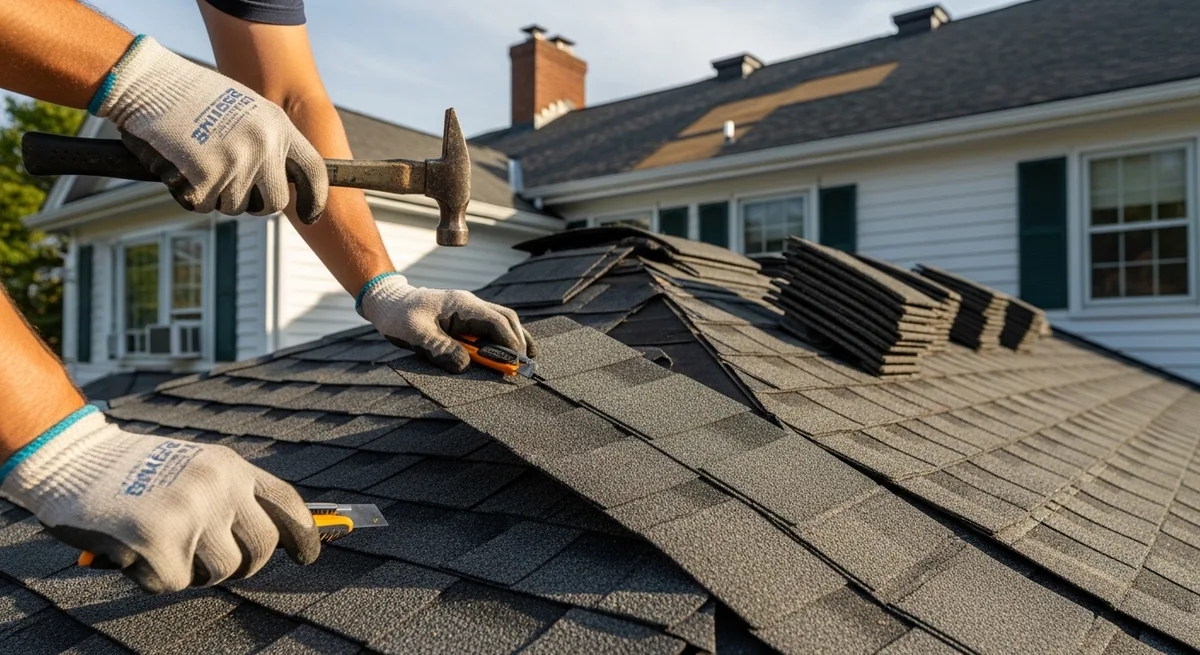
For repair projects, the actual work is usually completed within a single day. The crew arrives in the morning, sets up safety equipment and staging, performs the repair, cleans up all debris, and wraps up by late afternoon. Straightforward repairs like pipe boot replacement or minor flashing resealing may take only a few hours. More involved repairs such as replacing a section of shingles along with the underlying decking can take a full day. You generally do not need to be home during the work, but being reachable by phone is important in case the crew discovers additional issues that warrant discussion.
Full roof replacements on typical Alexandria homes take one to three days. The first day is devoted to tear-off—removing all existing shingles and underlayment down to the bare decking—followed by decking inspection and repair. The tear-off is the loudest phase of the project, and if you work from home or have young children or pets, planning around this day is worth considering. The second day focuses on installing the new underlayment, shingles, flashing, and ridge vent. Larger or more complex roofs with multiple levels, dormers, skylights, or intersecting planes may require a third day for completion and final detailing.
On the day of the project, expect the crew to arrive between seven and eight in the morning. They will set up a dump trailer for debris, protect your driveway and landscaping with tarps, and begin work promptly. During the tear-off, debris will be falling into the trailer continuously, so keeping children and pets indoors and moving vehicles away from the work area is important. A project manager should be present on site or checking in regularly to oversee the work, communicate with you about progress and any discoveries, and ensure that the project stays on schedule and on scope.
Cleanup happens at the end of each workday and is especially thorough on the final day. A responsible crew uses magnetic nail sweepers across the entire property to collect stray fasteners, inspects and cleans the gutters, and removes every scrap of old material, packaging, and debris. The final walkthrough with your contractor is your opportunity to inspect the finished work, ask questions about maintenance, and receive warranty documentation. This is also when you verify that the project matches the original estimate and express any concerns before making the final payment. A contractor who takes the final walkthrough seriously is a contractor who stands behind their work.
Weather is the one variable that no contractor can fully control, and understanding how weather delays are handled sets appropriate expectations from the outset. Roofing work stops during rain for obvious reasons, and most contractors will not install shingles when temperatures drop below 40 degrees because the adhesive strips need warmth to activate. A professional contractor communicates schedule adjustments promptly, ensures that any open areas of the roof are tarped and waterproofed at the end of each workday, and resumes work as soon as conditions allow. The key question to ask your contractor before the project begins is how they handle weather delays and what measures they take to protect your home when work has to pause overnight.
After the project is complete, the relationship between you and your contractor should not end. A quality contractor will reach out after the first significant rainfall to confirm that everything is performing as expected, and they will be available for questions or concerns that may arise in the weeks and months following the project. Establishing this ongoing relationship ensures that you have a trusted professional to call for future inspections, maintenance, and any warranty-related issues that may develop over the life of your new roof or repair.
Get a Leak Diagnosis in Alexandria
Get a leak diagnosis in Alexandria from Sterling Roofers and avoid paying twice for the same issue. Call us today at (703) 436-4445 or schedule your free consultation online.
Schedule Free Consultation